Tasting a Franc
Tasting
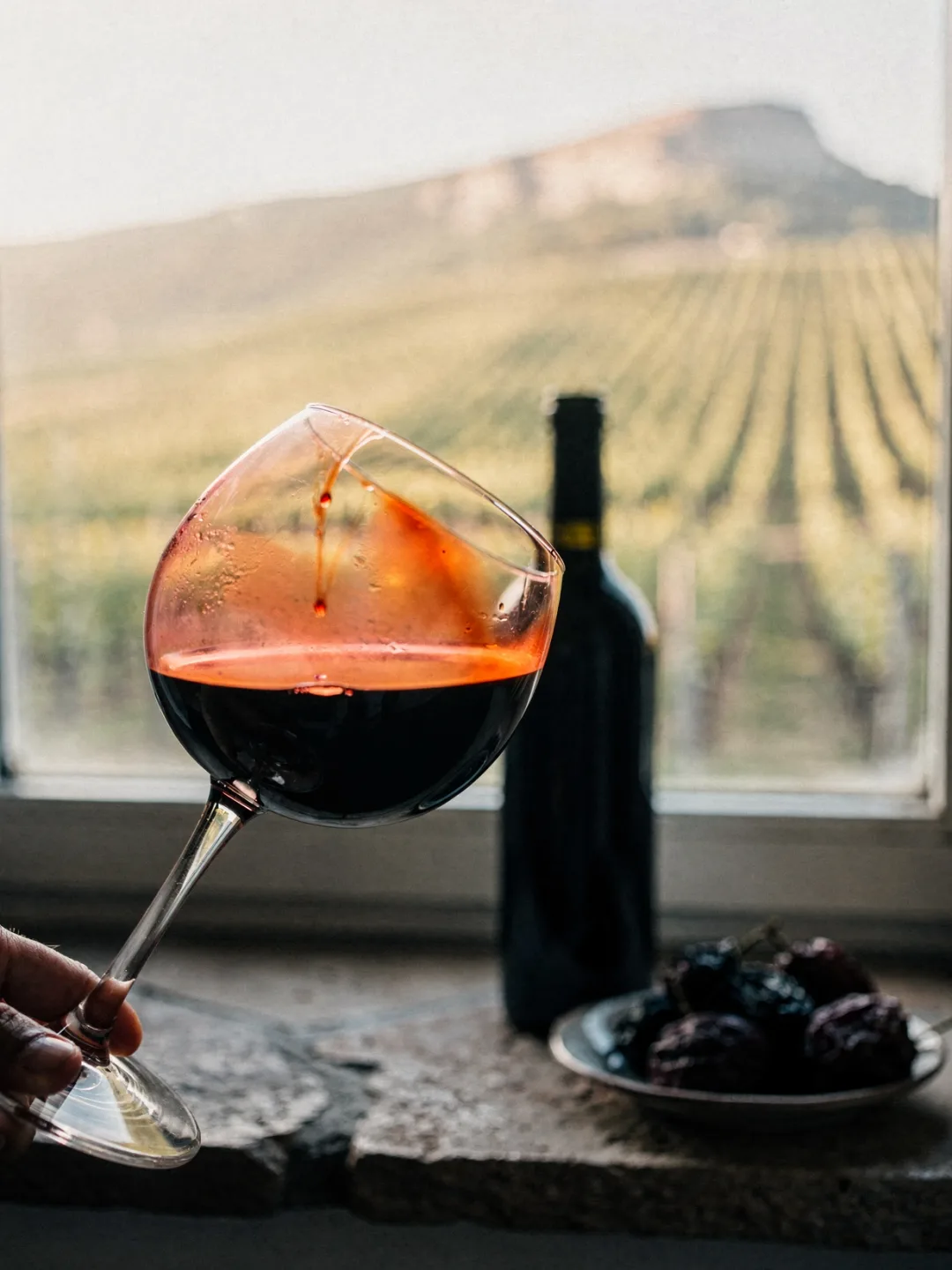
Hold a glass of Cabernet Franc from Villány at an angle against the light, ideally over something white. Young, the rim shows a deep violet, almost blue-black at the core. After the mandatory three years of a Szuperprémium, this rim has usually already shifted toward brick red, while the core stays dark. That's not a flaw, just simply age.
Smell first, without swirling the glass. At rest, dark fruit usually rises up first, blackcurrant and ripe plum. Swirl next, and a second, spicier note emerges: something like green bell pepper or black pepper, sometimes even a hint of graphite. This note comes from pyrazine, the same compound that dominates the entire nose when the grapes are picked too early. Here, it's just a footnote.
On the palate, it helps to separate two things. You feel the acidity along the sides of the tongue, keeping the wine fresh even after years in barrel. The tannin, the rough coating on the gums, is often grippier in a Kopár wine than elsewhere in the region, because the thinner soil over the karst forces smaller, more concentrated berries, and you taste that for a long time afterward. Together, both create a structure that carries the wine for ten, often twenty years.
Finally, count how long the flavor lingers after you swallow. With a young RedY made from Kékoportó and Kékfrankos, that's maybe five seconds, pleasant but fleeting. With a Szuperprémium Villányi Franc, you count twenty seconds and more. In the end, it's that length that makes the difference.