Must to Barrique
Production
With Cabernet Franc, harvest timing decides almost everything. Picked too early, the variety tastes of green bell pepper, because a compound called pyrazine sits in unripe berries and only breaks down at full ripeness. In Villány's hot summers, the grape reaches this ripeness far more reliably than in almost any other Central European site, and that's exactly what made the variety so successful here. It's no coincidence.
After harvest, the red grapes stay in an open vat with their skins and sometimes even their stems. Nothing gets pressed beforehand. For two to four weeks, the must is punched down or pumped over several times a day, so color and tannin migrate from the skins into the juice. Shorter maceration times produce the fruity, easy-drinking style sought in RedY, a young cuvée of Kékoportó and Kékfrankos. Longer maceration times deliver the dense structure a Villányi Franc needs.
Then comes the barrel, and here strict rules apply. A Premium Villányi Franc must age for at least one year in wood. For a Szuperprémium, it's at least two years of aging in total, one of them in barrel, before the wine can be sold, at the earliest in the third year after harvest. Anyone who falls short of these timeframes isn't allowed to put the name on the label, no matter how good the wine otherwise tastes. No exceptions.
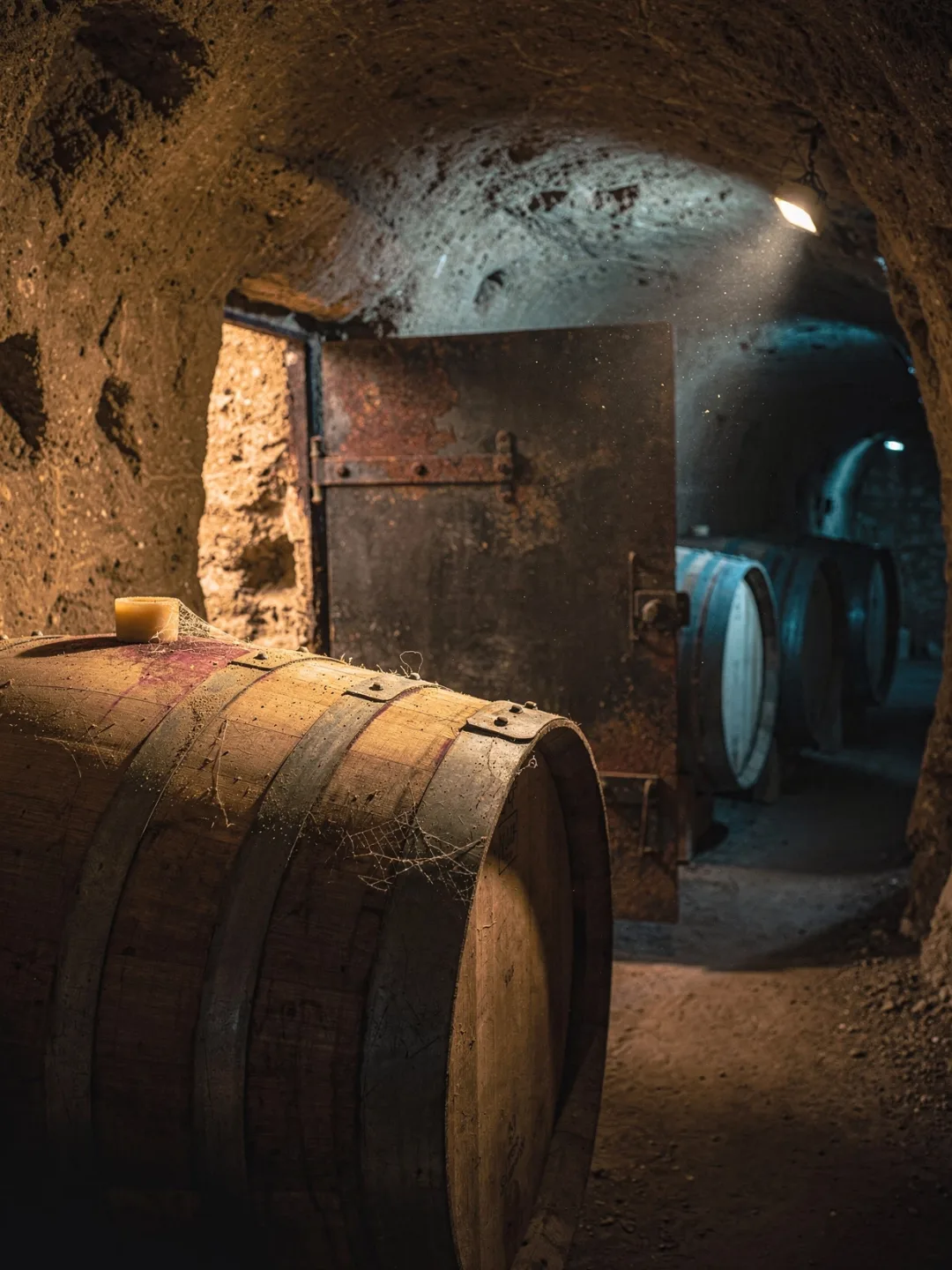
Where this wine ages is still determined by the loess. The German settlers dug their cellars deep into the soft soil layer of the slopes, often several stories down, because loess is easy to hollow out yet still holds its shape. Inside, the temperature stays nearly constant all year round, without air conditioning and without heating. Some of these cellar passages beneath Villány and Villánykövesd are over a hundred years old and are still in use today.