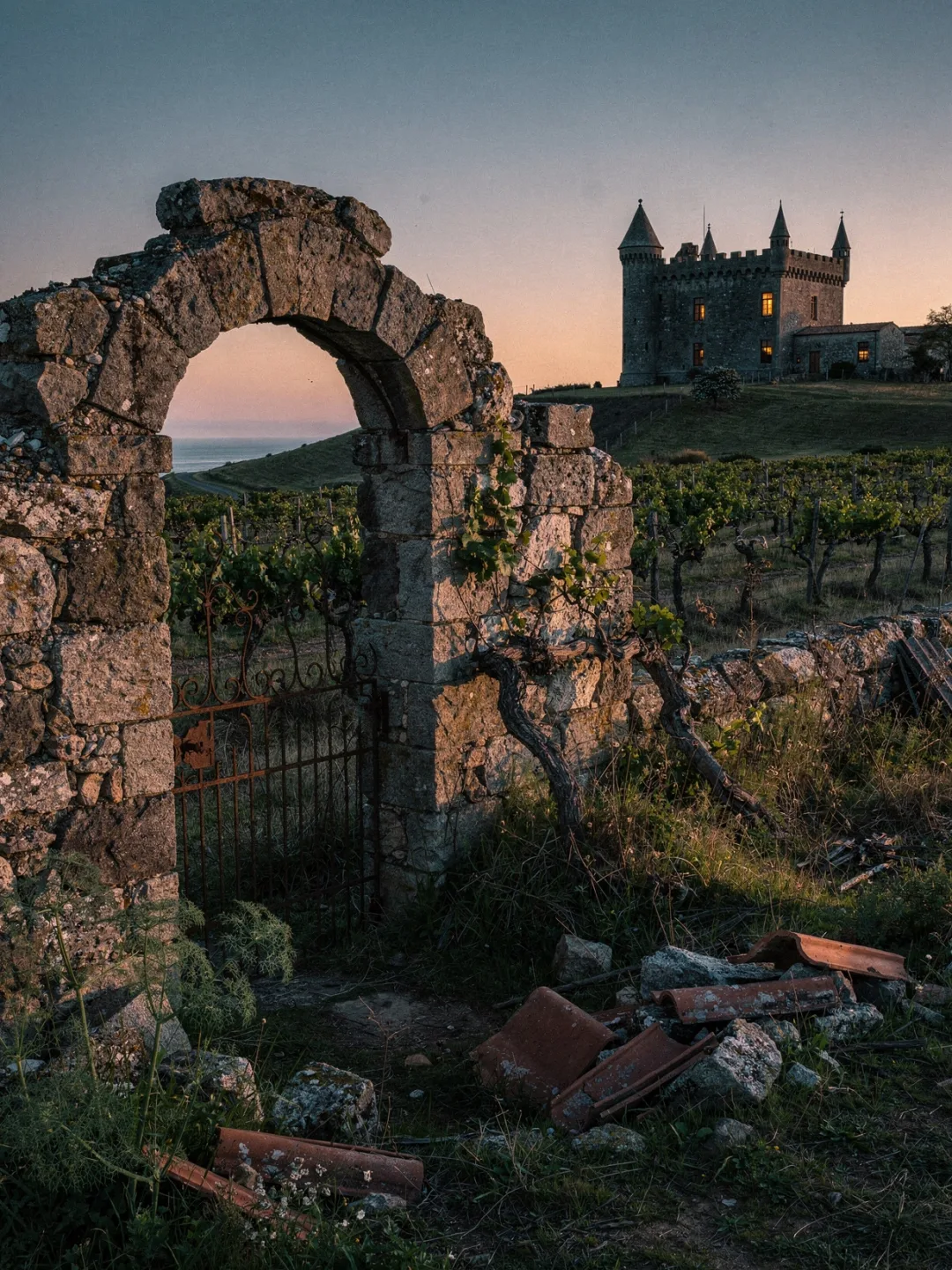
Piria and the Locusts
Region & History
Wine here is no invention of yesterday, even if it often sounds that way. In 1890 the businessman Francisco Piria bought 2,700 hectares of land on the coast near Piriápolis, between Mount Pan de Azúcar and the sea. He had vines shipped in from Italy and France, aiming for a wine in the style of Bordeaux, just with salty sea air instead of Gironde fog.
By 1892 the winery already stood finished. It sat directly across from the plot where, five years later, Piria completed his castle, a turreted building overlooking his own vineyards that still watches over Piriápolis today. The wine sold well from the start. As early as 1896 it was supplying the young town and was even being exported.
Then came disaster. Of all things, one year after the castle's inauguration, a locust plague swept over the slopes in 1898 and stripped the vines bare down to the trunk. Piria never really recovered from the blow. With him died Maldonado's first winemaking venture, barely begun.
For more than a hundred years afterward, little happened. Cattle grazed where vines once stood, while Uruguay's winemaking took root elsewhere, inland and to the north, where the Tannat grape—brought over from Madiran in France—had been growing since the 1870s. For an entire century, Maldonado remained blank on the wine map.
That changed only in 2000. Paula Pivel and Álvaro Lorenzo bought nineteen and a half hectares of granite hill country on the Sierra de la Ballena and planted the first new vines since Piria. Their Bodega Alto de la Ballena was the first winery of modern Maldonado.
Eight years later came the big bet. Businessman Alejandro Bulgheroni invested around 85 million dollars in Bodega Garzón and planted well over two hundred hectares near Garzón. When the winery opened in 2016, it quickly became one of South America's most decorated addresses. In 2019, Wine Enthusiast named Garzón New World Winery of the Year. On the World's Best Vineyards ranking, it placed second in both 2019 and 2020. A bit further inland, in Pueblo Edén, Viña Edén also opened in 2009. What had begun as a failed winery had turned into an entire wine region.