Tannat Meets Albariño
Grape Varieties
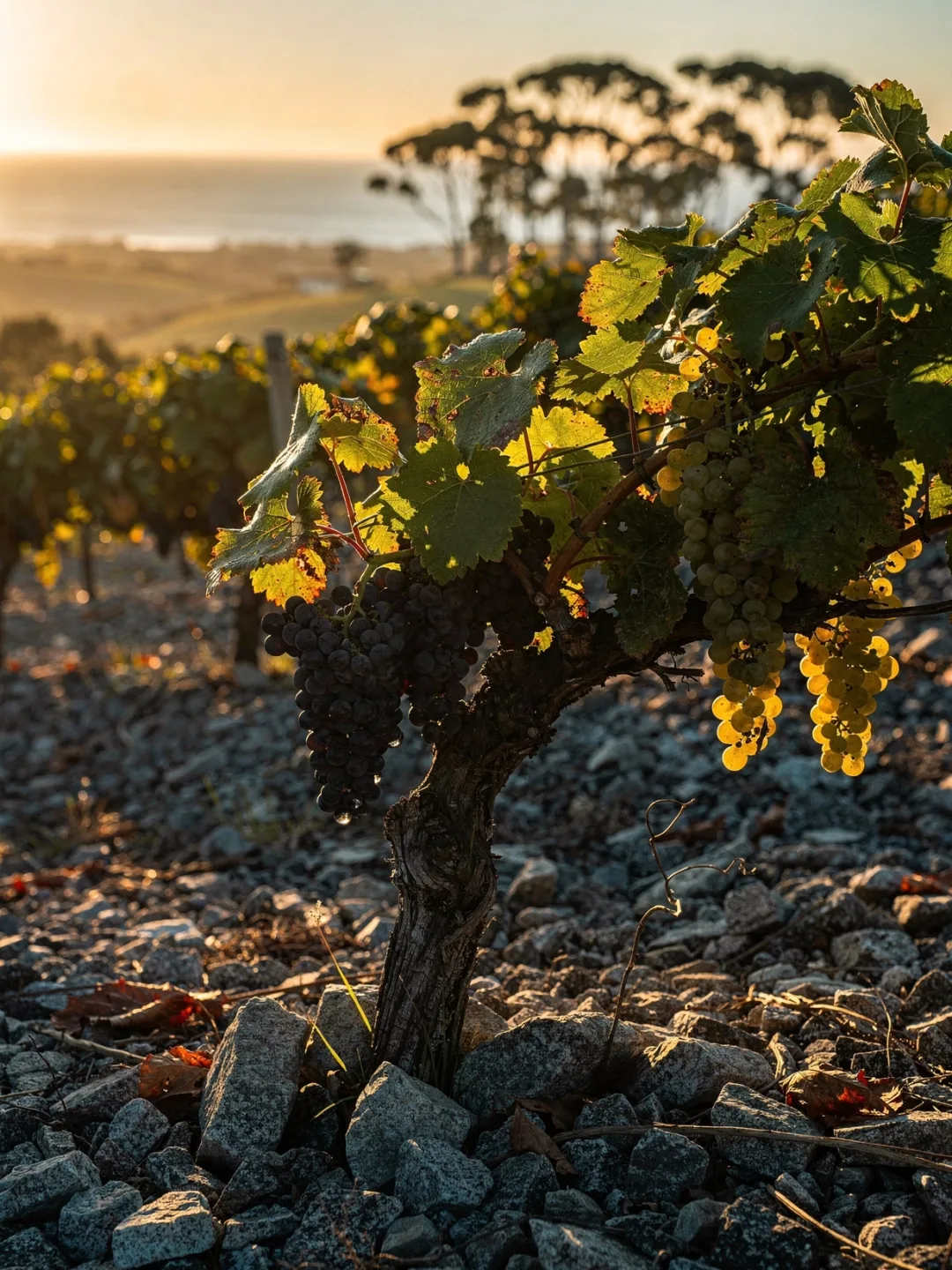
Two grapes carry Maldonado, and they could hardly be more different. One is Tannat, dark, thick-skinned, and brutally tannic, brought here from Madiran in southern France. The other is Albariño, pale, salty, and aromatic, originally a variety from Rías Baixas in Galicia, Spain. Both feel remarkably at home on this windy stretch of coast.
Tannat earns its reputation. While most red grape varieties carry two to three seeds per berry, a Tannat grape holds five, and with them an excess of tannins. A 2006 study by Roger Corder published in the journal Nature found the highest measured levels of procyanidins in Tannat from Madiran among all common red wine grapes. That very abundance is what makes Maldonado's Tannat so powerful.
Albariño only arrived with the turn of the millennium. In 2008, Bodega Garzón began planting the variety on the granite hills near Maldonado Bay, having noticed a resemblance to Galicia's Atlantic coastline. Today around 35 hectares grow there, the largest contiguous Albariño planting in all of the Americas. The sea wind gives the grapes their crisp acidity and a distinctly salty note in the glass.
Around these two stars grows a small but important supporting cast. Cabernet Franc, Petit Verdot, and Merlot lend structure to blends. Garzón's Balasto, for instance, blends forty-two percent Tannat with thirty-nine percent Cabernet Franc and nineteen percent Petit Verdot. At Alto de la Ballena on the Sierra de la Ballena, meanwhile, a white grape forms a surprising counterpart: fifteen percent Viognier is blended into the Tannat to lighten the fruit.
Something entirely new is Marselan, a French crossing of Cabernet Sauvignon and Grenache, which Viña Edén in Pueblo Edén is trying out alongside Chardonnay, Merlot, and Pinot Noir. None of this is long-established in Maldonado. That's exactly what makes the region so interesting. Anyone planting here is still figuring out which variety truly suits which slope and which wind.