Oxygen Versus Tannin
Winemaking
A raw material as tannic as Tannat presents every winemaker with the same problem. How do you turn it into a wine you can drink in five years instead of fifteen? In Uruguay, a technique has become standard that's barely used this widely anywhere else.
It's called micro-oxygenation. Through a porous ceramic disc at the bottom of the tank, a tiny, precisely dosed stream of oxygen flows continuously into the young wine. The tannin molecules link up into larger units. This lowers astringency and gives the Tannat its often-cited note of ripe blackberry, instead of tasting like a hard grip on the palate alone.
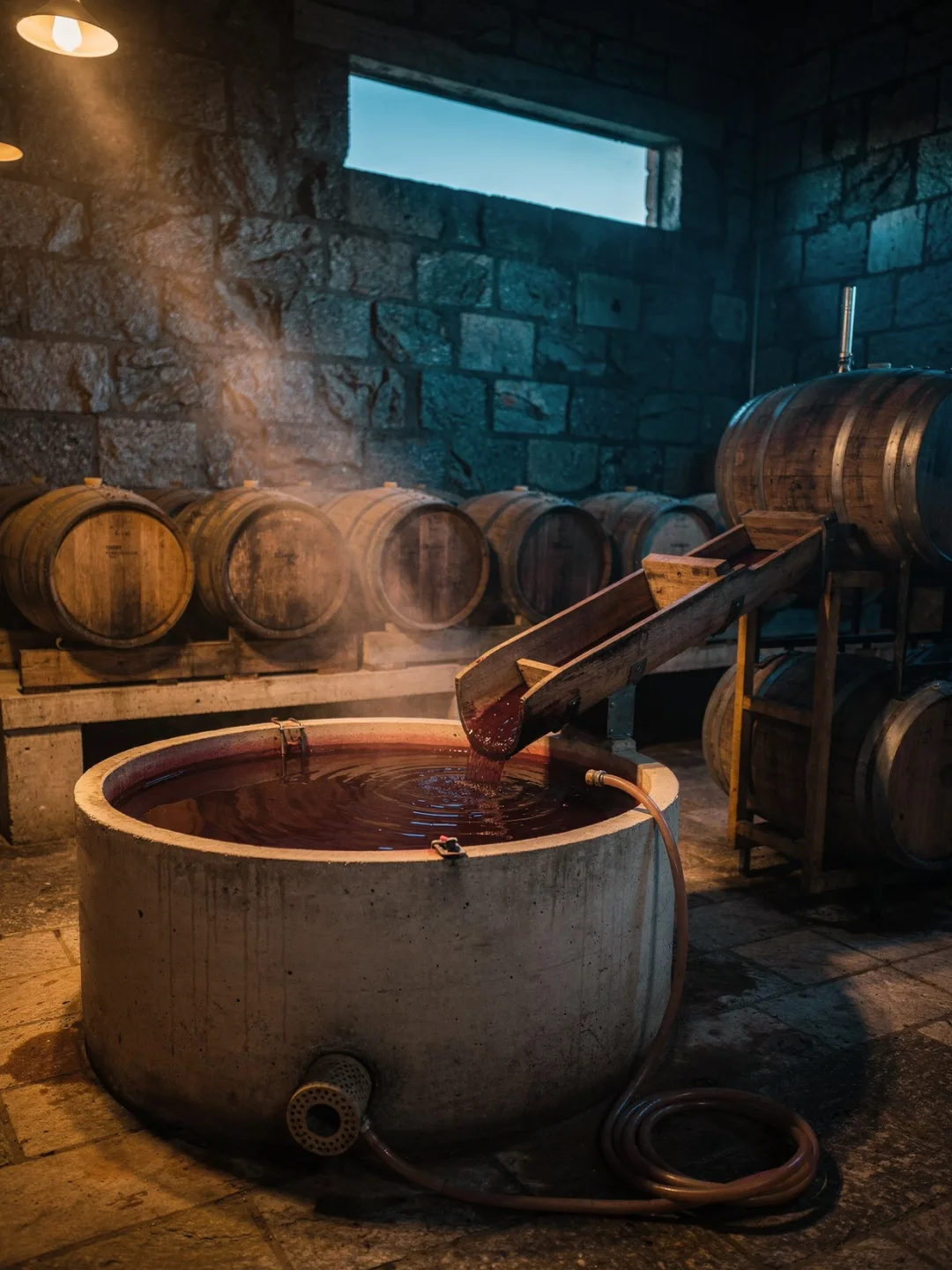
Viña Edén in Pueblo Edén takes a different approach. There, the wine moves from one level to the next by gravity alone, with no pumps at all, and it ages in concrete tanks rather than oak barrels. This treats the grape even more gently and deliberately forgoes toasty barrel notes, to let Tannat's pure fruit character show through.
Albariño demands the opposite treatment. It ferments cool in stainless steel, usually below fifteen degrees Celsius, to preserve the volatile aromas of citrus and white blossom. Oak contact would rarely make sense here, as it would mask exactly the freshness buyers are looking for in this wine.
Uruguay has no official appellation seal like those found in Europe, at least not yet. As early as 1903, the state placed winemaking under official oversight. Since 1987, the Instituto Nacional de Vitivinicultura, known as INAVI, has carried this role forward. Under a decree from 1993, only wines made from Vitis vinifera grapes may carry the designation Vino de Calidad Preferente, with 8.6 to 15 percent alcohol by volume and bottled in glass containers of up to 750 milliliters. Nearly every Tannat and Albariño from Maldonado already meets this standard.