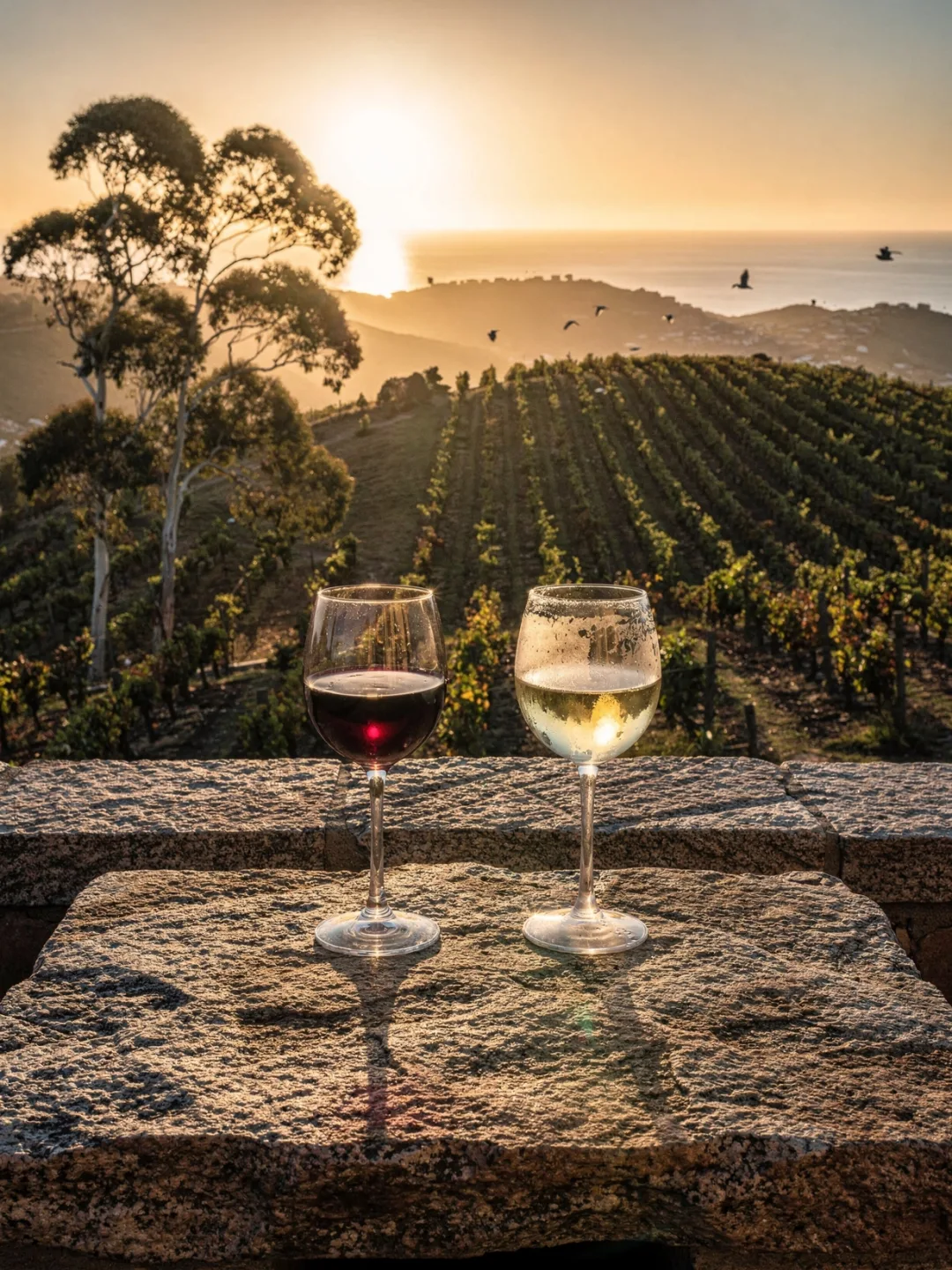
Balloon Glass, Tulip
Glassware
Set a glass of Tannat next to a glass of Albariño, and you'll need almost opposite shapes for each. One wine is so tannic it demands air and room. The other lives off freshness, which needs to be trapped, or it's gone within two minutes.
Tannat needs a large, bowl-shaped glass, similar to the balloon glass used for Bordeaux or Barolo. The wide surface at the bottom draws oxygen to the wine and softens the tannins before they reach the tongue. As the opening narrows above, the scent of dark fruit and herbs gathers instead of dissipating right away.
A serving temperature of sixteen to eighteen degrees Celsius is right. What surprises many people: a young Tannat can often handle a half hour in a decanter before the first sip, since its tannin load is as high as almost any grape variety in the world. For most young red wines that would be overkill, but for Tannat from Maldonado it makes a noticeable difference.
Albariño wants the opposite. A narrow, tall white wine glass with a tight opening concentrates the aromas of peach, citrus, and jasmine, while the salty note stays intact instead of getting lost in a wide bowl. Eight to ten degrees Celsius is right; any colder and the wine goes mute.
Finally, the pour, the same for both wines: fill the glass no higher than its widest point, never more. Above that, room is left for the aromas to gather. Without that space, even the finest Balasto smells like nothing special.