Tri-Tip & Red Oak
Wine & Food
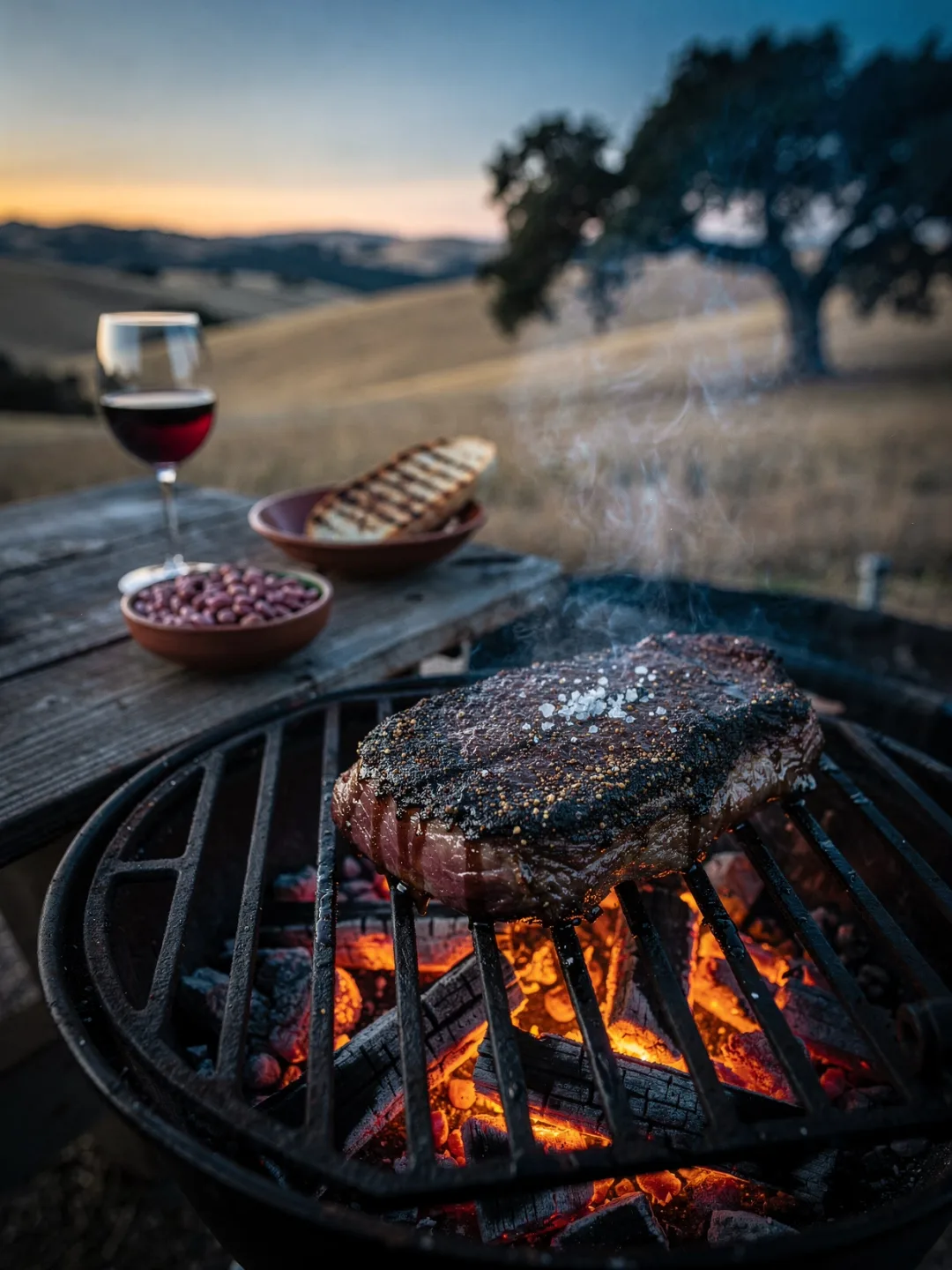
Long before anyone here spoke of Rhône blends, meat was already sizzling over open fire in the Santa Maria Valley. The tradition dates back to the era of California's nineteenth-century rancheros, when cattlemen roasted whole sides of beef over fire pits to feed their harvest crews at great pasture feasts.
The dish only took its modern form in the 1950s. Butcher Bob Schutz began offering a cut that had drawn little attention until then — the tri-tip from the bottom sirloin — as a roast in its own right, rather than grinding it into hamburger. To this day, it's grilled over glowing logs of coastal oak, known locally simply as red oak. It's a native hardwood that lends the meat an unmistakably smoky character.
Seasoning stays minimal: salt, pepper, garlic, and nothing more. Traditionally served alongside are pinquito beans, small pink beans grown almost exclusively in this region. Salsa and toasted bread round out the meal. In 2012, the California State Senate officially declared this style the state's grilling tradition — a rare honor for a recipe that actually originated in a single valley town.
Few wines pair better with roasted meat and smoke than a Zinfandel from old vines near Paso Robles. A GSM blend with a generous share of Syrah works beautifully too. Its tannin cuts right through the fat of the tri-tip, while the Syrah's own peppery note meets the black pepper on the meat rather than fighting against it.
Head toward the coast instead, and you'll find yourself at Monterey Bay with fresh fish and crab rather than beef. There, the pairing logic flips: a cool-climate Chardonnay from the area, aged with little new oak, complements seafood far more gracefully than any red wine could — same stretch of coastline, two entirely different tables.