Cherry & Garrigue
Tasting
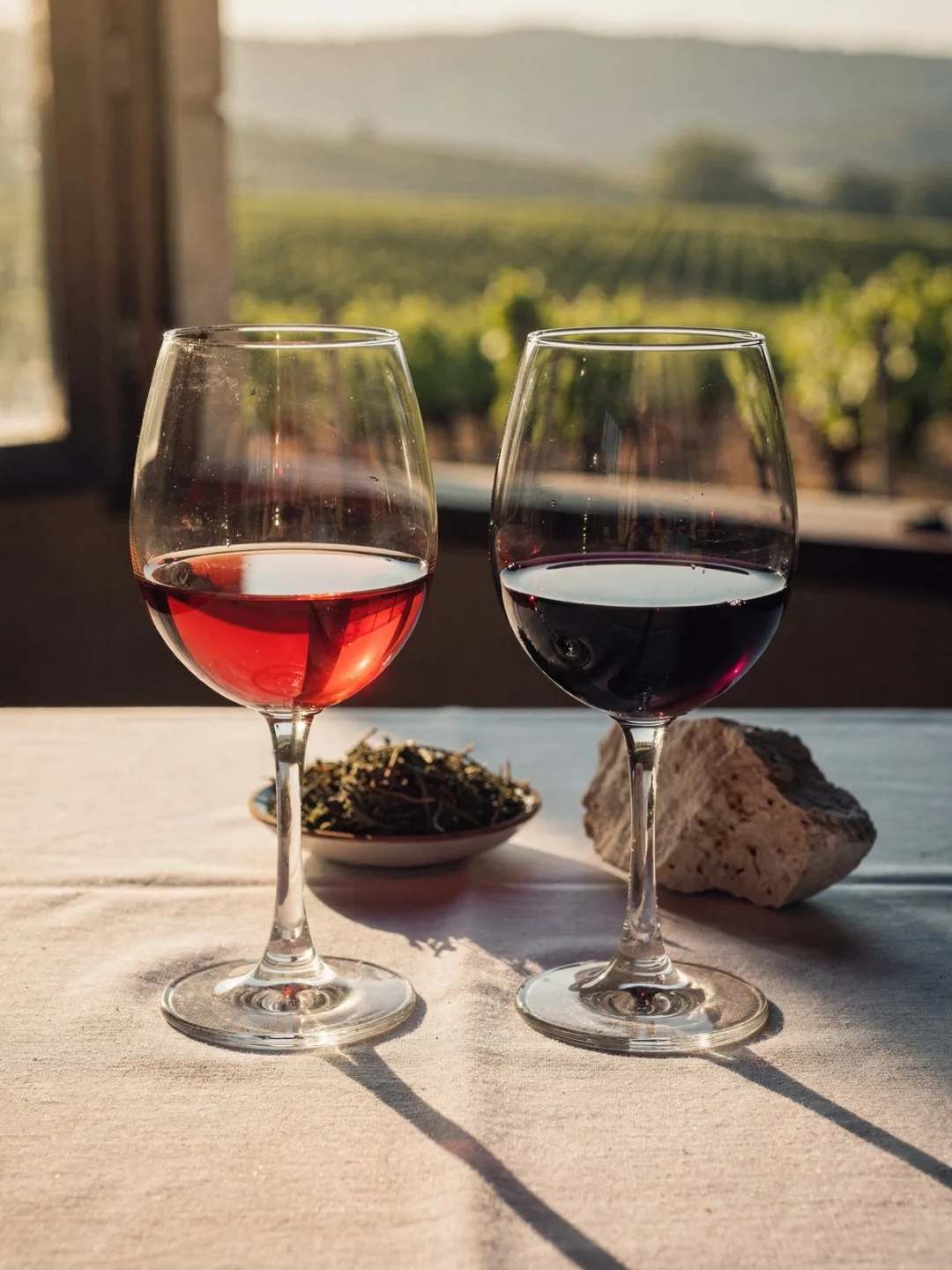
Hold a glass of Pinot Noir from the Santa Lucia Highlands against a white sheet of paper. The color is pale, almost translucent at the rim — bright cherry-red rather than deep purple. That's down to the grape's thin skin, which yields little pigment no matter how ripe it gets.
On the nose, red cherry and cranberry come first. Behind them often lies a briny, almost maritime note that many tasters trace back to the proximity of Monterey Bay, while the barrel sometimes adds a whisper of clove or sandalwood, though the fruit stays out front.
On the palate, the acidity pulls sharply at the cheeks, a legacy of the cool nights over the Salinas Valley. The tannin, by contrast, stays comparatively gentle. The finish — how long the flavor lingers after swallowing — is remarkably long in good examples, given how pale the wine is.
A GSM from Paso Robles sits at the opposite extreme. The color gives it away immediately: dark, nearly opaque purple right to the rim of the glass. On the nose, ripe blackberry dominates, joined by black pepper from the Syrah component and a dry, herbal tone. Connoisseurs compare it to French garrigue — that fragrant scrubland around the southern Rhône, which the limestone soil of Paso Robles surprisingly resembles.
On the palate, warmth comes first, since these wines often sit at fourteen to fifteen percent alcohol, followed by ripe, gripping tannin and plenty of dark fruit. Where Pinot Noir wins on freshness, the Paso blend wins on power. Two tasting notes that could hardly differ more, even though both wines come from the same region.