From Krug to Paris
Region & History
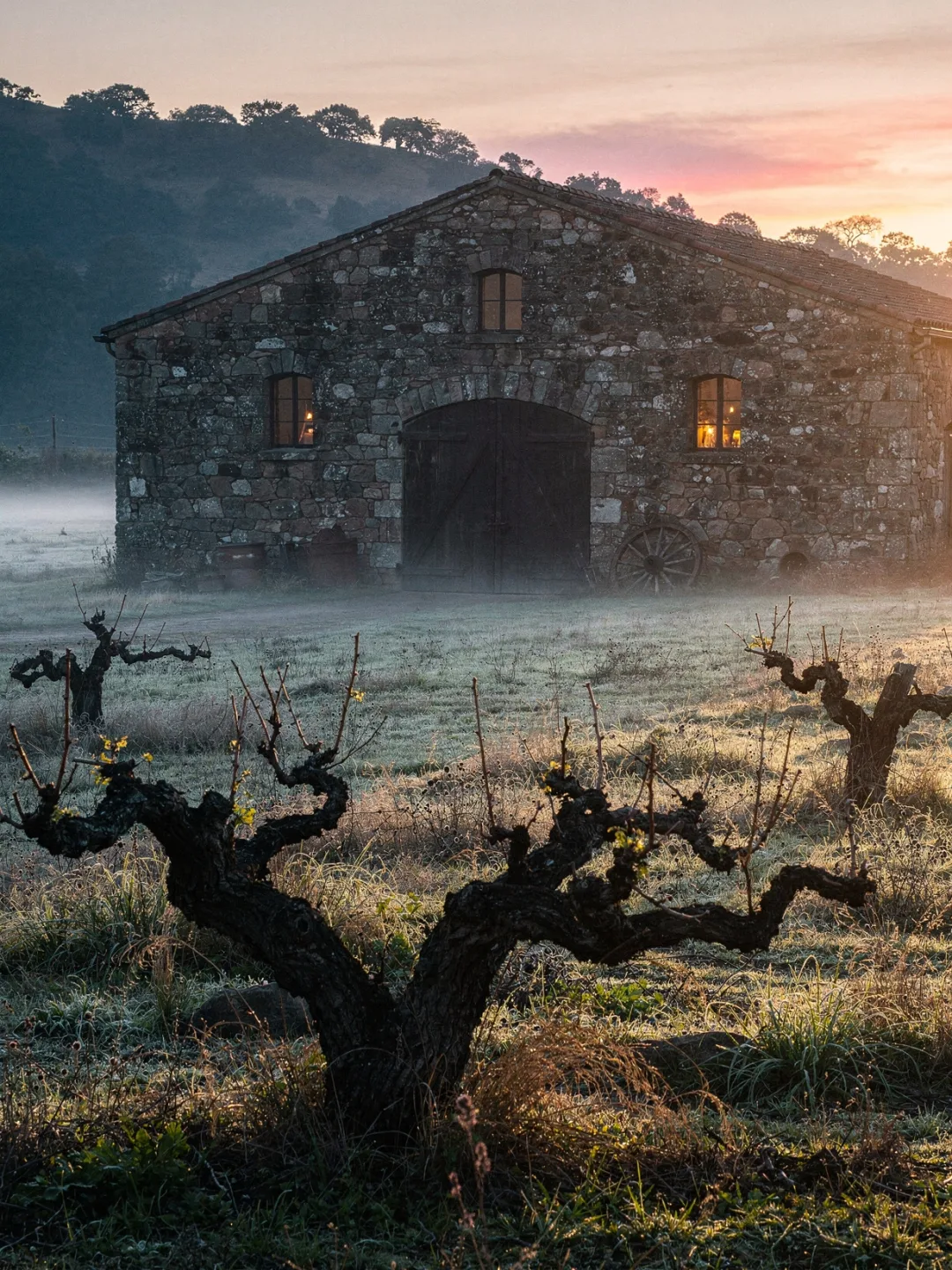
George Yount was granted the land in the 1830s by the Mexican government, back when California wasn't yet part of the United States. Around 1839 he planted the valley's first vines here. The place where he settled is known today as Yountville, named after him. No one could yet call it wine country at the time — it was frontier land with a handful of vines by the house.
That changed with an immigrant from Prussia named Charles Krug. In 1861 he founded Napa Valley's first commercial winery, proving that wine could be sold here on a large scale. Others followed quickly: Beringer, Schramsberg, and Inglenook opened soon after, and all still appear on labels today. Within a single generation, a handful of farms grew into a wine region with a reputation of its own.
Then came phylloxera. It attacks the roots, slowly draining them, and the vine dies without showing any warning signs beforehand. In the 1890s it chewed through the valley and destroyed more than eighty percent of all vines. Recovery dragged on for decades, because every plot had to be replanted, this time on rootstock from phylloxera-resistant American wild vines.
No sooner had that crisis passed than national Prohibition arrived in 1920. Ninety percent of the valley's wineries closed for thirteen years, since selling alcohol had suddenly become a crime. Those that survived did so through workarounds: sacramental wine for churches remained legal, some estates planted walnuts or figs instead of vines, and a few kept pressing grapes in secret. When the ban was lifted in 1933, little remained of the old Napa Valley beyond the land itself.
The turning point came in 1976, far from the valley, in Paris. At a blind tasting, a 1973 Cabernet Sauvignon from Stag's Leap Wine Cellars beat the finest Bordeaux, and a 1973 Chardonnay from Chateau Montelena won against white Burgundies. The press called it the Judgment of Paris. Overnight, it shattered the assumption that great wine could only come from Europe. Five years later, Napa Valley became the second AVA in the United States. That was in 1981, after Augusta in Missouri, but ahead of any other zone in California and every other region in the country, and the rules for that designation, known as an AVA since 1978, still require proof of genuinely distinct geographic characteristics today. Seventeen smaller AVAs are now nested within the valley, stretching from Calistoga in the north to Coombsville in the south.