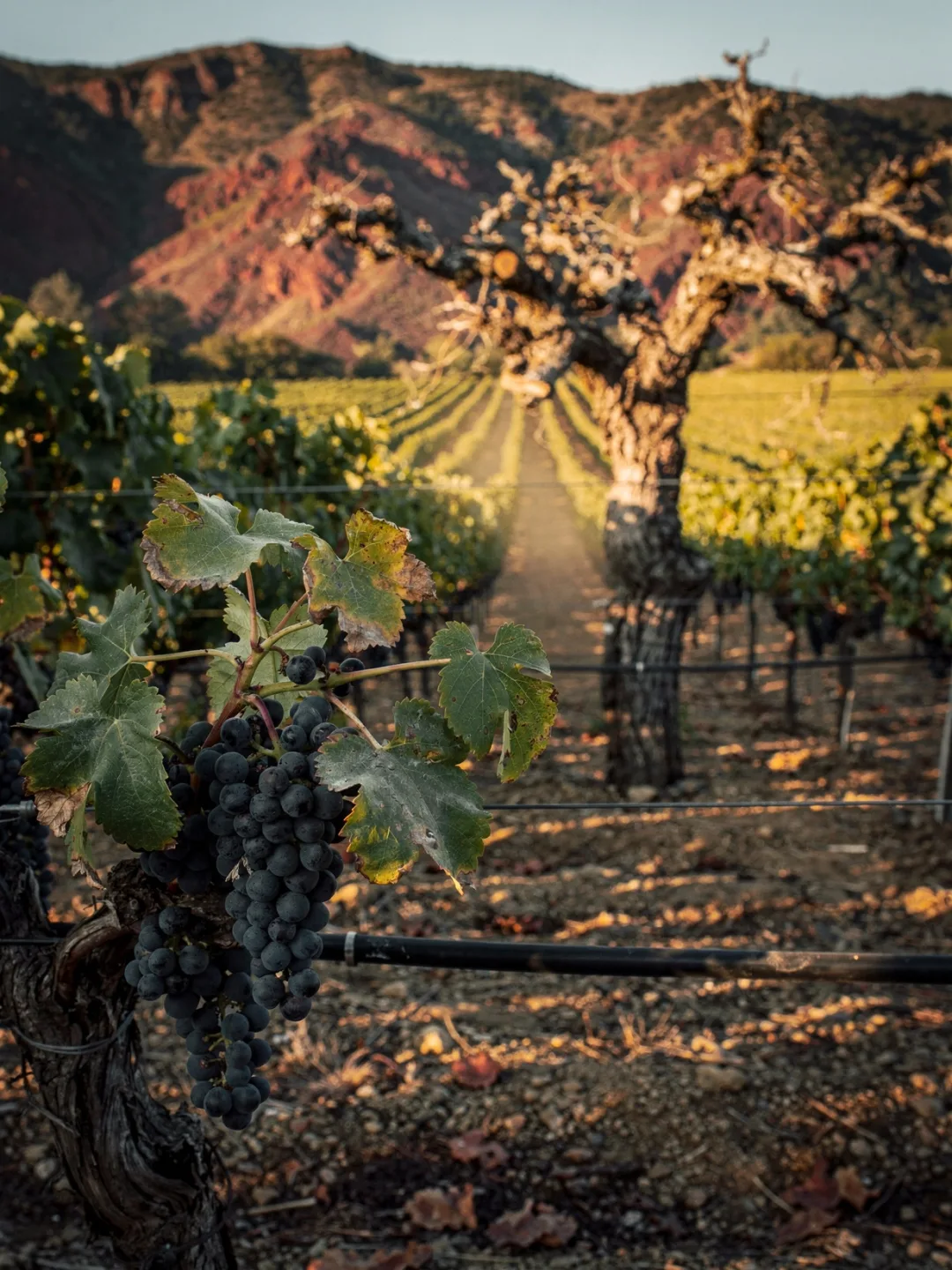
Cabernet Sauvignon Dominates
Grape Varieties
One variety rules the valley. Cabernet Sauvignon covers fifty-four percent of all vineyard acreage in Napa Valley, equivalent to more than ten thousand hectares, more than in any other wine region in the United States, putting it far ahead of any other California grape variety. In viticulture, that's a rare monoculture. More than every second vine in the valley now carries the same variety.
In the glass it appears dark and dense. The aroma recalls blackcurrant, what connoisseurs call cassis, along with cedar, toasted vanilla from the barrel, and sometimes a hint of mint from the surrounding hills. The tannins feel firm and grippy. Alcohol content often exceeds fourteen percent, since the grapes ripen effortlessly under the California sun. It was precisely this richness that made the wine famous at the 1976 Judgment of Paris.
The second most important variety is white. Chardonnay covers twelve percent of the acreage, mostly in the cooler south around Carneros, near San Pablo Bay, where the grapes retain their acidity. Merlot and Sauvignon Blanc follow. Together they make up fourteen percent, mostly as blending partners for the great Cabernets or as standalone summer wines for hot afternoons.
Older than much else in the valley is Zinfandel. Italian and Croatian immigrants brought it over in the nineteenth century, and individual vines from that era still bear fruit today, thick-trunked like small trees after more than a hundred years in the same soil. Only three percent of the acreage still grows it. Its wine tastes of stewed blackberries and black pepper, a reminder that Napa wasn't always a Cabernet valley.
Which clones grow here is no accident. After phylloxera, every vineyard was rebuilt on American rootstock, and in the 1980s the import of French Cabernet clones marked a second fresh start for the whole valley. The grape variety itself stayed the same. The wine it produces did not.