Cassis, Vanilla, Tannin
Tasting
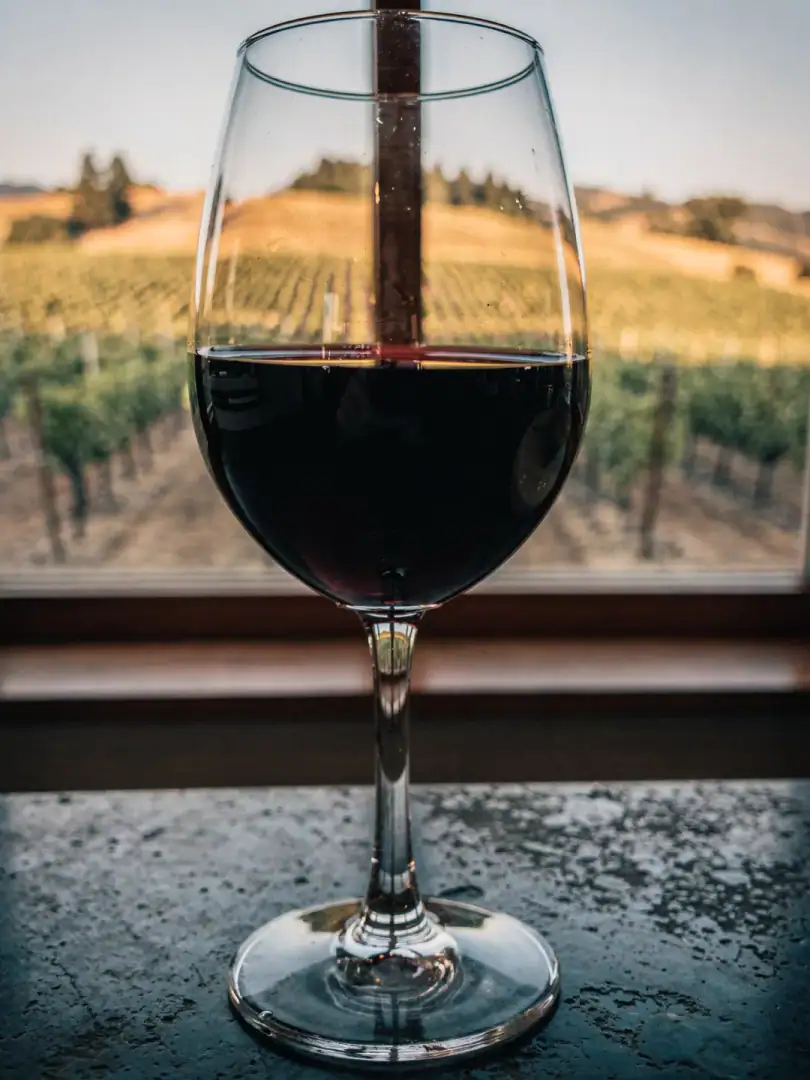
Hold the glass up against something bright. A good Cabernet from Napa Valley lets through almost no light, its color ranging from deep ruby to nearly black, and that alone tells you the grapes had thick skins, ripened under intense California sun. Young vintages show a violet shimmer at the rim. Over the years, that shimmer slowly shifts toward brick red.
On the nose, blackcurrant dominates above all. Connoisseurs call that cassis, joined by cedarwood and a sweet vanilla note from the barrique, often rounded out by a hint of eucalyptus from the wild trees on the hills above the valley. This aroma is especially typical of vineyards at the foot of the Vaca Mountains.
On the palate, fruit arrives first. Then comes a firm grip of tannin, which can still feel angular in young wines, while the alcohol content, often above fourteen percent, registers as a warm sensation in the throat. This exact combination stunned the judges at the 1976 Judgment of Paris. They had expected European restraint and were served American richness instead.
It's best served cooler than room temperature. Around sixty-one to sixty-four degrees Fahrenheit, the alcohol doesn't overwhelm the fruit. Ten minutes in the glass helps further still. Then tannin and fruit slowly knit together, and the finish often lingers for a full minute, a reliable sign of a wine built to age.