Barrels and Caves
Winemaking
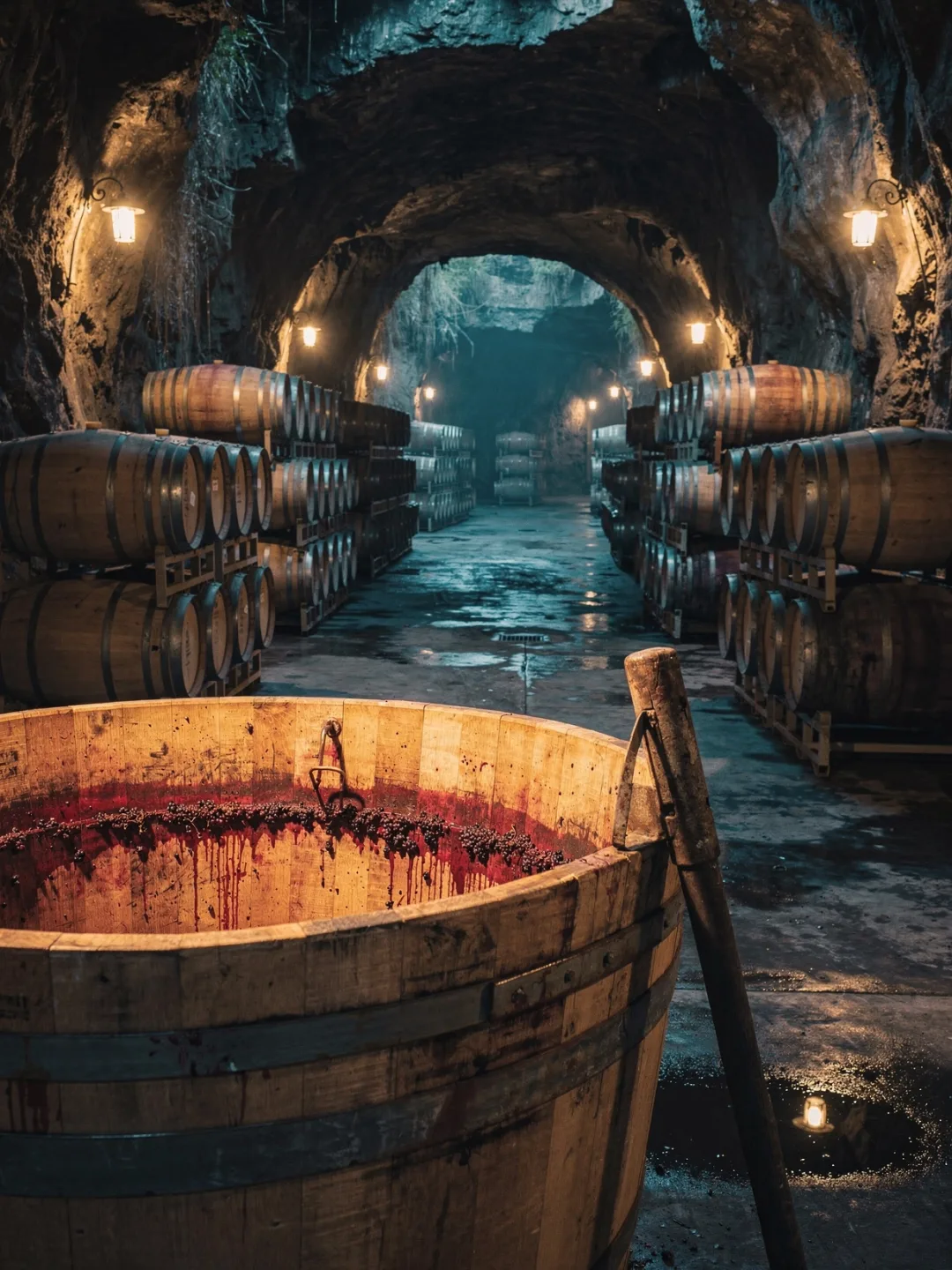
In the cellar, the house style begins early. New French oak is expensive, yet most Napa Valley wineries use it anyway, because it delivers the vanilla and toasty notes that suit the valley's bold style. A typical Cabernet ages fifteen to thirty months in barrique. New oak often makes up around a third of the barrels, and considerably more for top-tier wines.
Before fermentation, some winemakers chill the must. It sits cold for several days, a process known as cold soak, before the yeasts even become active. This extracts color and gentle aromas, producing wines with deep red hues rather than mere cherry-red.
Many wineries dig their barrel cellars straight into the hillsides. They tunnel directly into the Mayacamas or the Vaca Mountains, because a cave holds a steady temperature around fifty-five degrees Fahrenheit year-round, with no air conditioning needed. That very stillness is exactly what a wine spending years in oak requires. Some facilities even use the hill's natural slope so the must simply flows downward and never needs pumping.
Since 2004, much of this can be certified. Napa Green requires wineries to implement more than a hundred individual measures, from water conservation to erosion control in the vineyard, before a winery or vineyard can carry the seal. More than eighty percent of the valley's vineyard acreage now holds it. Nearly every member of Napa Valley Vintners participates in one of the two programs.
What emerges at the end is a wine that has taken its time. More than two years typically pass between harvest and market readiness for most Cabernets from the valley, before the first bottle reaches a store shelf.