Cheese & Crab
Wine & Food
Sonoma eats what Sonoma grows. And that starts long before harvest. In late summer, orchard growers near Sebastopol harvest the Gravenstein, a tart-sweet apple that Slow Food USA named a heritage food worth protecting in 2005. Orchards once covered roughly 2,800 hectares; today, fewer than 370 remain. Paradoxically, a warm Gravenstein apple tart doesn't call for a sweet wine. Better a cool, barely oaked Chardonnay — its acidity cuts right through the pastry's butter.
On a small farm near Sebastopol, another Sonoma story began in 1979, when Laura Chenel brought French goat-cheese-making techniques to the US. That made her a pioneer of American goat cheese. Her fresh, mild chèvre calls for a crisp Sauvignon Blanc, whose citrus and gooseberry notes brighten the mild cheese rather than overwhelming it. This pairing, originally invented in the Loire, works just as well in Sonoma.
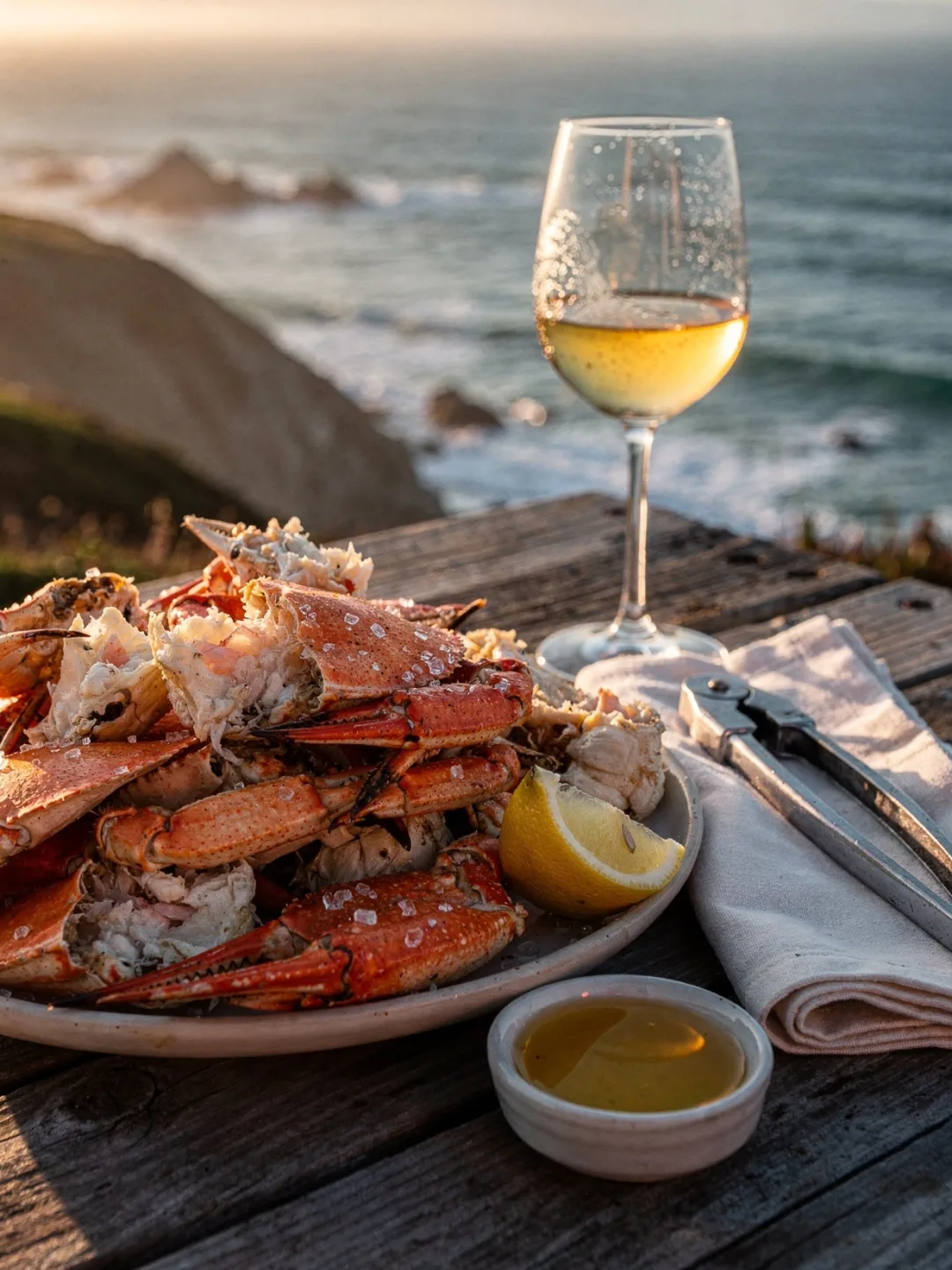
On the coast near Bodega Bay, Dungeness crab comes ashore in winter, its sweet, firm meat asking for little more than butter and lemon. The oak-aged Chardonnay from Russian River Valley described earlier pairs especially well here. Its buttery, toasty barrel notes mirror the dish almost exactly, while its acidity keeps the rich crab meat feeling light. Reach for a heavy Cabernet instead, and you'll completely overwhelm the delicate meat.
A Sonoma menu almost always ends with Zinfandel, ideally alongside braised or grilled meat from the pastures between the vines. The wine's spicy, slightly peppery fruit stands up effortlessly to smoke and char. Its robust alcohol carries even richer sauces with ease—no wine from Sonoma calls for a full plate as naturally as this one. In the end, the whole county comes together on a single table.