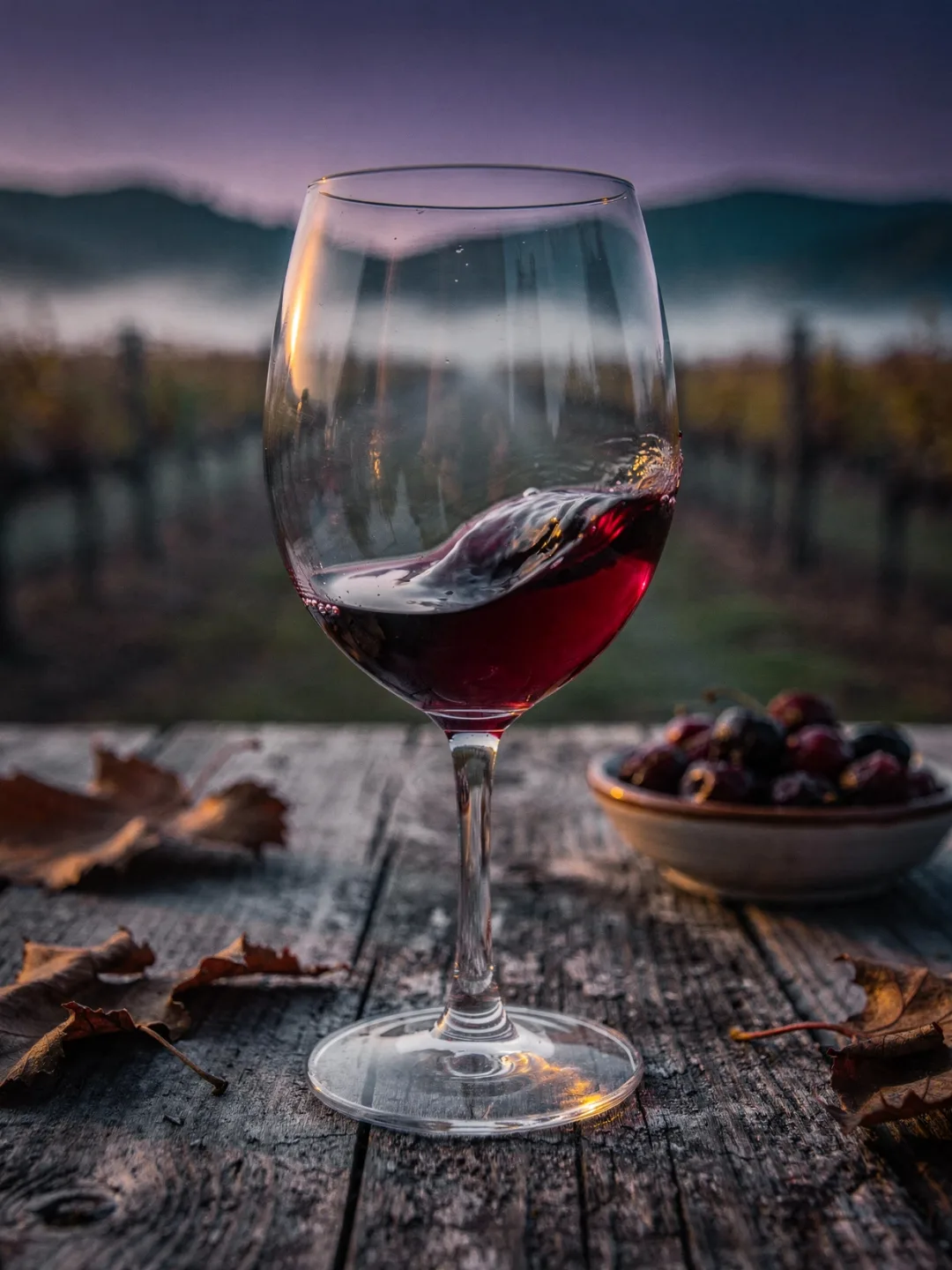
Fog Meets Fruit
Tasting
The palest wine in a Sonoma lineup almost always comes first: Pinot Noir from Russian River Valley. In color, it looks almost translucent, more like a deep rosé than a classic red — but don't let that fool you. On the nose, ripe red cherry sits alongside an earthy note reminiscent of damp leaves, sometimes joined by a floral hint. On the palate, the acidity is noticeably higher than in most red wines, and it's exactly this freshness that makes it such a natural match for food.
Chardonnay from the same area can show two entirely different faces. Some winemakers keep it lean and largely unoaked, with aromas of green apple and citrus peel. Others age it in barrique, which gives it notes of butter, toasted bread, and ripe pear. Both styles come from the same cool fog — it's the cellar that decides the direction. Taste both side by side, and you'll instantly understand how much stylistic freedom lives within a single grape.
Zinfandel from Dry Creek Valley tastes entirely different: darker in color, warmer with alcohol, with aromas of stewed blackberry, licorice, and black pepper. The old debate over whether Zinfandel is even made dry or tends toward sweetness resolves itself with the first sip. A well-made Zinfandel is bone dry, even if the fruit tastes so concentrated you might suspect residual sugar. Even experienced drinkers fall for this mix-up.
Last comes Cabernet Sauvignon from Alexander Valley, the most powerful and longest-lived wine in the lineup. Black currant, a touch of mint, and a hint of cedar from the barrel define the nose, while on the palate the tannins provide noticeably more structure than the other three wines. Swirl the glass before you smell — this lets more alcohol evaporate into the air, allowing the fruit to come through more clearly. By the end of the lineup, you realize just how differently a single county can taste.