Form Follows Variety
Glassware
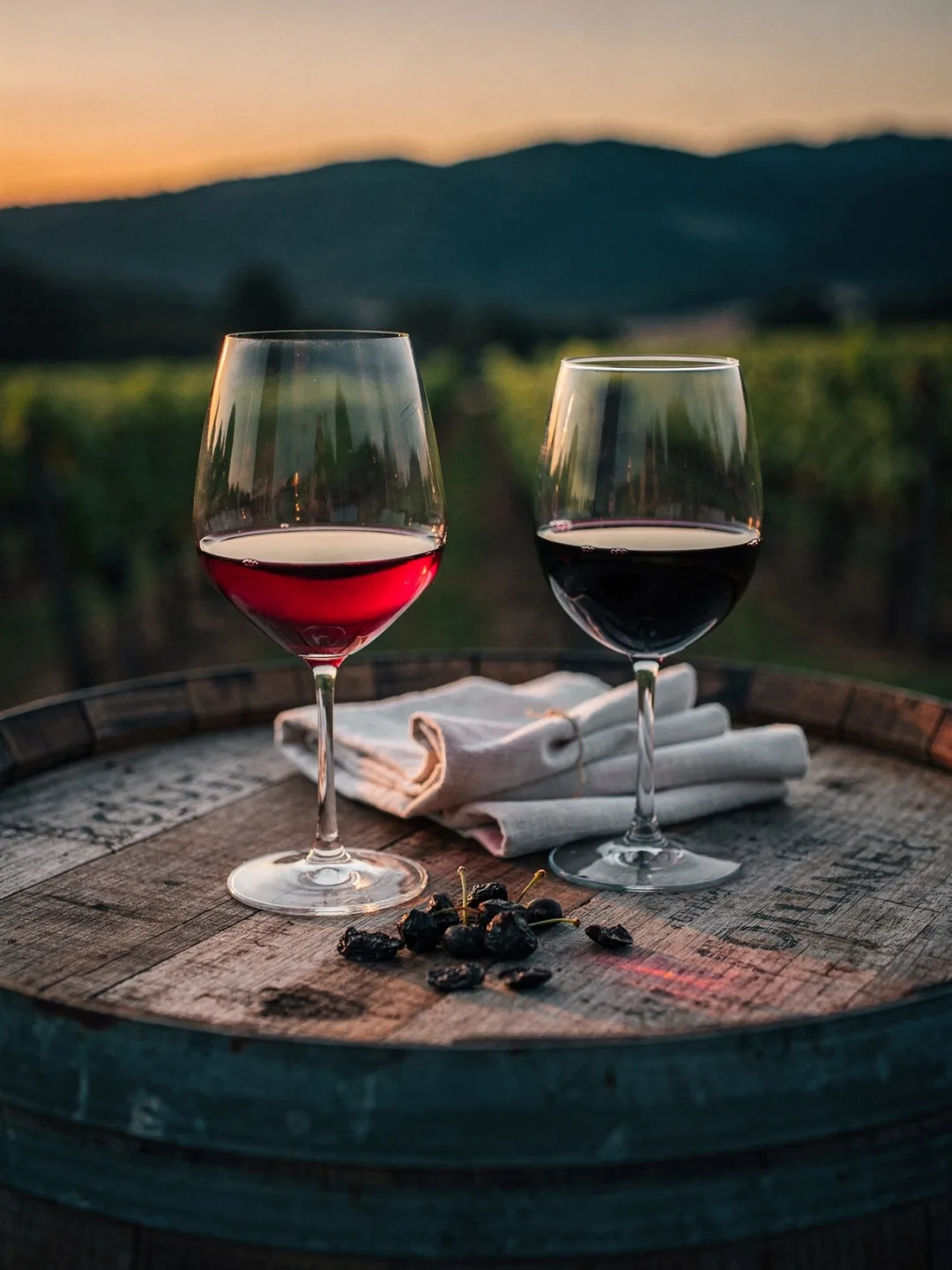
In a single afternoon, a Sonoma tasting often calls for four different glasses, and there's a reason for that. No other county in California covers such a range of styles. A glass suited to Pinot Noir won't do for Zinfandel, and what Cabernet Sauvignon needs would only hurt a cool-climate Chardonnay. The shape must follow the variety, not the other way around.
Cool-climate Pinot Noir from Russian River Valley calls for a large, bowl-shaped glass with a narrow rim. The wide surface lets the delicate aromas of red cherry and forest floor breathe before they concentrate into a focused stream at the narrow rim. Too tight a glass nearly suffocates this wine; too large a one visually dilutes it. The right measure sits exactly in between.
Zinfandel from Dry Creek Valley demands something else. Often clocking in at fourteen percent alcohol or more, with abundant blackberry and black pepper fruit, it needs an even larger, rounder glass. A generous volume lets the alcohol dissipate instead of burning the nose, and gives the fruit room to unfold. Serve it too cold, and that very fruit shuts down. Just below room temperature is ideal.
Cabernet Sauvignon from Alexander Valley arrives with firm tannins and dense black fruit, which calls for the tall, narrow Bordeaux glass with its steep opening. It directs the wine straight to the tip of the tongue, where sweetness registers first and the tannins arrive later, softer. An everyday glass often makes the same wine taste more bitter than it really is. Shape determines the first impression.