Sustainable & Old
Winemaking
In 2014, the Sonoma County winegrowers' association set itself a goal: to become the most sustainable wine-growing county in the world. No other county had ever managed that before. For five years, wineries had their vineyards individually certified, parcel by parcel, on water use, soil protection, and chemical inputs. By 2019, it was done. Ninety-nine percent of the county's vineyard acreage, roughly 24,000 hectares, carried a recognized sustainability certification. No wine region in the world has come close to that number since.
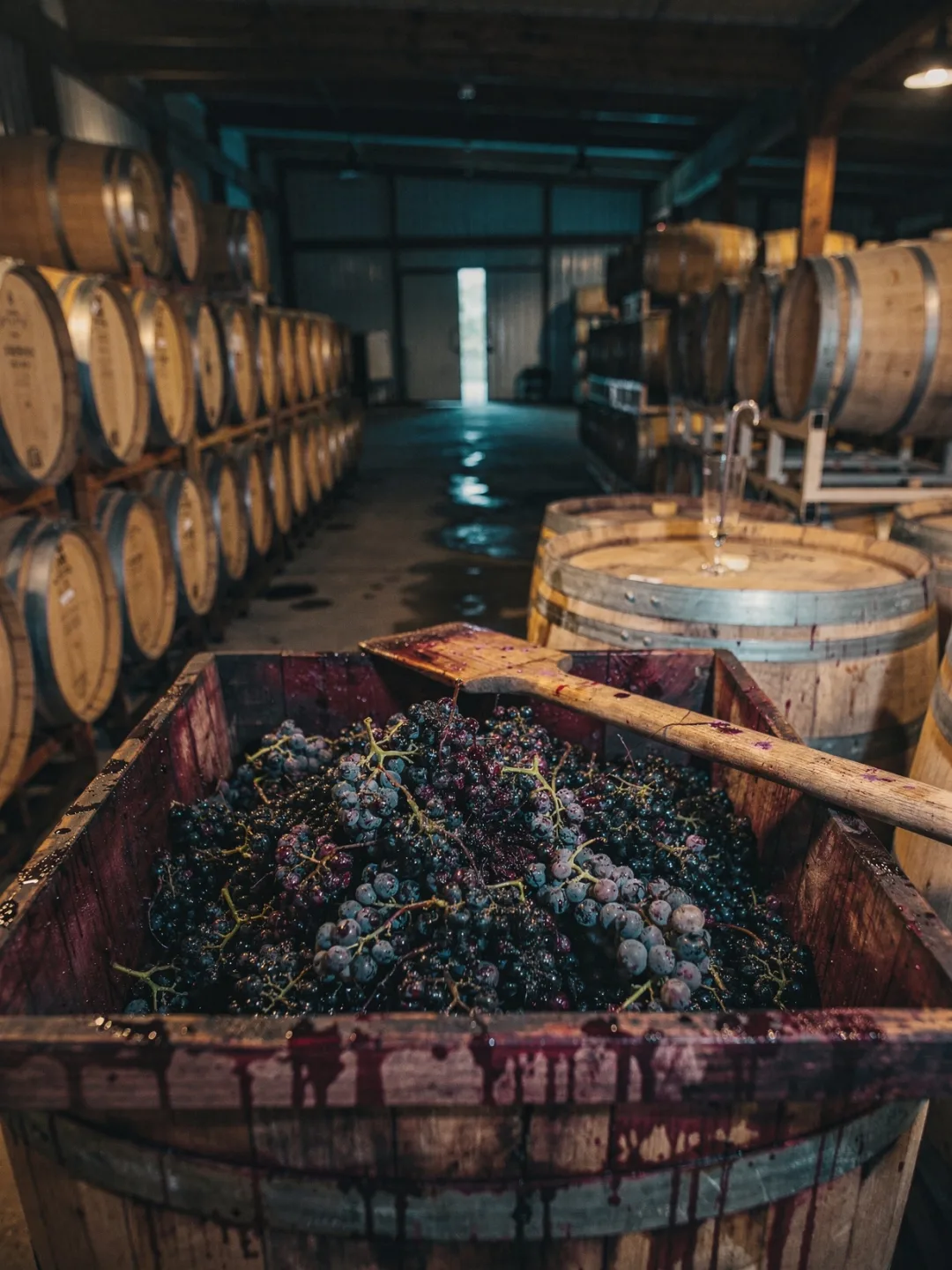
In the cellar, Dry Creek Valley's history still shows today. Many of the oldest Zinfandel parcels are so-called mixed plantings. Individual rows of Petite Sirah or Carignan stand among the Zinfandel vines, planted in an era when nobody harvested varieties separately. To this day, all the varieties often go into the same press together during vinification. This gives the wine a depth that a single variety alone rarely provides.
With Pinot Noir from Russian River Valley, it's about restraint rather than power. Many wineries ferment part of the grapes as whole clusters, stems and all, which gives the wine more structure and a hint of green spice. Fermented cool and usually aged in used rather than new oak, the wine is meant to taste of the region's fruit, not of the barrel. Restraint here is a deliberate cellar decision, not a fallback.
With Cabernet Sauvignon from Alexander Valley, it works the other way around. The thick skin and firm tannins handle new French oak well. Many estates age the wine considerably longer in barrel than a light-bodied white wine. Some blend in a bit of American oak, which lends the wine notes of coconut and vanilla — a legacy from a time when domestic wood was easier to source than imported oak. Time in barrel here makes up for what the soil alone doesn't provide in power.