Salmon Meets Cabernet
Wine & Food
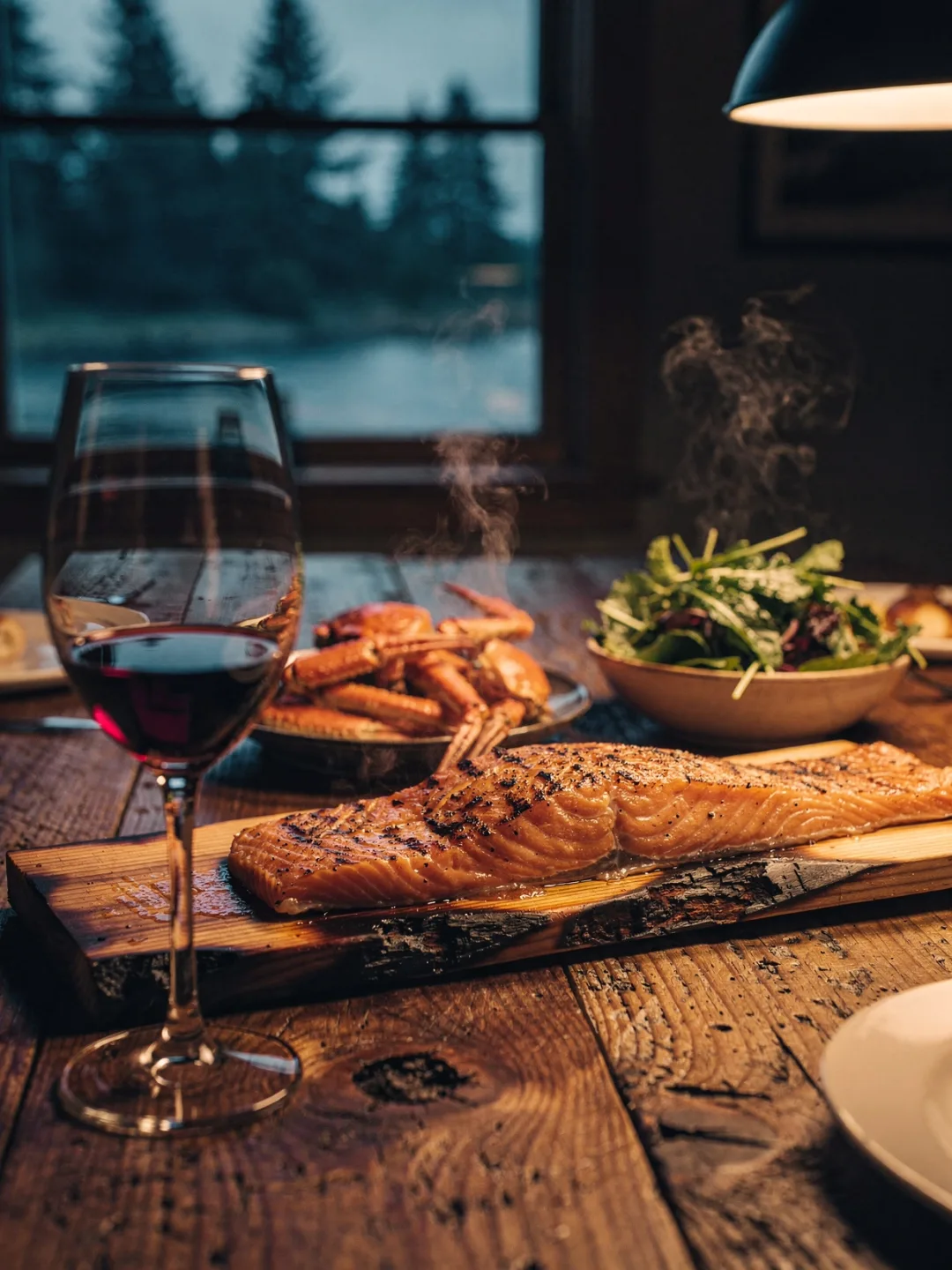
The scent of cedarwood smoke hangs in the air when a feast begins in Washington. Salmon cooks slowly on a plank over open embers, and the wood lends the fish a slightly resinous aroma as its own fat caramelizes in the heat. Surprisingly, the big Cabernet Sauvignon the state is otherwise famous for rarely suits this dish.
Tannin and oily fish don't mix well; next to the fat, the tannin suddenly tastes metallic and bitter. A better match is a chilled Pinot Noir or a fruit-forward Merlot from the Columbia Valley. Its soft tannins don't get in the way and blend nicely with the smoky flavor of the salmon. Those who really want white wine should reach for a Chardonnay with restrained oak, which brings a texture just as creamy as the fish.
Things look quite different with Dungeness crab, named after a small port town on the Olympic Peninsula. Its meat tastes sweet and delicate, almost without any sharp edges, and too powerful a wine would simply smother that subtlety. A dry Riesling from the Yakima Valley, with its bright acidity and a hint of lime, acts like a spotlight instead. It really brings out the crab's natural sweetness, all without tasting sweet itself.
The most unusual pairing remains geoduck, a large clam with a long siphon protruding from its shell. It's eaten raw as crudo or in a chowder, which calls for plenty of acidity. Its briny, mineral flavor wants very little fruit, and that's exactly what a bone-dry Sauvignon Blanc from a cool site in the Columbia Valley delivers. Tasting these three courses back to back, each with the right glass, reveals something fundamental: Washington's cuisine and its wine come from the very same cold water and the very same dry sun.