The short answer
Preparation matters more than the word salmon. Smoke, salt, a fried crust, or sauce can each deliver the strongest impression.
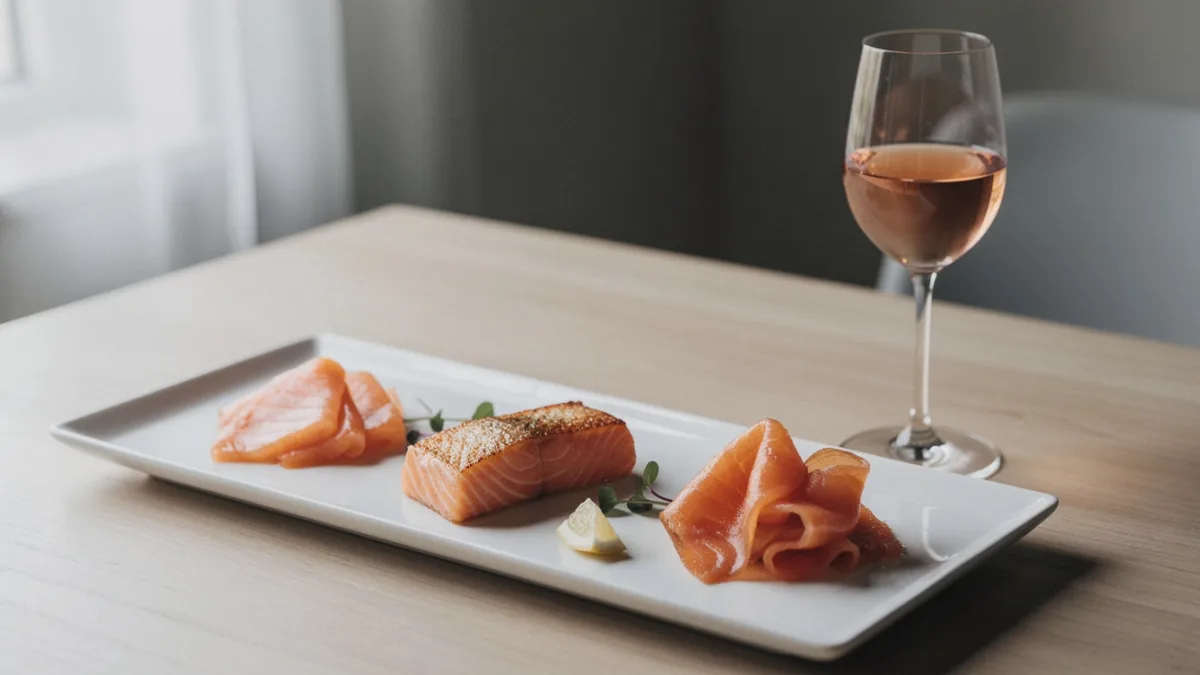
Three different plates
With mildly fried salmon, I'd try a white wine with some fullness, say a Chardonnay that's not too oaky. With smoked salmon, a fresher style or a dry sparkling wine could make an interesting contrast. Raw salmon served with soy sauce and wasabi calls for yet another approach.
This selection is an editorial tasting idea. Sauce and preparation significantly shape the pairing with the fish. There's no guarantee based on grape variety alone.
The difference lies not in the fish itself, but in what surrounds it. Fried salmon brings roasted notes and rendered fat, and can handle a wine with some body. Smoked salmon arrives already salty and aromatic, so the wine doesn't need to add much. Raw salmon on its own is delicate, but soy sauce and wasabi bring salt and heat into play.
A useful order for tasting: taste the plate first, then the glass. Whatever comes across loudest in your mouth is the wine's true partner. With a smoked salmon breakfast, that's often the salt; with a fried fillet, the crust; with raw fish, the sauce. The salmon itself often ends up surprisingly far in the background.
Don't skimp on the wrong detail
Mention the sauce when ordering. Honey mustard, lemon, or a creamy dill variation change the dish significantly. If a glass of wine tastes too sharp or too oaky next to it, a fresher, simpler direction is worth trying.
For guests, I wouldn't explain a complicated rule, but rather offer two small options. Anyone who doesn't want wine can enjoy the same plate with water or unsweetened iced tea. The fish doesn't require alcohol.
The sauce is the lever you can adjust the most. A sweet honey-mustard variation can make a very dry wine seem slightly harsh. Lemon brings its own acidity, and an acid-driven wine adds little alongside it. A creamy dill sauce fills the mouth and can handle correspondingly more fullness in the glass. So ask about the sauce at a restaurant, rather than just ordering the fish.
Two options at home don't need large quantities. Two half-glasses per person say more than any explanation, and no one has to commit to one choice. Unsweetened iced tea works with the same plate for a similar reason as a fresh wine. It brings bitterness without sweetness and lets the fish's salt come through clearly.
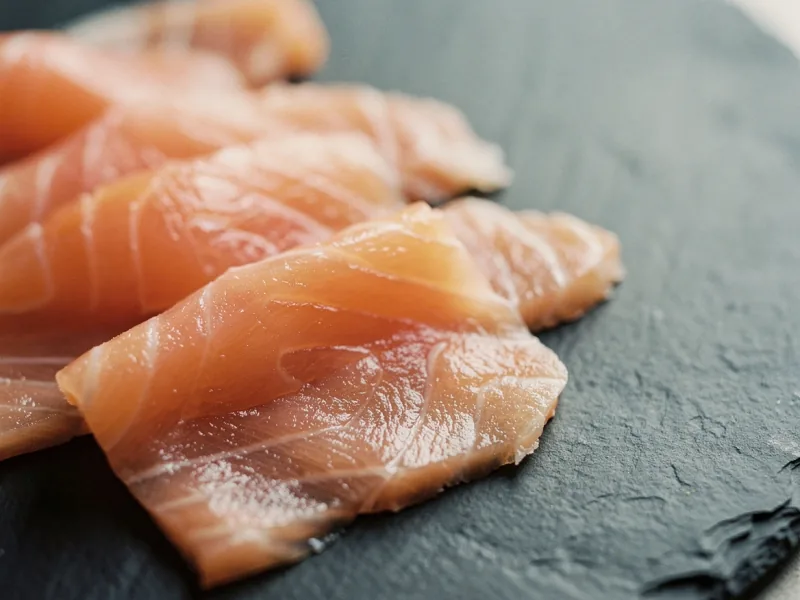
Which Wine Suits Which Salmon Preparation?
Three preparations side by side, each with a direction to try and the element that sets the tone on the plate. That element is the litmus test: if it doesn't apply to your dish at all, the suggestion won't be much use either.
The wine direction is a starting point, not a rule. Within each direction, there's a lot of variation. A wine heavily aged in oak behaves differently than a lean one from the same region. If your result differs, you haven't done anything wrong. It's likely that a different sauce or a bolder fried crust was on the plate than assumed here.
| On the plate | Suggestion to try | What matters |
|---|---|---|
| Smoked | Freshness as a starting point | Consider salt and smoke together. |
| Fried | A slightly fuller white wine | The crust and sauce set the direction. |
| With creamy sauce | A wine with enough body | Taste not just the fish, but the sauce too. |
Not all salmon is the same
The most persistent equation is fish equals white wine. It leads to a smoked salmon sandwich and a fried fillet with dill sauce getting the same wine, even though they have almost nothing in common. It's more useful to ask how salty, how fatty, and how charred the plate is. Only after that does the color in the glass come into play.
Second misconception: smoke in the food needs smoke in the wine. In practice, this tends to stack two bold flavors rather than complement each other. And third, a pricier wine doesn't automatically help. An elaborate, oak-driven wine can feel much more out of place next to soy sauce and wasabi than a simple, fresh one.
Trying salmon and wine at home
Buy a piece of salmon and split it. Fry one half with just salt, and serve the other raw with a bit of soy sauce. Pour a single glass of wine to go with both. Just these two bites show how strongly preparation changes the wine. You don't need several bottles for this.
In the second round, keep the dish the same and switch the wine. Two glasses side by side, a sip of water in between. After each try, jot down in three words what happened. After a few rounds like this, you'll have your own sense of what pairs with your salmon, and you won't need a chart anymore.