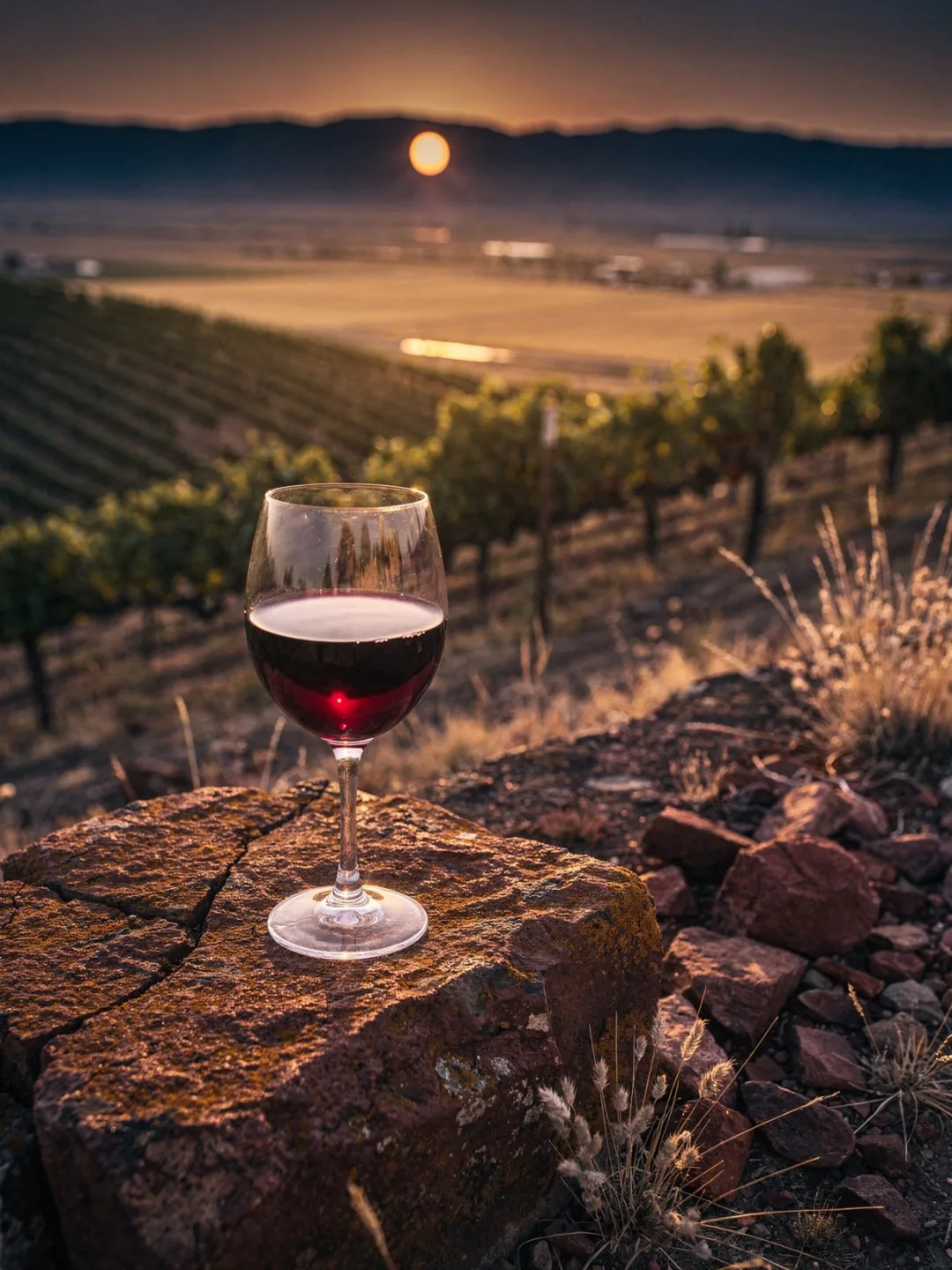
Sunshine in the Glass
Tasting
A Cabernet Sauvignon from Red Mountain appears in the glass almost opaque and deep violet right through to the core. That comes from the berries. They're small and thick-skinned, ripening on bare desert soil, and if you give the glass a quick swirl before smelling, you'll find black currant on the nose, some cedar, and, in cooler vintages, a subtle note of green bell pepper.
On the palate you immediately understand why these wines are considered powerful. The tannin sits dense and grippy on the tongue and gums. And yet it never feels heavy-handed. A pronounced streak of acidity carries the wine, unlike many other wines from hot growing regions, and this interplay of power and freshness comes courtesy of the cold desert nights, which cool things down by twenty degrees Fahrenheit or more every night during ripening.
Right after that, a dry Riesling from the Yakima Valley tastes best served cool, at around forty-six to fifty degrees Fahrenheit rather than fridge-cold. Served too cold, any Riesling tastes like little more than acidity. A few degrees warmer changes everything: aromas of green apple, lime, and sometimes apricot come forward clearly. The Cabernet, by contrast, can handle and even needs room temperature — though this means the cooler European sense of the term, around sixty-four degrees Fahrenheit, not the seventy-two of a heated living room.
Anyone who tastes both wines back to back understands the principle behind the entire Columbia Valley. Intense daytime heat builds sugar and aroma. Cold nights preserve the acidity that gives those aromas their definition in the first place. This daily swing between heat and cool is exactly the signature by which you can recognize a wine from this region almost blind.