Wet Into the Barrel
Barrel & Maturation
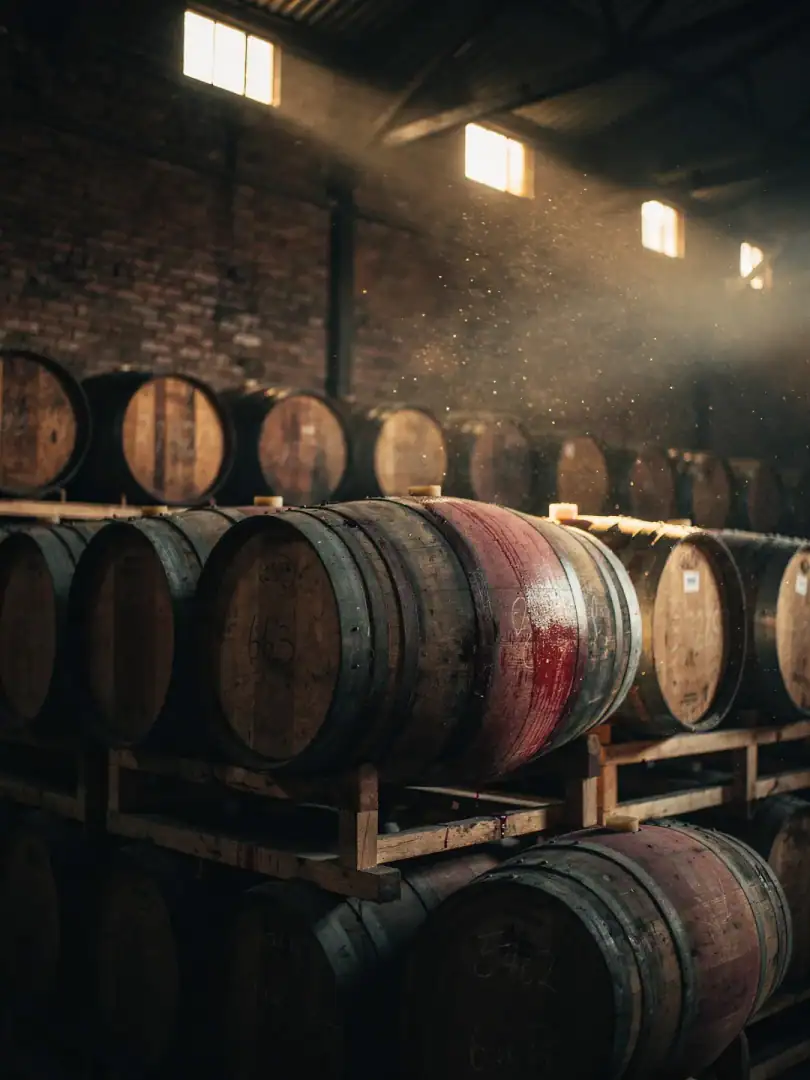
When a cask of Shiraz, Cabernet Sauvignon or Pinot Noir is emptied in the Yarra Valley or the Barossa Valley, a distillery from Melbourne is often already on its way to pick it up. Starward sometimes collects its red wine casks just hours after they've been emptied. There can still be wine clinging to the staves when they're filled with the distillery's own malt spirit.
The reason is simple. Unlike in the US or Scotland, you don't have to ship used casks halfway around the globe in Australia. The country has one of the largest wine industries in the world. Empty casks from Shiraz, Cabernet, Merlot, or from Apera production, Australia's counterpart to sherry, sit practically on the doorstep.
What happens afterward in the warehouse is the real trick. Melbourne's weather can cycle through all four seasons in a single day. Every time the temperature swings, the barrel wood expands or contracts. In the process, it drives the whisky deeper into the wood than a calm Scottish warehouse ever could.
That heat comes at a price. More whisky evaporates from the barrel than in cooler countries, and the Angel's Share is noticeably larger in Victoria. In exchange, a barrel here doesn't need twenty years to taste mature. Four to eight years is often enough for a result that tastes far older than it is.
On the palate, this maturation shows immediately: red berries and dark cherry from the wine, vanilla and soft spice from the wood. Add to that a freshness that recalls a summer evening in Port Melbourne more than a peat fire in Scotland.