Barley, Locally Sourced
Grain
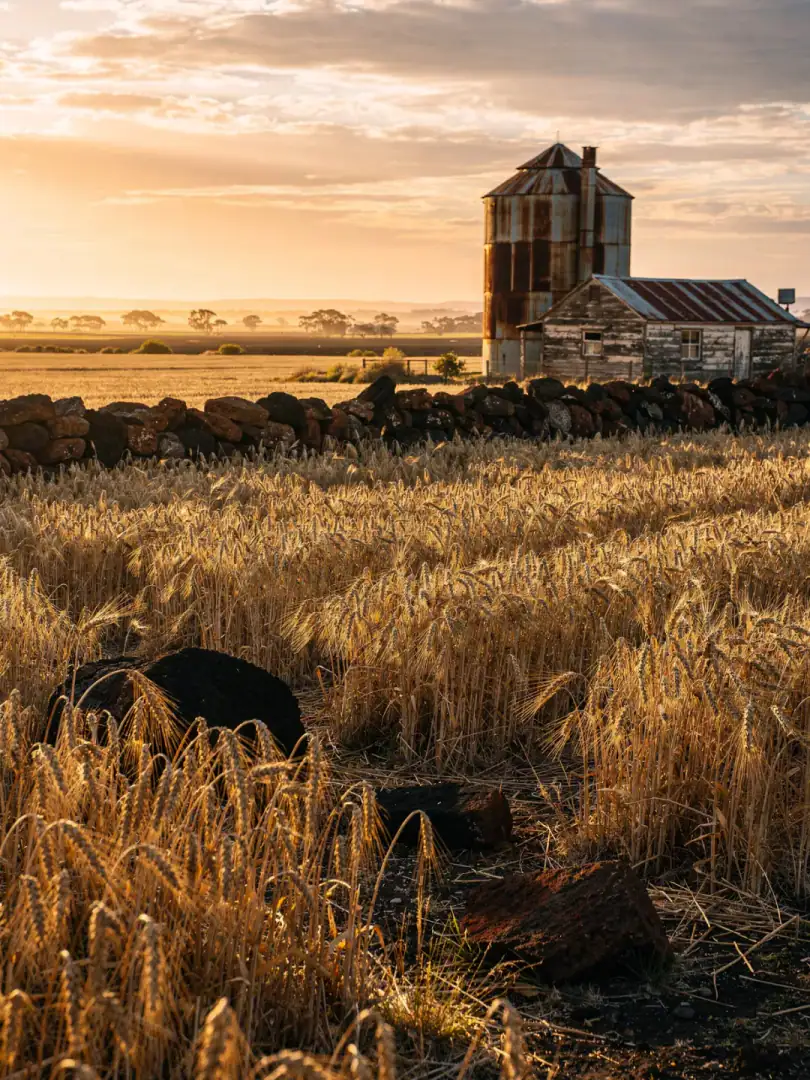
Ask about whisky in Kentucky, and you'll almost always get the same answer: corn. Ask in Victoria, and you'll get barley, almost exclusively barley. The grain suits the region's climate. Malting barley has grown on the volcanic plains of western Victoria since colonial times, and that very grain ends up in the distilleries' mash tuns.
Starward in Port Melbourne turns this into a principle. From the grain to the emptied wine cask, as much as possible should come from close to the distillery. That means Australian barley, mostly from Victoria itself, malted at a maltings within the state, rather than imported malt from Europe.
It's also worth noting which barley many Australian distilleries choose. It's not the classic distiller's barley bred for a neutral aroma, but brewing barley, the kind meant for beer. It brings more grain character into the mash tun. In a whisky later shaped by robust red wine casks, that grain aroma doesn't get lost, it carries through.
Bakery Hill in Bayswater sticks to a simple rule: one hundred percent malt, no caramel coloring, no shortcuts. The wash is brewed in 1,000-liter batches before heading into the copper pot still. Before 1990, that batch size would have been illegal.
Australia has no law like Kentucky's mandating a minimum share of corn. What counts as whisky here is governed mainly by distillery practice, not by statute. It's a difference you can still read on every label from Victoria today.