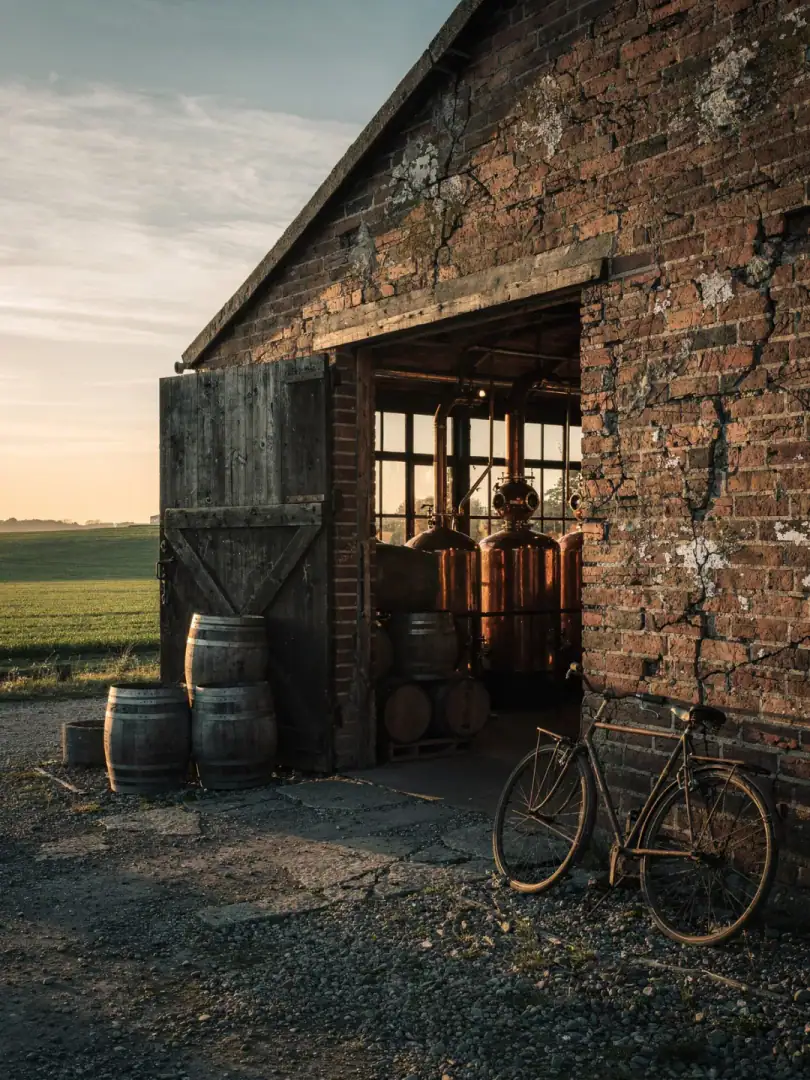
Slaughterhouse & Inventive Spirit
Region & History
In May 2005, nine friends sat together in a disused slaughterhouse on the edge of the village of Stauning. They wondered why Denmark didn't have a whisky of its own. Among them was a butcher, whose empty workshop became the first distillery. They knew Scotland from holiday trips, and taught themselves the craft from scratch.
Denmark has no tax or smuggling history to speak of, unlike Scotland or Ireland. Grain spirit here was distilled for centuries into aquavit and snaps, not whisky. You can still find those recipes in almost every supermarket today. It wasn't until Stauning that the idea even arose, in 2005, of applying the same craft to a cask matured for three years. That's the EU's legal requirement for whisky.
The early years were a side project. Between 2009 and 2012, the small crew distilled around 6,000 liters a year; by 2012 that had risen to 15,000. In 2015, Distill Ventures, the investment arm of British drinks giant Diageo, invested roughly ten million pounds in Stauning. The company helped build a new, much larger facility. The founders stayed at the helm, with Diageo initially holding only a minority stake.
Two more Danish distilleries followed. Braunstein opened in 2007 in the harbor of Køge on Zealand, and Fary Lochan in 2009 in the woods near Give in East Jutland, laying down its first cask in the cellar. Today, Stauning is considered the oldest whisky distillery in the Kingdom of Denmark. Its journey from slaughterhouse to trade-press darling shows just how young this whole whisky landscape still is.