Giant and Tiny
Distilling
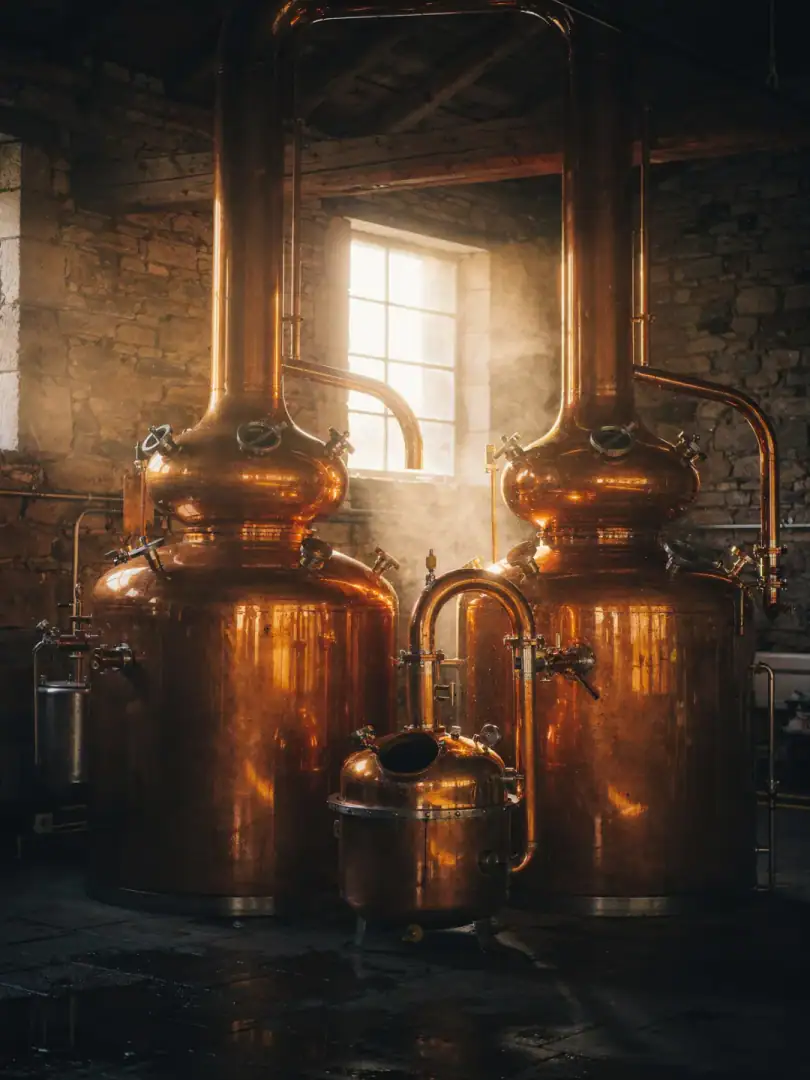
Worlds apart separate the stills of this region. At Finch on the Alb, Germany's largest pot still has stood since January 2012, a copper behemoth that runs continuously, seven days a week. Its copper volume is so vast that it brings to mind a small brewery rather than a classic whisky distillery.
In Berglen, the Waldhorn distillery's setup looks completely different. The Klotz family's distilling license covers just three hundred liters of pure alcohol a year, which allows for only a small, traditional still. Four generations have worked with exactly this size, first for fruit brandies, and since 2013 for Glen Buchenbach too. Small stills like this one heat up faster and leave the distiller less room for error, but far more control over every single batch.
In the Black Forest, too, the stills trace back to fruit distilling. At Wild in Gengenbach and at the Kinzig distillery in Biberach, the very same copper stills that once produced cherry brandy and plum brandy are now also used for malt mash. Craft learned over generations with fruit carries over to grain.
Either way, the same moment decides everything in the end: the cut. After the foreshots, too sharp and undrinkable, comes the heart, the true centerpiece carrying the finest aromas. Only after that comes the feints, heavy and oily. It's exactly here, in deciding where the heart ends, that every distiller's experience shows.
How much ultimately makes it into the cask also depends on whether the spirit is distilled once or twice. The region relies almost entirely on classic double distillation in copper pot stills, just as fruit distilling has done for generations, rather than the continuous column stills of large industrial distilleries.