Cellar, Sherry, Wine
Cask & Maturation
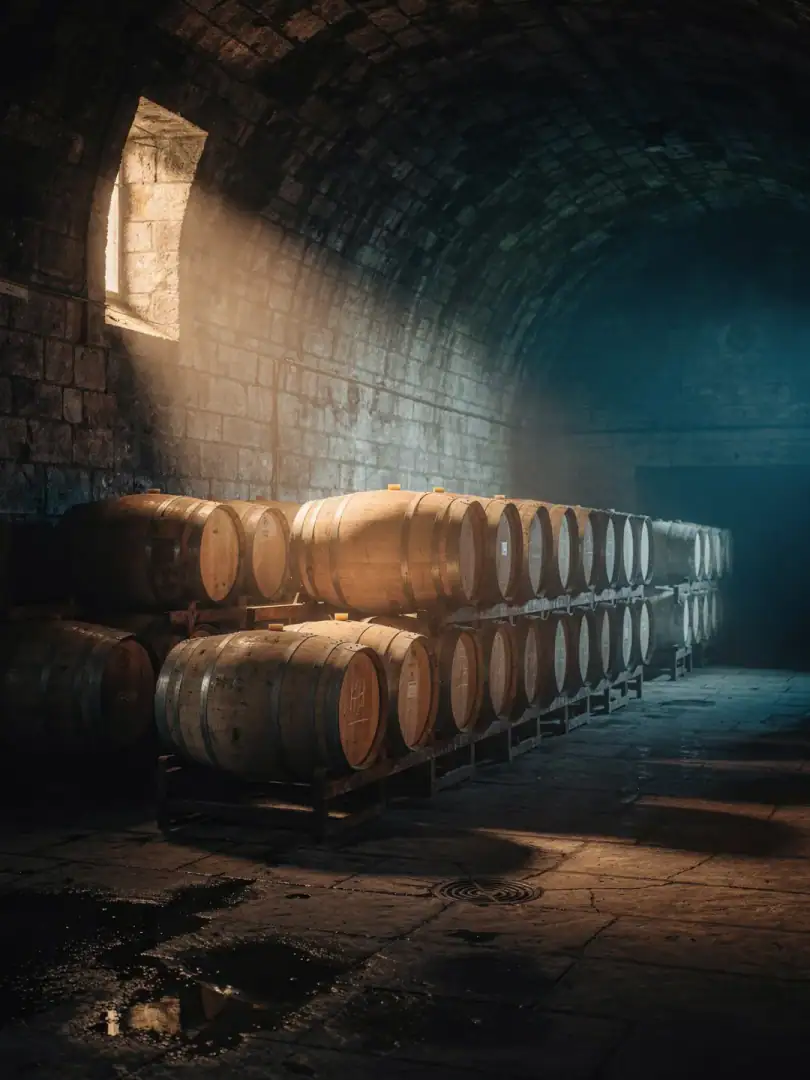
Fink began maturing his whisky in 1999 in small thirty-liter casks, small enough that the whisky quickly made contact with the wood. This early choice of small casks was less a strategy than a workaround, since larger oak casks simply weren't available for the first vintage. From 2005 onward, Greek wine casks were added, lending the young spirit a fruity note. Everything is matured in the deep vaulted cellar of the Hofgut Aglishardt, cool and consistent.
The Waldhorn distillery in Berglen, by contrast, relies on used Oloroso sherry casks and port casks. Both cask types lend color and a sweet, dark fruit note to the Buchenbach whisky. It's a legacy of the Spanish and Portuguese wine world, right in the heart of Swabia.
Wild in Gengenbach bottles its own sherry-cask release, in which the same cask type produces a bolder, darker style. Lift the lid of such a cask and you'll immediately catch the sweet, winey scent of sherry that has worked its way into the wood over the years. In every cellar, part of the whisky evaporates through the wood over the years, the so-called angels' share. What remains grows more concentrated with each passing year.
The climate of the warehouse plays its part in how fast that happens. In the cool vaulted cellar of the Alb, whisky matures more slowly than in a warmer, more humid warehouse in the Black Forest valley. There, the casks breathe more heavily and draw color and aroma from the wood faster.
Exactly how much evaporates depends on the humidity and temperature swings of each particular warehouse, which differ noticeably between a vaulted cellar and a Black Forest valley. The longer a cask lies there, the more this interplay ultimately shapes the color, sweetness, and toasted notes in the finished whisky.