Spelt and Emmer
Grain
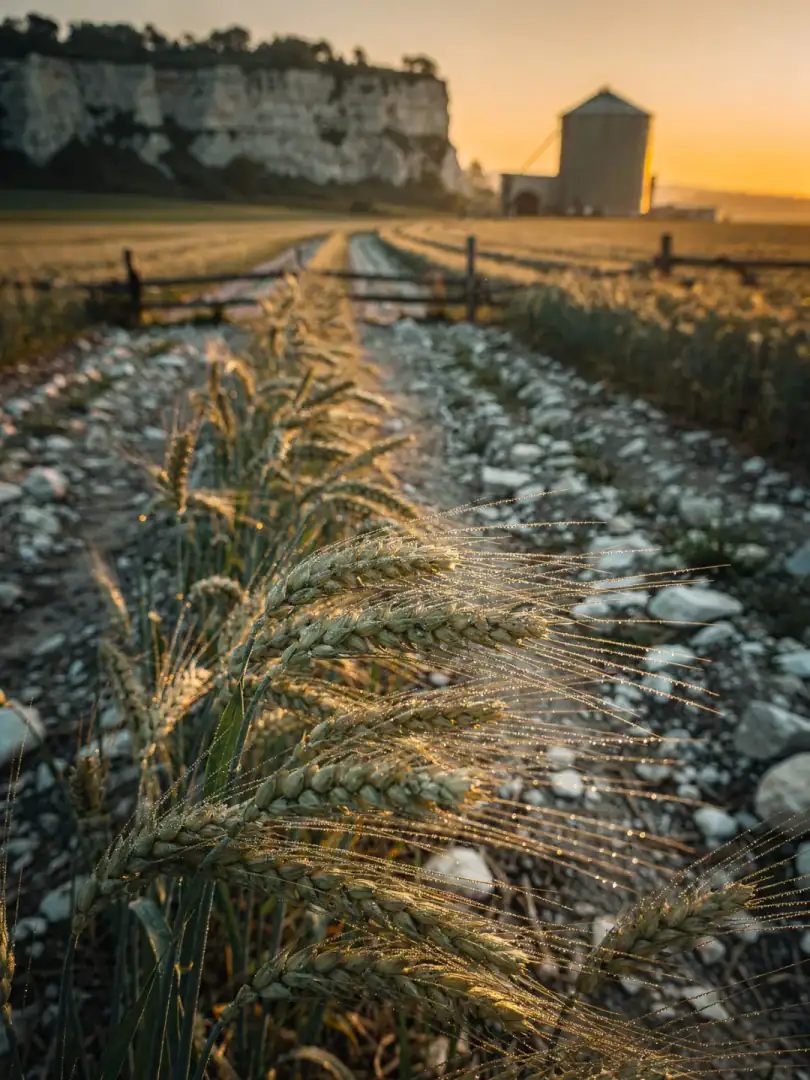
Anyone farming near Nellingen on the Swabian Alb knows thin, stony soils that forgive little. Alongside barley, Hans-Gerhard Fink grows wheat, rye, corn, and, experimentally since 2005, spelt on his farm. Whatever thrives on this thin soil ends up in the mash in the end.
Spelt is one of the old grain varieties that were grown on the Alb long before modern high-yield strains took over the fields. Its husks have to be laboriously removed before malting, and its yield per hectare stays lower than barley's. Anyone who distills with it anyway trades quantity for a distinct, earthier character in the glass.
Barley still remains the backbone of the mash, as it does almost everywhere in whisky. Fink has his own barley malted from grain grown on the farm, before it's milled and mashed in with hot water. This converts the starch in the grain into fermentable sugar, and the yeast takes care of the rest.
In the Black Forest, the starting point looks different. Distilleries like Wild in Gengenbach or the Kinzig distillery originally came from fruit, not grain: cherries, plums, and Williams pears from the region's orchard meadows shaped generations of distillers long before any grain ever went into a still. Switching to a malt mash was, in craft terms, a fresh start for them.
Under EU law, whisky must come from grain broken down by malt enzymes and then fermented. The law doesn't dictate whether that's barley, wheat, rye, or a rarity like spelt. It's exactly this leeway that the Alb uses to turn old seed stock into a young drink.