Trying Four Styles
Tasting
Tasted side by side, the four distilleries reveal four different routes to the same destination. The finch Schwäbischer Hochland Whisky comes across as grain-forward, often with a fine, almost floury sweetness reminiscent of freshly baked bread, alongside the slightly earthy note that old grain varieties can bring. Nose it carefully and you'll often catch a subtle herbal note recalling the herbs of the Alb meadows.
Glen Buchenbach from Berglen appears darker and sweeter thanks to its sherry and port casks, with raisin and dried-fruit notes typical of those cask types. The Blackforest Wild Whisky Sherry Cask from Gengenbach heads in a similar direction, bolder and spicier, with the wood clearly present in the background. Both bottlings show just how closely whisky and winemaking have always been intertwined in this region.
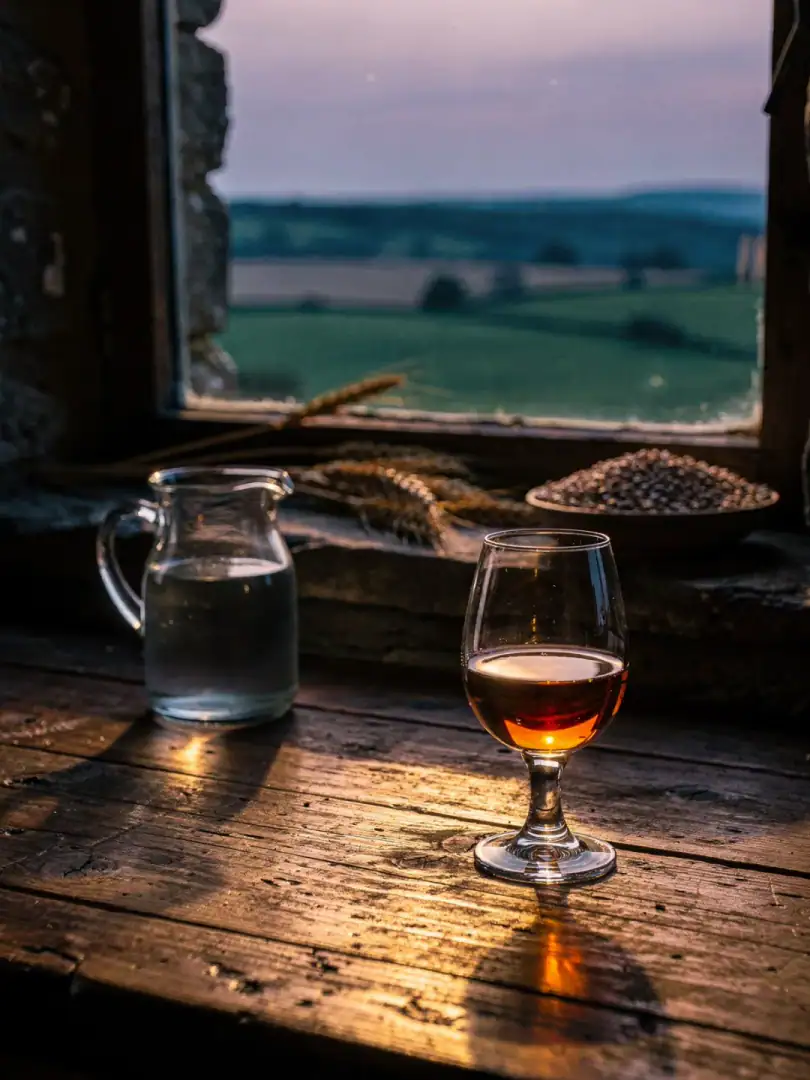
It's best to taste in small sips, first neat at room temperature, then with a few drops of still water, which open up the aromas without diluting them. A nosing glass with a narrow bowl concentrates the aroma better than a wide glass. A sip of still water between samples helps the palate reset to zero.
A pause between sips is worthwhile: drink too fast and by the third glass all you'll smell is alcohol. Water or a neutral piece of bread in between resets the nose.
Taste all three one after another and you'll quickly notice just how much the choice of cask alone can shift a whisky's character, even when the grain behind it comes from the very same region. It's exactly this kind of comparison that makes a tasting in Baden-Württemberg more interesting than any single glass.