The short answer
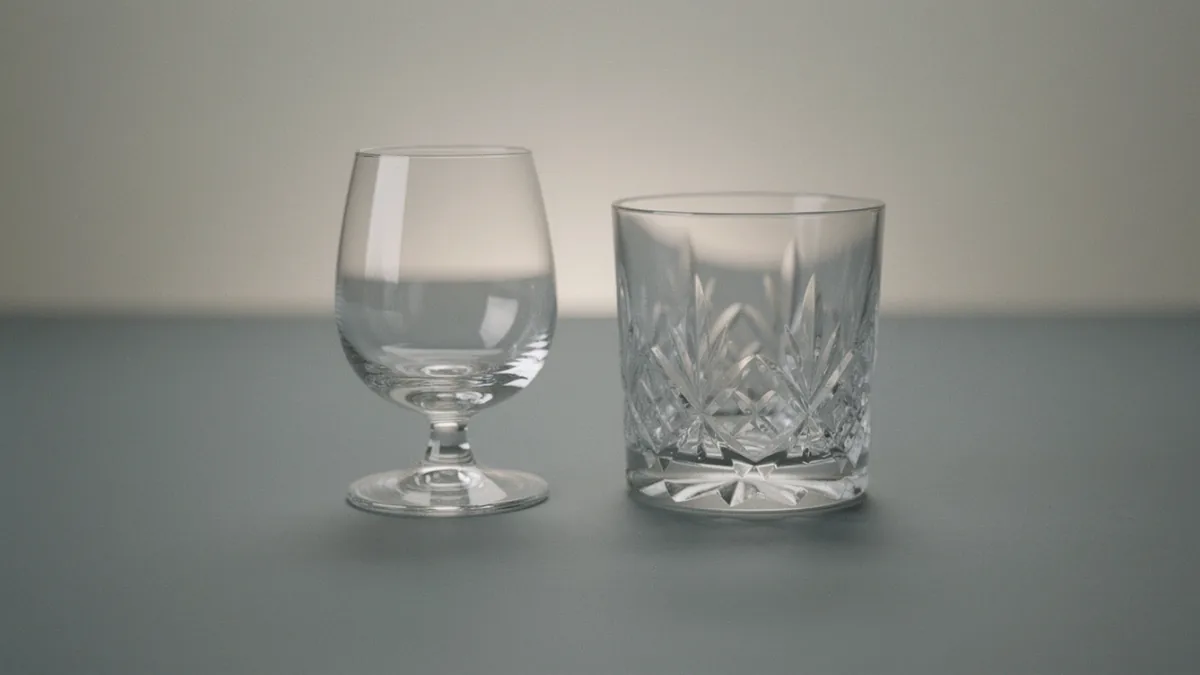
A tulip-shaped glass helps concentrate the aroma for nosing. A tumbler, on the other hand, gives you room for ice and cocktails. Which whisky glass suits you depends on what you plan to do with the whisky.
Guide · 3 min read
Nosing glass or tumbler? Compare whisky glasses by use: nosing neat, drinking with ice, or serving cocktails.
As of: <time0>{expression0}</time0>
The short answer
A tulip-shaped glass helps concentrate the aroma for nosing. A tumbler, on the other hand, gives you room for ice and cocktails. Which whisky glass suits you depends on what you plan to do with the whisky.
A tasting glass has a rounded lower body and a narrower opening. The bowl gives the whisky room to swirl. The narrowing at the top concentrates the aroma at the rim. In an open glass, by contrast, the aroma disperses quickly into the room. A small wine glass serves the same purpose. Hold your nose a little away at first, then approach slowly. At high alcohol strength, the vapor can otherwise sting the nose.
The amount poured matters more than the glass model. Two centiliters in a glass that holds twenty give the aroma room to gather. A half-full glass releases it into the surroundings right away. If you pour only a small amount, you don't need a special glass. That insight costs nothing and improves every tasting.
A tumbler is wide, heavy and stands securely. It offers room for large ice cubes and a spoon. That makes it practical for drinks mixed directly in the glass. The wide opening, however, lets the aroma escape. For a focused nosing session, that's the weaker setup. There's no single glass that's universally right — it depends on the use. Large ice cubes melt more slowly than small ones and dilute the drink less. Only a wide glass can hold them in the first place. That's really the advantage of this shape.
Traces of dish soap, a musty cabinet smell, or a strongly scented tea towel can throw off any tasting. Rinse the glass thoroughly with clear water afterward. Let it air-dry so no towel smell lingers. Two samples you want to compare should go into identical glasses with the same fill amount. Otherwise you're judging the different conditions as much as the whisky itself.
One test takes a second: smell the empty glass before pouring. Whatever you notice there, you'll likely find again in the whisky later and wrongly attribute to it. Glasses that have sat in the cabinet for a long time often smell exactly like that cabinet. A quick rinse usually fixes it.
A full set of specialty glasses for every whisky origin is unnecessary when you're starting out. Begin with a small wine glass you already own, plus a tumbler. That covers both purposes. Focused comparisons may appeal to you later, and then you can buy matching tasting glasses. A brand name on the glass replaces neither comfortable handling nor your own impression. More important than the maker is that two glasses are truly identical. When buying more, pay attention to weight and rim rather than brand. A glass that feels good in the hand gets used more often than one with attractive packaging.
Pour the same whisky into a tulip-shaped glass and into a tumbler. Same amount, both side by side. Smell them alternately, first one, then the other. The difference is usually so clear that the question of the right glass answers itself. You don't need to buy anything for this — a small wine glass will do.
For drinks with ice, the tumbler remains the better choice. So the question isn't which glass is better. It's which one suits what you're planning to do.
Continue from here
Understanding whisky, choosing well, and comparing at home: with a flavor guide, tasting sheet, and practical tips on water and glassware.
WeiterlesenSetting up a whisky tasting at home: choosing samples, deciding the order, and comparing aroma, flavor, and the effect of water.
WeiterlesenA simple method for finding your own taste—without a rigid dilution rule.
WeiterlesenImages generated with AI · Text AI-assisted, editorially reviewed