Malty, warm, spicy
Tasting
Bavarian single malt rarely tastes smoky. Instead, it often carries notes of ripe fruit, caramel, and the light sweetness of sherry casks. The Slyrs Classic Single Malt shows this well: vanilla and honey from the American oak, paired with a darker, nutty note from the Oloroso sherry cask. Some tasters attribute a hint of mountain air in the finish to the alpine maturation.
Fleischmann's Blaue Maus, by contrast, shows its long maturation in the glass. The whisky comes across rounder and more wood-driven, with notes of dried fruit and oak. It tastes less fruity and fresh than a young malt, but carries the weight of six to eight years in a large cask.
With its unusual casks, St. Kilian opens up a broader spectrum. A whisky from a chestnut cask brings spicier, almost peppery tannin notes. A white wine or Amarone cask, on the other hand, brings more fruit and acidity. Anyone looking to taste their way through Bavaria won't find a single flavor, but rather the region's diversity of casks.
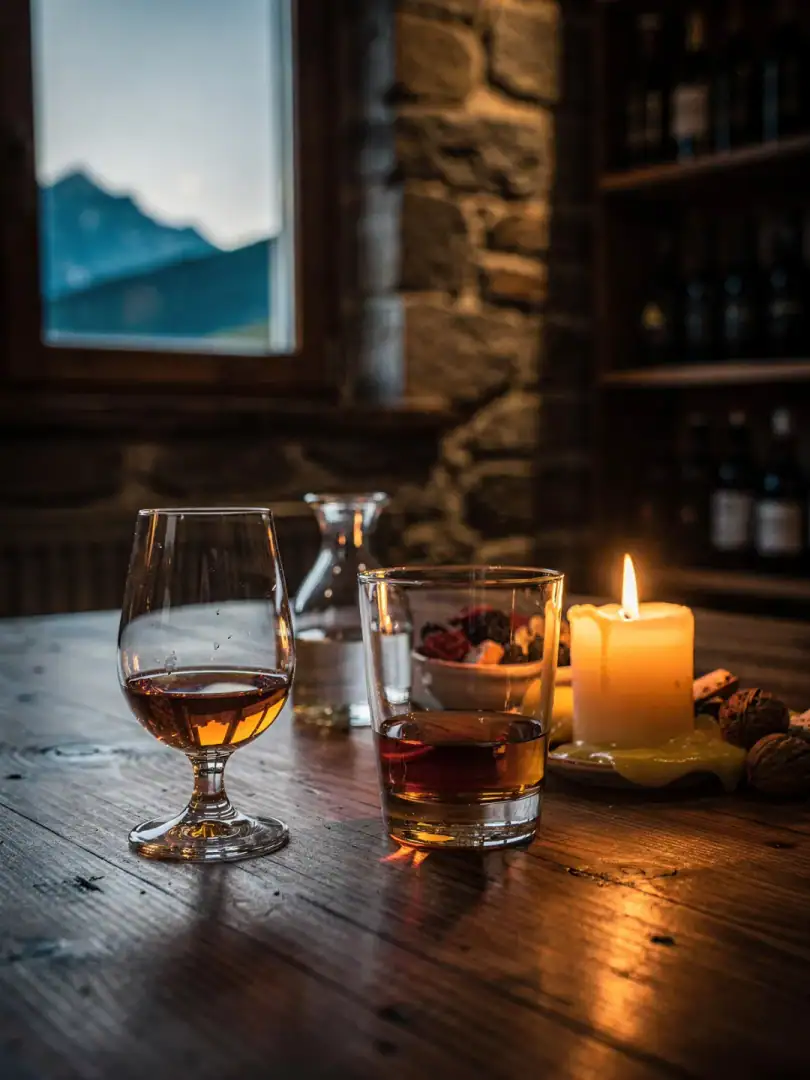
A standard nosing glass or a tumbler with a bit of room above the liquid is enough for tasting. This lets the aromas gather. A sip of still water alongside often opens up the fruit and caramel notes that would otherwise stay hidden beneath the alcohol.
It's best to nose first with the mouth slightly open, before the first sip even reaches the tongue. A short pause between samples is worthwhile, so the nose and palate can recover. At all three Bavarian addresses, the real goal is to taste, not to buy.