Alpine climate and chestnut
Cask & Maturation
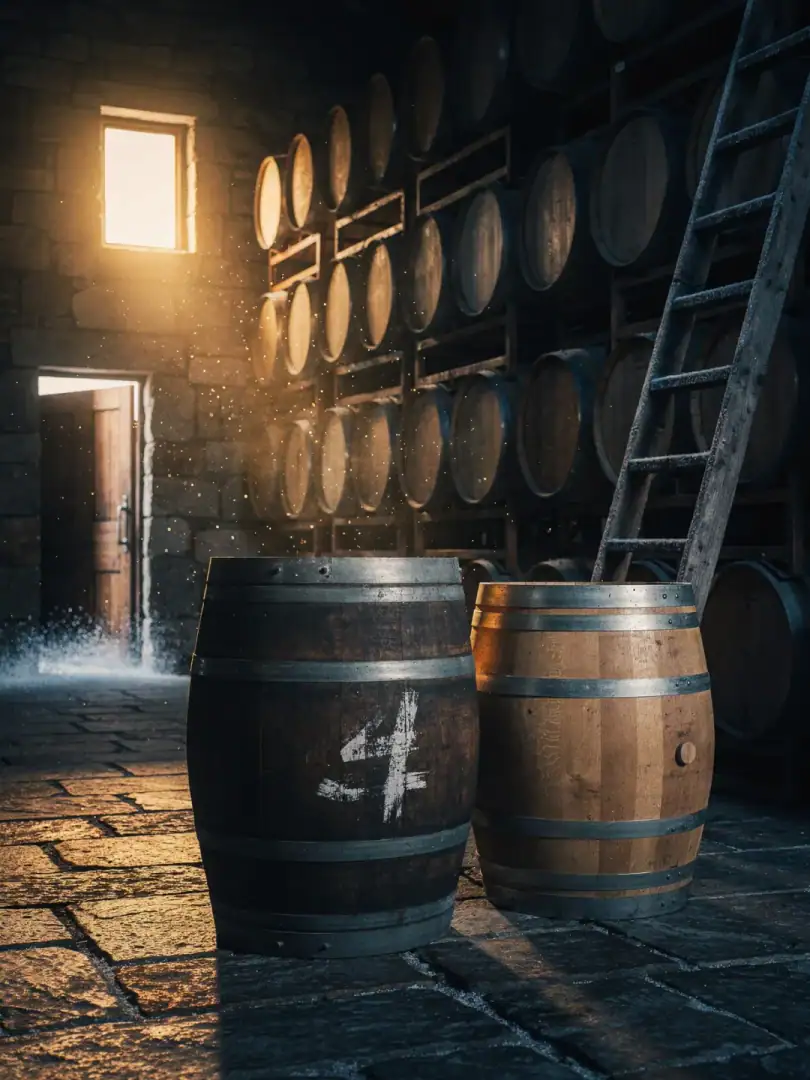
Slyrs matures its whiskies in fresh American white oak casks and in used Oloroso sherry casks. The warehouse sits right in the middle of the Bavarian Alps, fully exposed to the seasons. Snow in winter, foehn heat in summer: these temperature swings make the cask work harder than in a steady coastal climate. As a result, the whisky picks up color and wood notes more quickly.
In Rüdenau, St. Kilian takes the opposite approach, favoring variety over just two or three cask types. Over 90 different kinds lie in the warehouse, from ex-bourbon, sherry, cognac, rum, port, white wine, and Amarone casks to fresh European and American oak. Add to that casks made from acacia, cedar, beech, mulberry, and chestnut. Chestnut casks are a rarity even among German distilleries; the wood releases stronger, spicier tannins than oak.
At Fleischmann's Blaue Maus, the whisky matures more conservatively: in large oak casks, for at least six to eight years, until the distillery deems it mature enough. No time pressure, no marketing number on the label, just the taste in the glass decides.
In Bavarian warehouses, the temperature swings tend to cause more whisky to evaporate each year than in cooler, more stable climates. The so-called angel's share, the portion that escapes through the cask wood, is therefore higher here. The cask breathes more vigorously. As a result, the whisky matures faster than its Scottish counterpart at the same age on the label.
Lantenhammer, the parent company in Hausham am Schliersee, also stores some of its casks under these same changeable conditions. Whether oak, sherry, or chestnut, in the end, what matters is not just the cask wood but also the weather outside the warehouse.