The short answer
Start by adding just a little water to a small sample and compare. There's no ideal number of drops. Whisky, starting strength, and your own taste are different every time.
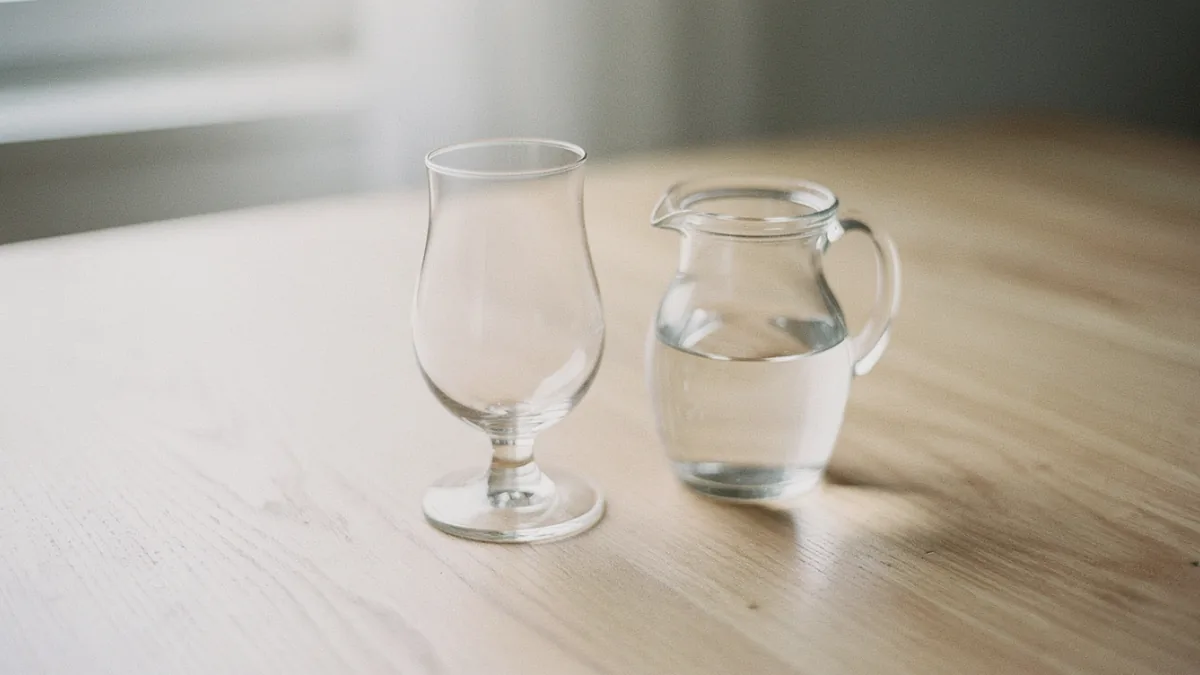
Water is allowed
Adding water to whisky is completely normal. No one has to prefer a bottling neat. Water lowers the alcohol strength and thereby changes what you smell and taste. Where the most pleasant point lies is up to you.
This comes down to chemistry, not taste. Some aroma compounds prefer to dissolve in alcohol rather than escape into the air at high alcohol strength. These compounds stay in the glass and never reach your nose. As the strength drops through added water, they rise up and become detectable by smell. A single drop can therefore achieve more than ten minutes of waiting.
You'll notice this most clearly with cask-strength bottlings—that is, whisky that wasn't diluted before bottling. With a standard bottle reduced to 40 percent, the effect is smaller. There, you're more likely to dilute away flavor than to gain anything.
How you can proceed
Take two very small samples of the same bottling. Leave one unchanged. Add a small amount of still water to the other. Then smell again after a brief pause and taste carefully. Does the impression become more pleasant, or too thin? Afterward, change only the amount of water and nothing else.
Two glasses side by side help you more than two glasses tasted one after another. Your memory for smells only lasts briefly. What you compare directly, you remember; what's separated by a quarter hour blurs together.
For a note you can repeat later, record a volume rather than a number of drops. Drops vary in size. With ice, cooling and ongoing melting add another variable, making it a different kind of comparison altogether. Both approaches are valid. What matters is whether you want to compare or simply enjoy your drink.
Work with a pipette or a straw rather than pouring straight from the bottle. You can't take water back out, and what gets accidentally added is almost always too much. Half a milliliter to two centiliters is a reasonable first step.
And what does ice change?
Ice cools and dilutes at the same time. One large cube behaves differently than several small pieces. Glass temperature and waiting time also affect the process. If you only want to test the effect of water, stick to a small sample with a few drops of still water. If you enjoy whisky on ice, the most pleasant finished result matters more than a rigid rule about drinking it neat.
So ice isn't a mistake. It simply produces a different drink: colder, thinner over time, and more restrained on the nose. Trying both side by side once will show you this difference faster than any rule could.
Which water, and why it matters
Use still water with as little flavor of its own as possible. Heavily mineralized water brings its own character with it. Carbonation additionally changes the mouthfeel. Both would obscure exactly what you're trying to observe. Room temperature is better than cold, since cold suppresses the aromas.
You don't need any special water. What matters is only that the same water goes into both samples. Otherwise, you end up comparing two waters rather than two whiskies.