Pure Rye
Grain
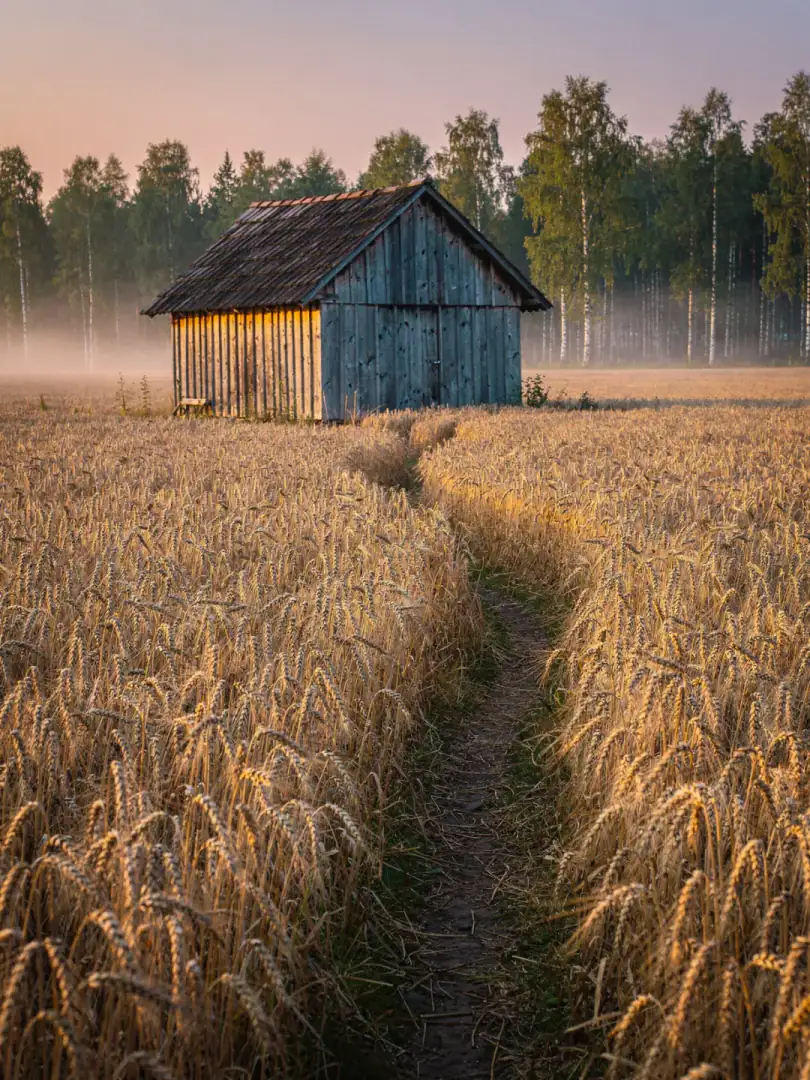
Finnish whisky almost always begins with rye, not barley. Around Isokyrö, in the western Finnish region of Pohjanmaa, grows the grain that the Kyrö Distillery Company has worked with since 2014. It's one hundred percent malted rye, a rare choice for whisky in Europe. Most distilleries on the continent rely on barley or blend rye in only as a smaller part of a mash dominated by corn or wheat.
Rye has a reputation among distillers for being difficult. The grain clumps easily during mashing, and anyone who handles it too roughly loses yield. At Kyrö, the distillers malt the rye themselves and filter nothing out afterward. All the solid matter runs through mashing, fermentation, and distillation together, so that as much of the bold, slightly spicy rye character as possible ends up in the glass. Their first product, an unaged rye spirit called "Juuri," already consisted of this hundred-percent rye malt back in 2014.
In Lahti, in the south of the country, the older Teerenpeli distillery relies instead on the classic formula. There, as elsewhere, Single Malt means malted barley. The family distillery has been distilling its malt whisky since 2002, building on its own brewery, which dates back to 1994. In 2008, Alko sold the five-year-old Teerenpeli Single Malt, the first whisky entirely grown, malted, distilled, and matured in Finland.
For a spirit to be called whisky at all, it must be made from grain and matured for at least three years in a wooden cask. That's a line Kyrö holds to as well. Whether rye or barley, the principle stays the same: only after this waiting period may the label bear the word that was once entirely banned in Finland.