Cold Extremes
Water & Climate
Finland is a land of short summers and long, dark winters. This exact shift shapes how whisky matures here. In Isokyrö, where Kyrö stores its casks, the thermometer climbs as high as 22 degrees Celsius in summer and drops to minus 11 in winter. Hardly any other whisky region in Europe experiences such swings within a single year.
For a cask, this climate swing means a great deal. In summer, the whisky pushes deep into the warm wood; in winter, it withdraws again. With every inhale and exhale, it picks up color and aroma from the oak. If the temperature swings too wildly, a cask matures unevenly. That's why Kyrö has equipped its wood-and-concrete warehouses with technology still rare in the whisky world: a control system that keeps temperature and humidity constant year-round.
Even the grain itself carries the cold climate within it. Rye grown in the north, under shorter, cooler summers, produces smaller kernels than its relatives from warmer regions, according to the distillery. Its flavor concentrates within. Anyone drinking Finnish rye whisky is tasting the cask – and a climate that gives the grain little time to grow.
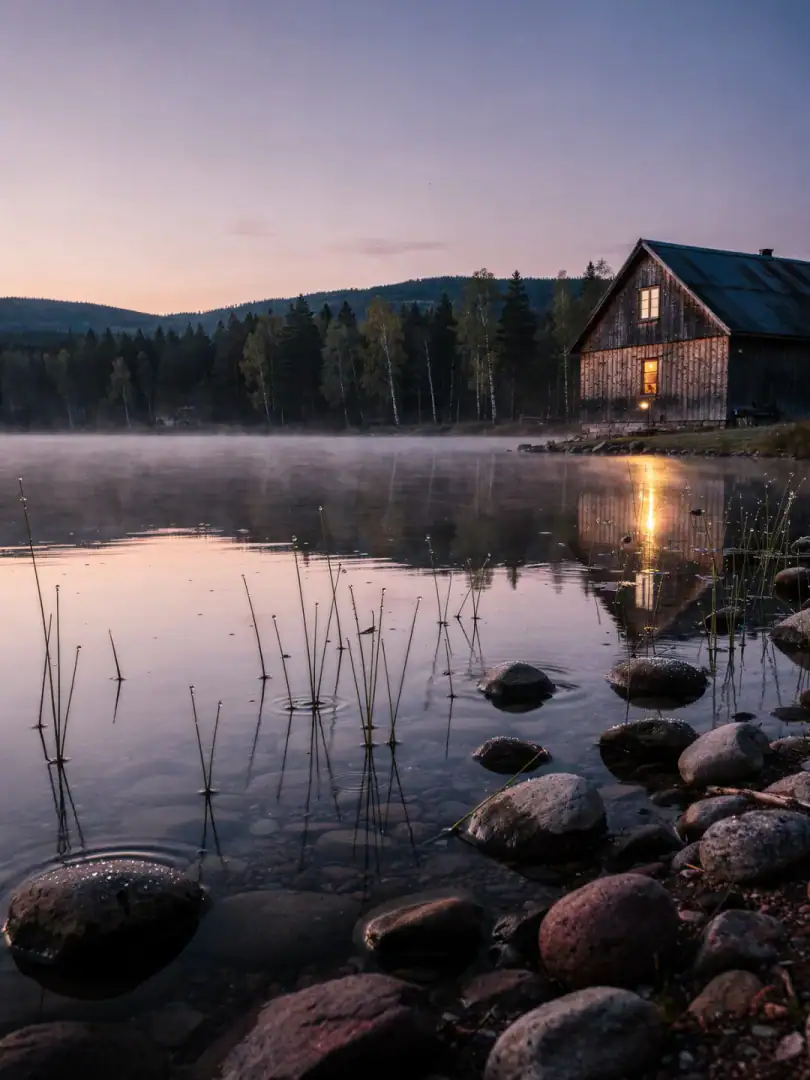
Add to that what a country with thousands of lakes naturally brings: water is never far away in Finland. Exactly how much flows directly into the casks at Isokyrö or Lahti, the distilleries don't reveal in detail. But that climate and landscape are more closely linked here than in milder regions is clear enough from the warehouse window.