Humidity ages it faster
Cask & Maturation
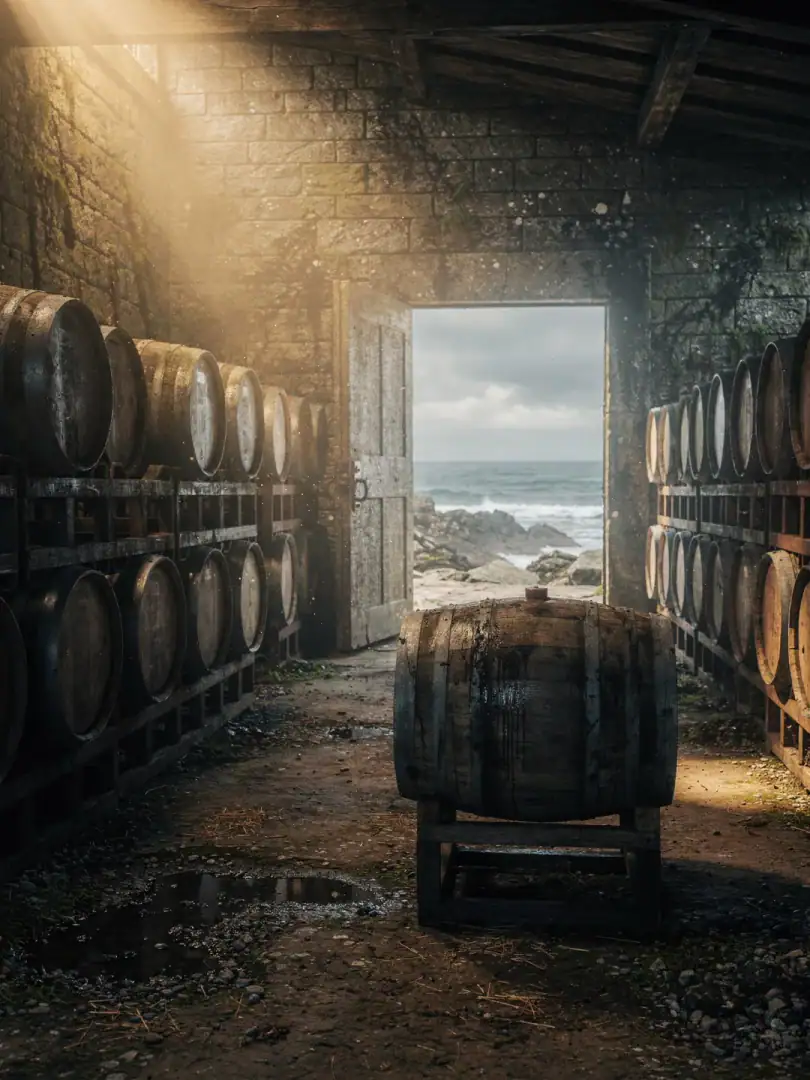
Water evaporates more slowly than alcohol in a warehouse when the air is as humid as it is on the Breton coast. As a result, the so-called Angel's Share, the portion that simply disappears every year, comes off lower in alcohol strength. On the other hand, more total volume is lost overall than in the drier climate of central Scotland.
At Warenghem in Lannion, the base spirit for Armorik matures in a cask mix that leans heavily on American influence. Around 60 percent are former bourbon casks, 15 percent Oloroso sherry casks, and 20 percent so-called STR casks, meaning casks that have been shaved, re-charred, and refilled. The remainder are casks made from Breton oak, sourced in part from the forests of Cranou and Brocéliande.
Using Breton oak is unusual. Most distilleries worldwide buy American or European casks from specialist cooperages. Warenghem instead sources wood from its own surroundings, including the forest of Brocéliande. Breton legends know this forest as the home of King Arthur and Merlin.
By law, Whisky de Bretagne requires a minimum maturation period of three years in the region's oceanic climate. This rule has applied since the Geographical Indication was recognised in 2014. This minimum age of three years now appears on every label entitled to bear the name Whisky de Bretagne.
Just how strongly the climate ultimately shows itself only becomes clear once the bottle is opened. A twelve-year-old Armorik can appear more mature in both colour and taste than some Scotch of the same age from a drier location. The reason: more of the cask transfers into the whisky each year in Brittany.