Molasses or malt
Grain
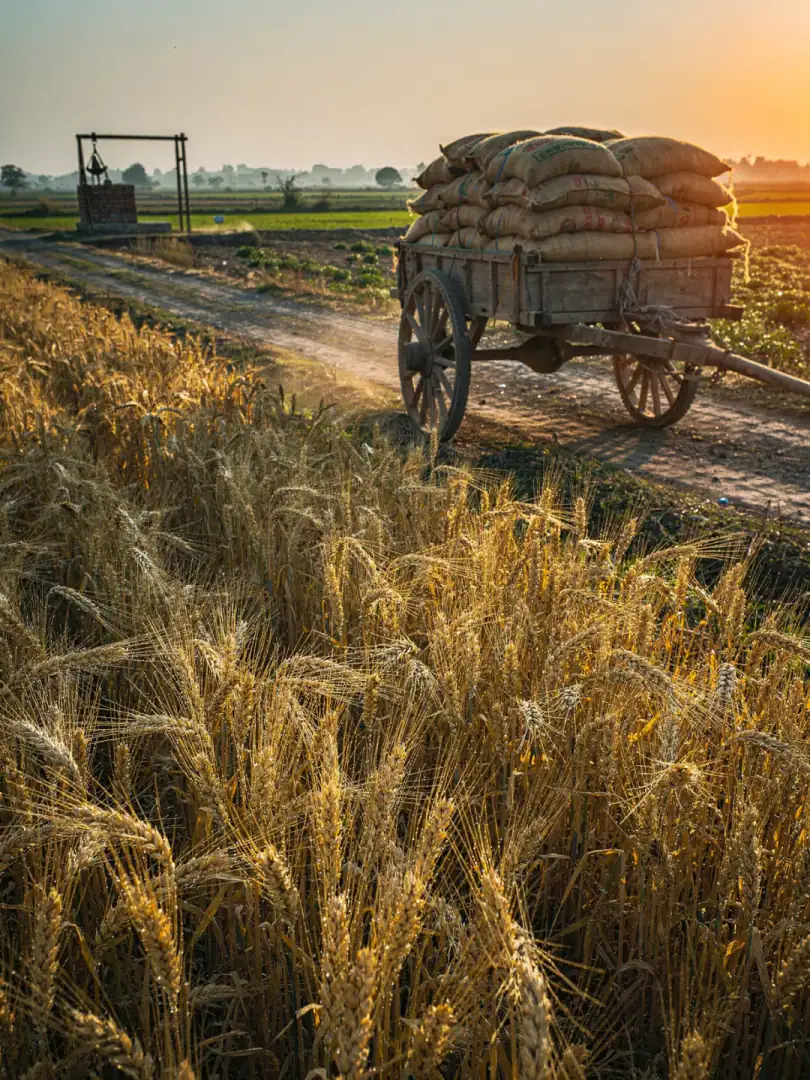
Anyone looking for barley in Bangalore or Goa has to travel far. Amrut sources its six-row barley from Haryana, Punjab, and Rajasthan, more than 2,500 kilometres from the distillery, trucking it down by road. Paul John likewise relies on Indian six-row barley rather than the two-row variety common in Europe.
The difference between the two barley types is more than mere botany. Six-row barley yields less alcohol per kilo than European two-row barley, but delivers significantly more amino acids and fatty acids, the building blocks of a fruitier, spicier distillate. This robust aroma is what sets malt from Bangalore and Goa noticeably apart from Scottish spirit, even before a cask comes into play.
Yet almost all the whisky sold in India has nothing to do with this barley. The bulk is ENA, Extra Neutral Alcohol, raw spirit distilled from molasses, dressed up with flavourings and colour to resemble whisky. Only a small share, historically around one-tenth, is genuine malt, the kind Amrut and Paul John produce. On the shelf, the two categories long looked identical; in the glass, they are worlds apart.
Since the Indian Malt Whisky Association established its own rules, the distinction is now clear on paper too. An Indian single malt must be made entirely from malted barley, water, and yeast, mashed, fermented, and distilled at a single distillery. Copper pot stills are mandatory, column stills are banned for this category, and maturation must last at least three years in oak casks under 700 litres. Amrut and Paul John have met these standards since long before they were ever written down.