A fast angel's share
Cask & Maturation
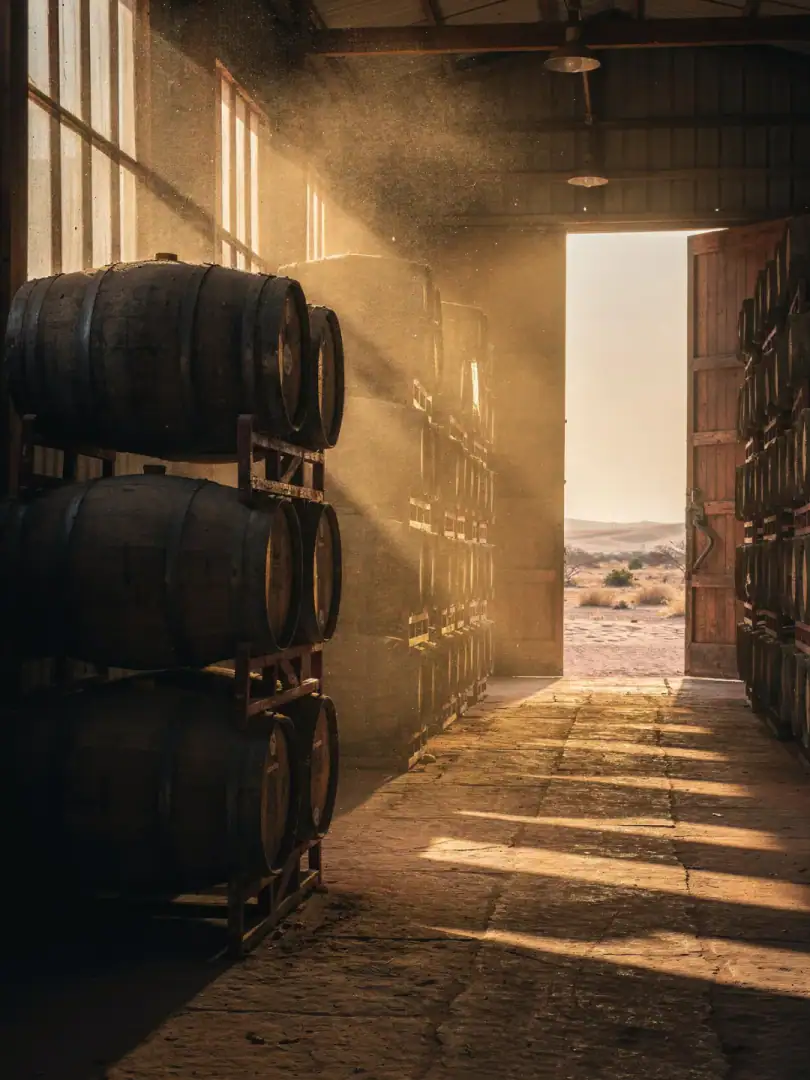
What evaporates from the cask is known in Scotland as the angel's share. There it sits at around two percent a year. In North India, that figure looks completely different, for better and for worse: at the Piccadily Distillery in Indri, reports suggest eight to over twelve percent of a cask's contents evaporate per year, depending on exactly where in the warehouse a cask sits.
That speed comes at a cost. Warehouses have to be planned more tightly, because a cask can noticeably empty out within just a few years. Some casks are therefore bottled after only four to six years, right around when a Scotch whisky is only just beginning to mature. Distilleries here have to decide earlier whether a whisky is ready for the bottle. In return, the young spirit also pulls colour, tannin and aroma from the wood much faster, something Rampur, Indri and Godawan openly market as an advantage.
When it comes to the casks themselves, each distillery goes its own way. Rampur fills its Double Cask first into American bourbon barrels and then transfers it into European sherry casks. It's bottled uncoloured and without chill filtration. Indri combines three wood types at once for its Trini expression: first-fill ex-bourbon barrels, used French wine casks, and casks that previously held Pedro Ximénez sherry.
Godawan goes a step further still, treating its casks before filling with Indian plants, rasna and jatamansi. According to the distillery, no one else uses this method. For the limited release Godawan 173, decades-old Asha liqueur casks were even used, yielding exactly 173 bottles.