Sea Air and Sherry
Cask & Maturation
A minimum of three years in wood, as required by EU regulations for Irish whiskey, in casks no larger than 700 liters. What happens after that varies considerably from distillery to distillery.
Most casks arrive secondhand from the US, where bourbon is legally allowed to touch a new oak barrel only once, with the rest often making their way on to Ireland. Add to that European sherry casks and, more rarely, new American oak, which Teeling uses for bolder vanilla and spice notes.
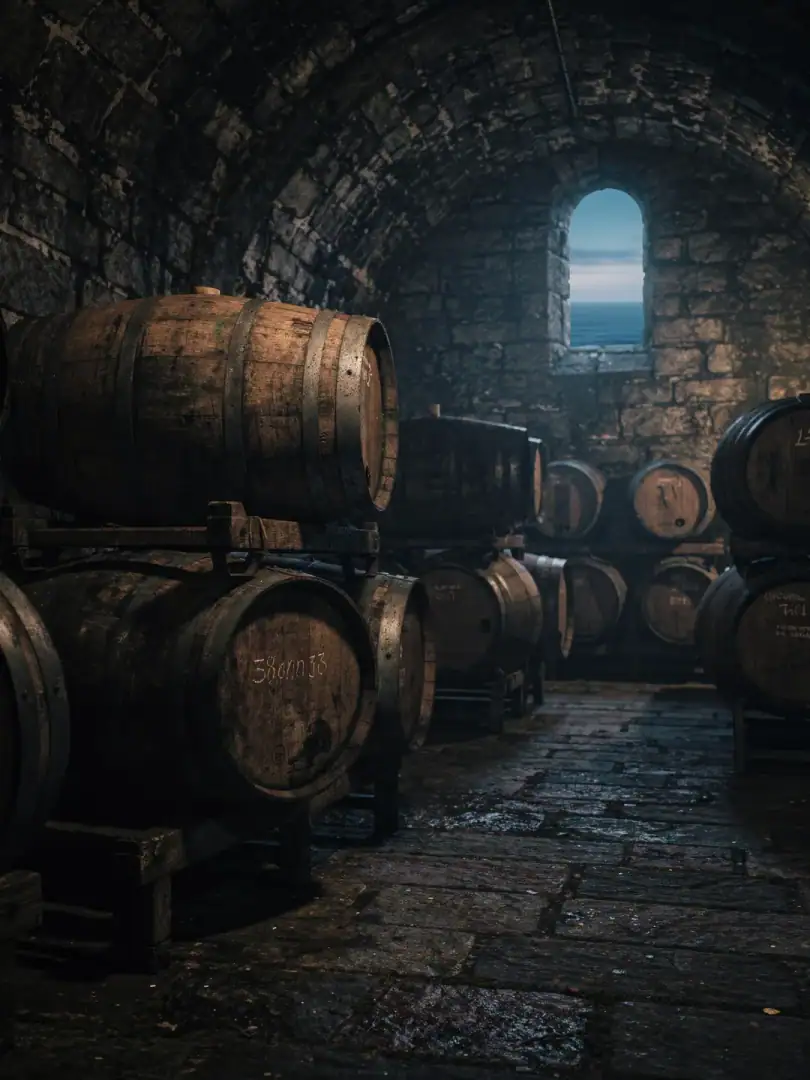
On the Cooley Peninsula, casks mature in warehouses just a few hundred meters from the sea, where salty, damp air slowly works its way through the wood. In the city, by contrast, at Roe & Co in the former Guinness power station on Thomas Street, young whiskey rests amid urban bustle, with all the temperature swings a city brings with it.
Ireland's mild, consistently humid climate means less whiskey evaporates than in hotter countries, but maturation overall takes longer before cask and spirit truly come together. Many connoisseurs credit this slow interplay for the round, gentle character of whiskeys from this region.
Kilbeggan still ages part of its stock in the same old warehouses where casks rested back in the 19th century. Thick stone walls keep the temperature remarkably steady even without air conditioning.
Not every warehouse looks alike. Some are old dunnage warehouses with stone floors and only a few tiers of casks stacked. There, temperature stays naturally even. Others are modern palletized warehouses stacked many meters high, where casks at the top mature noticeably warmer than those at the bottom.