No Smoke, Usually
Malt & Peat
Peat smoke, the trademark of many Scotch whiskies, is barely part of the picture in Dublin and Leinster. Dublin's distillers were already kilning their malt with hot air rather than peat smoke back in the 19th century. Even then, their whiskeys' reputation—and the tax rules—favored purity and lightness.
The 2014 Technical File makes this practice mandatory: Single Pot Still Whiskey must be made from unpeated malt. Where smoke carries the aroma in Scotland, other ingredients take on that role in Dublin and Leinster. Here, it's the raw barley and long cask maturation that carry the character.
There is an exception, though: Cooley, on the coast of County Louth, produces a deliberately peated single malt called Connemara. The peated malt for it, however, doesn't come from the local region but from further west. Founder John Teeling wanted to keep the smoky style from dying out.
Rather than peat bog, the ground beneath Leinster's barley fields is mostly topsoil over glacial till, a legacy of the last Ice Age. Beneath that lies limestone, which underlies much of Ireland. This soil holds water well without becoming waterlogged. It gives the barley the even ripening that maltsters need for clean, mild malt.
So anyone chasing smoky flavors will rarely find them in this region. That's by design, not accident. The purity of the malt lets the cask and the grain speak for themselves later on, rather than the smoke.
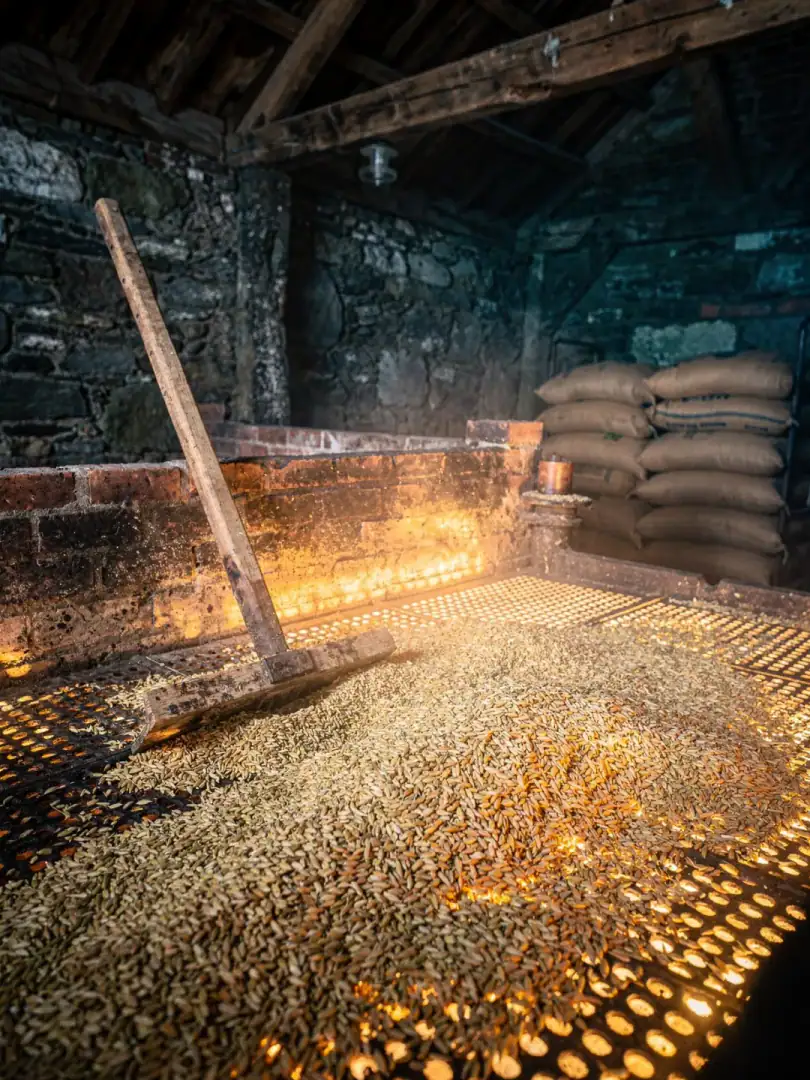
The process itself runs much the same everywhere: the barley soaks in water for several days and begins to germinate. It's then dried on the kiln to halt germination. In Dublin and Leinster, this final step is traditionally done with hot, clean air rather than smoke. The finished malt stays pale and neutral in flavor, a deliberate contrast to the heavily peated malts further west in Scotland.
Fertile farmland soil where the barley grows.
The root: Gives the barley the even ripening needed for mild, clean malt.