Malted and Raw
Grain
Northern Irish whiskey almost always begins with barley, rarely with rye or wheat. This traces back to an old tax. In 1785, the British Crown imposes a separate levy on malted barley, and the distinctive character that resulted from this still holds today. According to the Technical File of 2014, Pot Still Whiskey must consist of at least 30 percent malted barley. At least 30 percent must be unmalted, and no more than 5 percent may be other grains.
The unmalted barley doesn't bring its own sugar. It relies on the enzymes from the malted portion to ferment at all. In return, the finished whiskey gains an oily, slightly spicy texture that pure malt often lacks. At first, this sounds like a bookkeeping trick. Historically, that's partly true. But distillers in Ireland already knew the effect on flavor before the tax forced their hand.
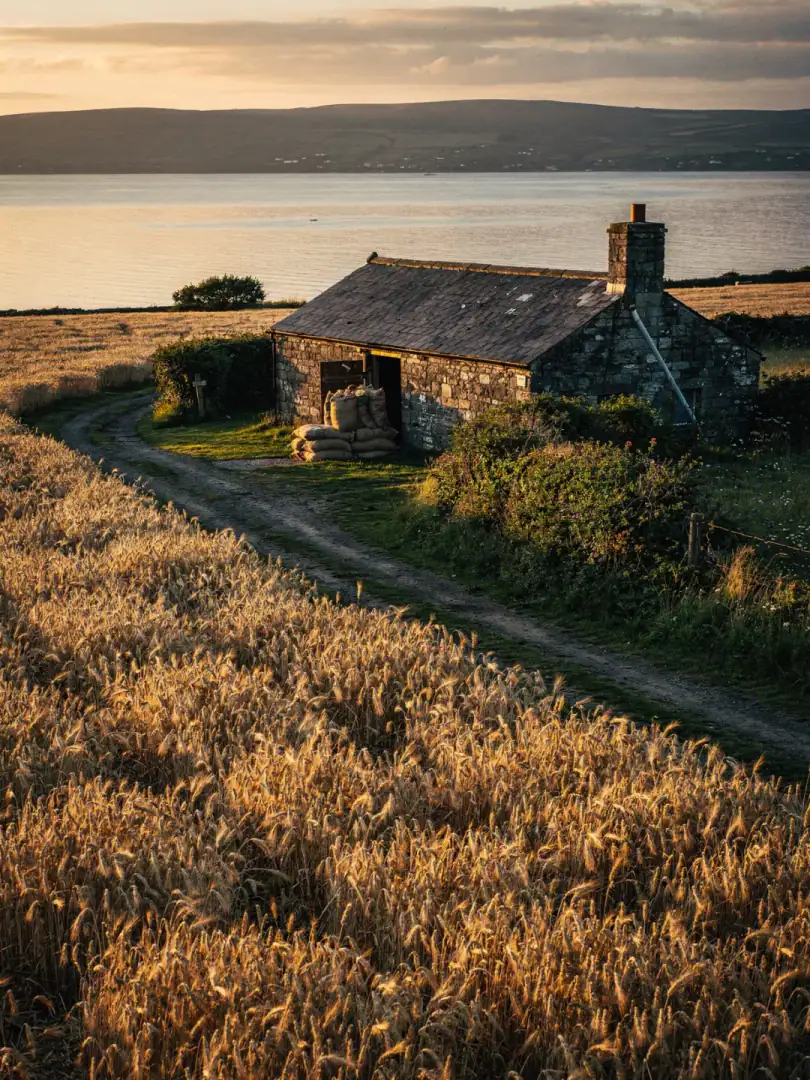
Bushmills traditionally relies on pure malt, entirely from malted barley sourced from a single distillery. Echlinville takes the opposite path. The distillery grows its own grain, on the fields surrounding the house by Strangford Lough. Part of it is still malted on their own malting floor, as was once common practice everywhere. This makes Echlinville Ireland's first true farm distillery.
What may ultimately be sold as Irish whiskey is precisely regulated by the Technical File. The mash must consist of malted grain, with or without whole grains of other varieties. It must be distilled and matured for at least three years, in wooden casks of no more than 700 liters, on the island of Ireland. For Northern Ireland's young scene, this isn't an obstacle but rather the framework within which they seek their own paths.