Malt Without Smoke
Malt & Peat
Peat smoke, the aroma many associate with whisky, is almost impossible to find in Northern Ireland. The Irish Whiskey Technical File explicitly requires unpeated malt for Pot Still Whiskey. The malt whiskeys from Bushmills are also traditionally kilned without peat. Anyone searching here for the smoky note familiar from Scotland's west coast will come up empty-handed.
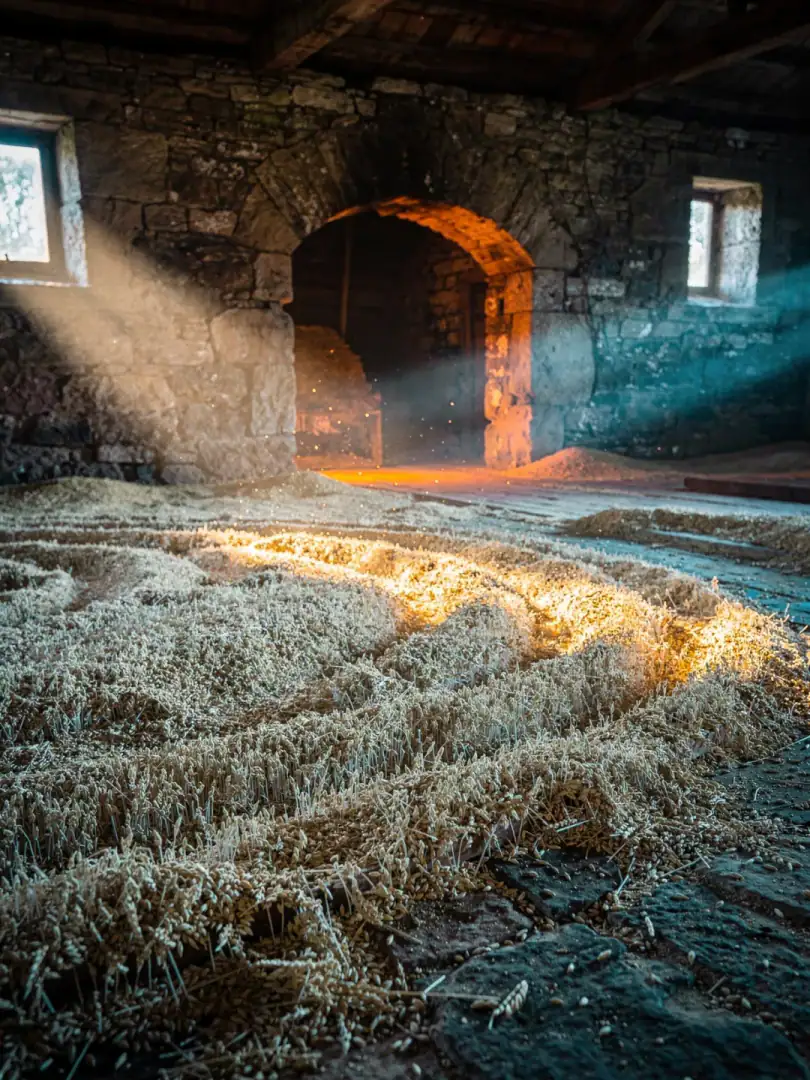
Echlinville takes a step back into traditional craft. Part of their malt is still produced on their own malting floor, the traditional malting surface. There, the barley is turned by hand until it germinates and enough starch has converted into sugar. This is slower and more expensive than a modern malting facility. In return, the distillery retains control over every grain, from field to kiln.
Without smoke, character has to come from elsewhere: from the barley itself, from the yeast, and later from the cask. The malt contributes mainly sweetness, along with a grainy, almost bread-like aroma. This forms the foundation for the later flavor of Bushmills, Hinch, or Dunville's. The smoke that defines other regions simply isn't part of the picture here.
The barley for this often grows just a few kilometers away, in the fertile loam above the region's basalt bedrock. Good malting barley above all needs steady growth, without long stretches of heat stress. That's exactly what the mild, damp climate of the Causeway Coast reliably delivers, year after year. This too is part of the region's distinct character, one that manages without peat smoke and yet remains utterly unmistakable.
Fertile loam over volcanic ground, where the malting barley for the malthouse grows.
The root: Gives the barley the strength for robust, easily soluble grains.