Water from Mount Tennozan
Water & Climate
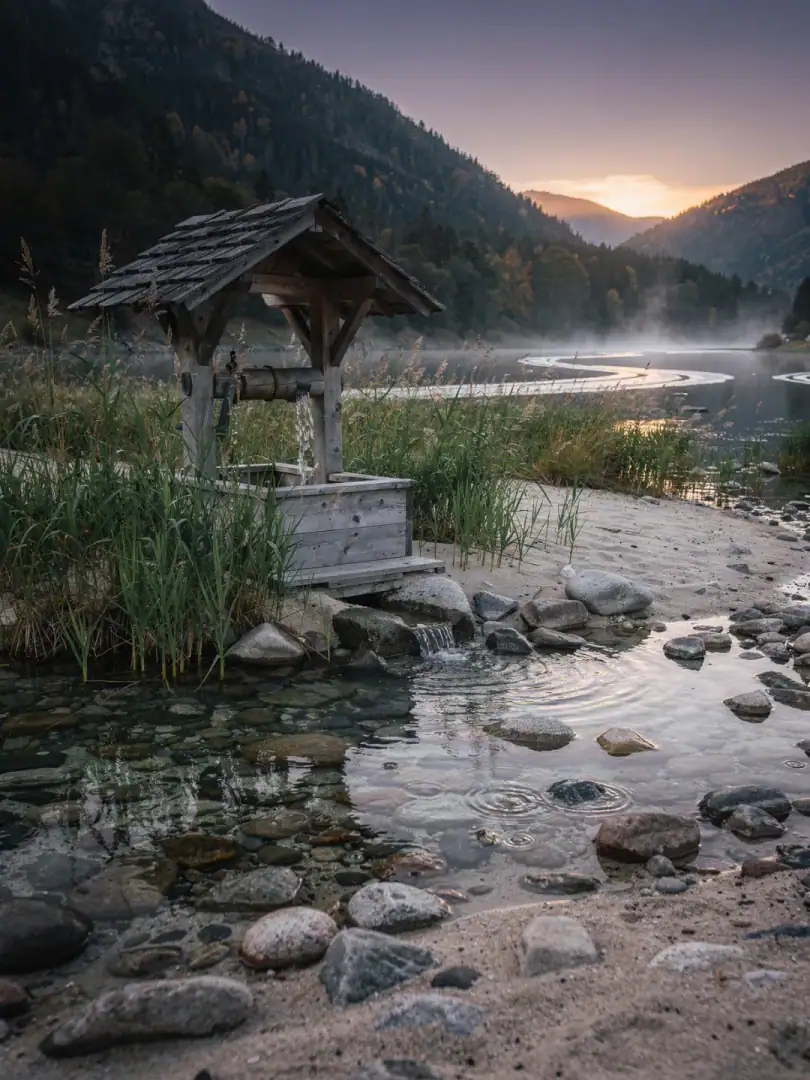
At the foot of Mount Tennozan, where the Katsura, Uji and Kizu rivers flow together, soft groundwater pushes up through the sand of the river plain. Torii knew what he had found there, for as early as the 16th century the tea master Sen no Rikyu had drawn this very water for his tea ceremonies. To this day, the spring is called Rikyu-no-mizu, "Rikyu's water." From here, the three rivers combine to form the Yodo, which continues on toward Osaka.
The water comes from two directions: from above, rain seeps through the weathered granite of Mount Tennozan; from below, the groundwater table of the three rivers pushes up against it. Together, this produces a low-mineral, soft water, just what many Scottish distilleries also wish for.
Early summer brings the rainy season, tsuyu in Japanese, weeks of steady rain that replenish the groundwater level beneath the valley. Without this seasonal pattern, the spring water at the confluence of the three rivers would be far less reliable.
The climate of the Kansai region has little in common with Scotland. Summers are hot and humid, winters mild, typical of the subtropical setting on the edge of the Pacific. On such nights, fog often lingers over the valley until midmorning, keeping the warehouses evenly humid as well.
For maturing whisky, this warm, humid climate means one thing above all: it works faster with the wood than in a cool Scottish warehouse. Warmth pushes the alcohol deeper into the cask, and humid air causes alcohol to evaporate faster than water, shaping sweetness and body even at a younger age.