Malt without the moor
Malt & Peat
Search as you might, you won't find a peat kiln of its own at Yamazaki. The distillery doesn't malt or kiln its own grain; it buys finished malt from Scottish maltings and ships it in from Speyside and the Highlands to Osaka. It arrives already kilned, in sacks, ready for milling in the mash house.
Suntory deliberately orders both types: lightly peated malt for a touch of smoke and completely unpeated malt for the clear, fruity notes Yamazaki is known for. Which portion ends up in which cask filling is decided only years later by the blenders at the time of blending.
This restraint with peat traces back to Torii himself. He didn't want a whisky that tasted like a Scottish import, but one that suited Japanese cuisine, soy sauce, dashi and raw fish. A heavy smoky note would have overwhelmed these delicate flavors.
Peat therefore remains the exception in Kansai, even as some distilleries elsewhere in Japan now experiment with native peat bogs. Yamazaki sticks with imported malt and its own long experience in blending. For individual smoky special releases, the blenders selectively reach for more heavily peated imported malt, without abandoning the distillery's fundamental restraint.
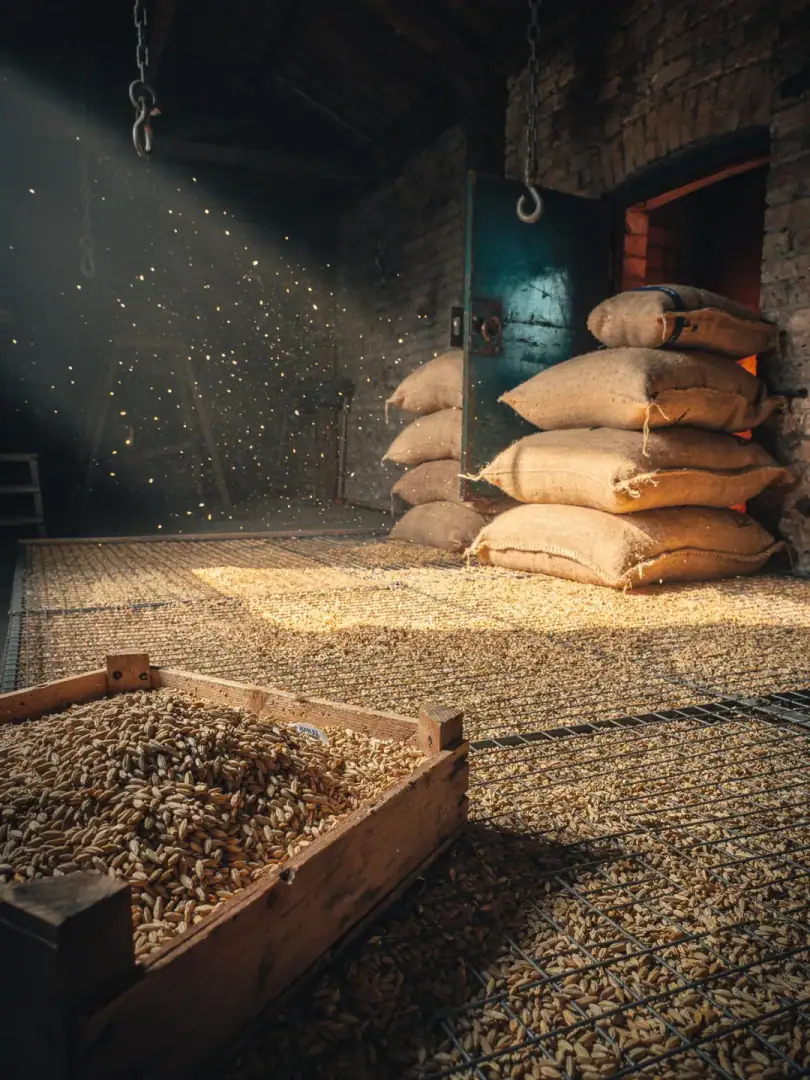
At the maltings in Scotland, the barley germinates for a few days before hot air from the kiln stops and dries it. Only when peat smoke passes through the kiln does the malt absorb phenols, which later produce the smoky flavor. Without peat, the malt stays neutral, the raw material for Yamazaki's lighter, sweeter base character.
Deposited gravel and sand, washed down over millennia by the Katsura, Uji and Kizu rivers.
The root: Acts like a natural filter, through which the water becomes soft and low in minerals.