Cold and Casks
Cask & Maturation
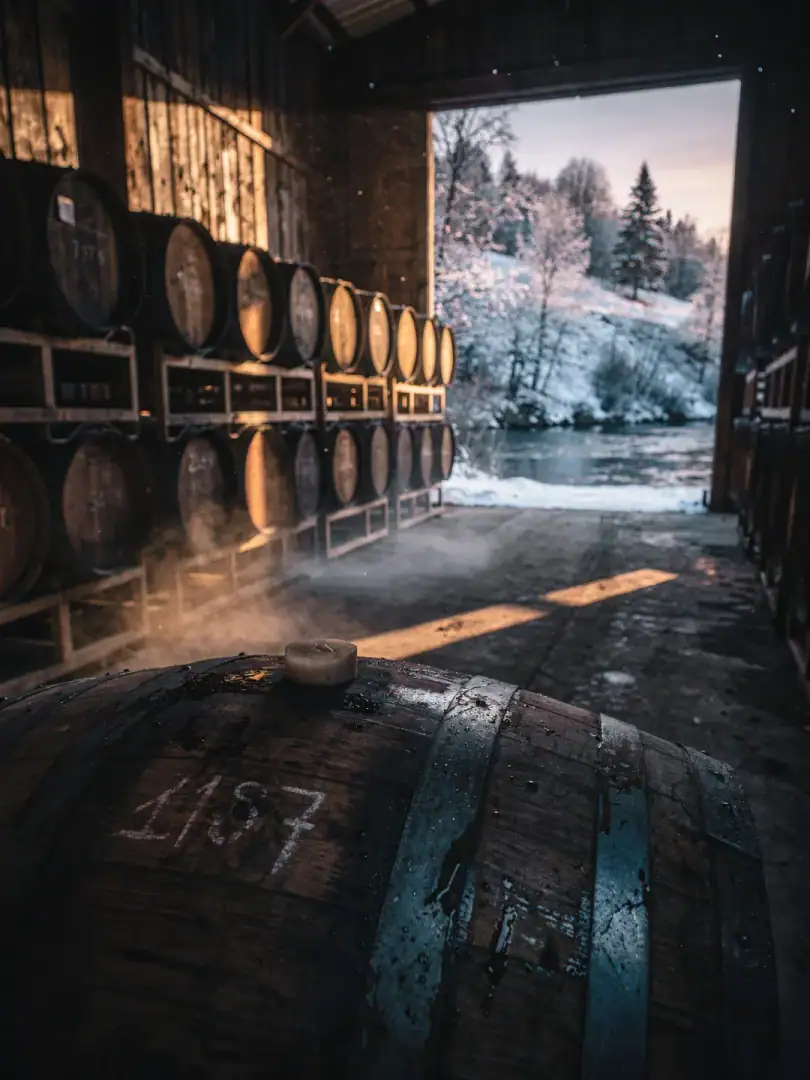
Casks age slowly at Miyagikyo. The damp, cool air from the forest surrounding the distillery slows how much whisky evaporates through the wood—the famous "angels' share." On the coast, salt air and wind dry out casks more aggressively; in the Sakunami valley, by contrast, conditions stay mild and even all year round.
In Koriyama, about a hundred kilometers to the south, things are rougher. The plain around the Asaka Distillery sees large temperature swings between seasons. In winter, a cold, sharp wind often blows down from the Bandai volcano. Here, the cask works harder—expanding in the heat and contracting in the cold, taking on color and aroma more quickly.
Sasanokawa fills its young malt whisky mainly into bourbon casks. These are used American oak casks that previously held American whiskey. They've already imparted sweet vanilla and caramel notes into the wood. The Yamazakura Asaka Single Malt matures for at least three years this way before it can even be bottled as Japanese Whisky.
Those three years aren't a house rule. Since 2021 they've been the minimum under the JSLMA industry standard. Only whisky aged for at least that long in Japan, in wooden casks of up to 700 liters, may carry the words "Japanese Whisky" on the label. Miyagikyo exceeds this threshold by decades with many of its bottlings.
So within the same region lie two very different cask cellars. One stays damp, cool, and built for long maturation. The other is young, subject to shifting climate, and still finding its own character.