Malt without a Bog
Malt & Peat
There's no peat in Miyagi or Fukushima the way Islay distilleries can cut it right on their own doorstep. Anyone here wanting smoky whisky has to import the bog. Usually it arrives as already-peated malt from abroad.
Sasanokawa in Koriyama makes use of this anyway. For the Yamazakura Peated blend line, part of the malt goes into the mash peated, while the rest stays unpeated. After distillation, both types of casks are brought together. That way, the smoke never dominates the whole picture but remains just one note among several.
At Nikka's Miyagikyo, on the other hand, smoke mostly stays out entirely. The distillery relies on unpeated, bright malt. It leaves the peaty side of the house to its sister distillery Yoichi on Hokkaido, situated right by the sea. The two Nikka houses thus divide the labor—one stands for smoke, the other for fruit and blossom.
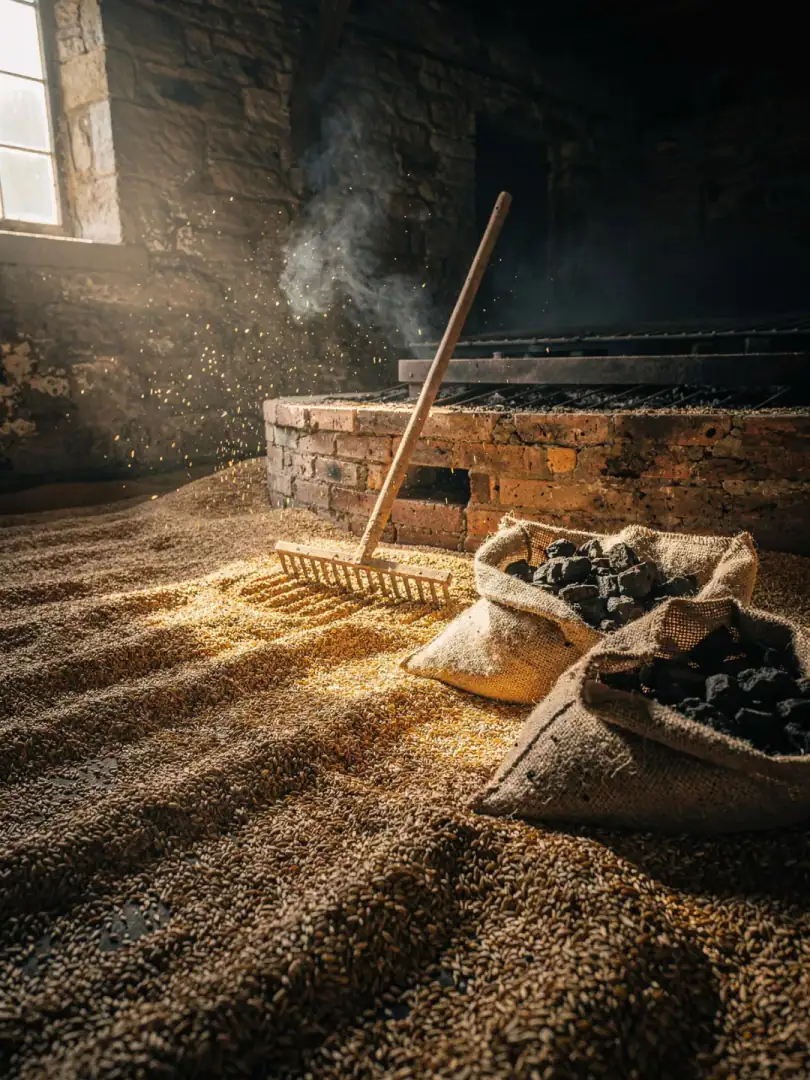
Malting follows the same basic principle everywhere. The barley germinates in water until enzymes in the grain convert starch into fermentable sugar. Then heat from the kiln stops the germination. Whether peat smoke or just warm air passes through the malt at this stage later determines whether the result is smoky or clean.
What lies beneath the barley still explains why this particular water is suited to malting. Beneath the thin forest soil in the Sakunami valley lies volcanic rock from the Zao Mountains. Below that sits groundwater, filtered through these layers before resurfacing at the Nikkawa. It's low in minerals and soft enough not to disturb the mash.
In the end, what matters to the distillery is less the origin of the peat than the amount used. A single peated portion is enough to give an entire bottling its smoky edge. The rest of the region stays unpeated.
A thin layer of humus beneath the mountain forest in the Sakunami valley, porous and constantly damp.
The root: The moist air from this soil later keeps the warehouses evenly cool.