Rivers and Volcanoes
Water & Climate
In 1969, Masataka Taketsuru was searching for a site for his second distillery. Beforehand, he tasted whisky made with water from the Nikkawa River. Only after that sip was the decision made. Miyagikyo would stand in the valley west of Sendai.
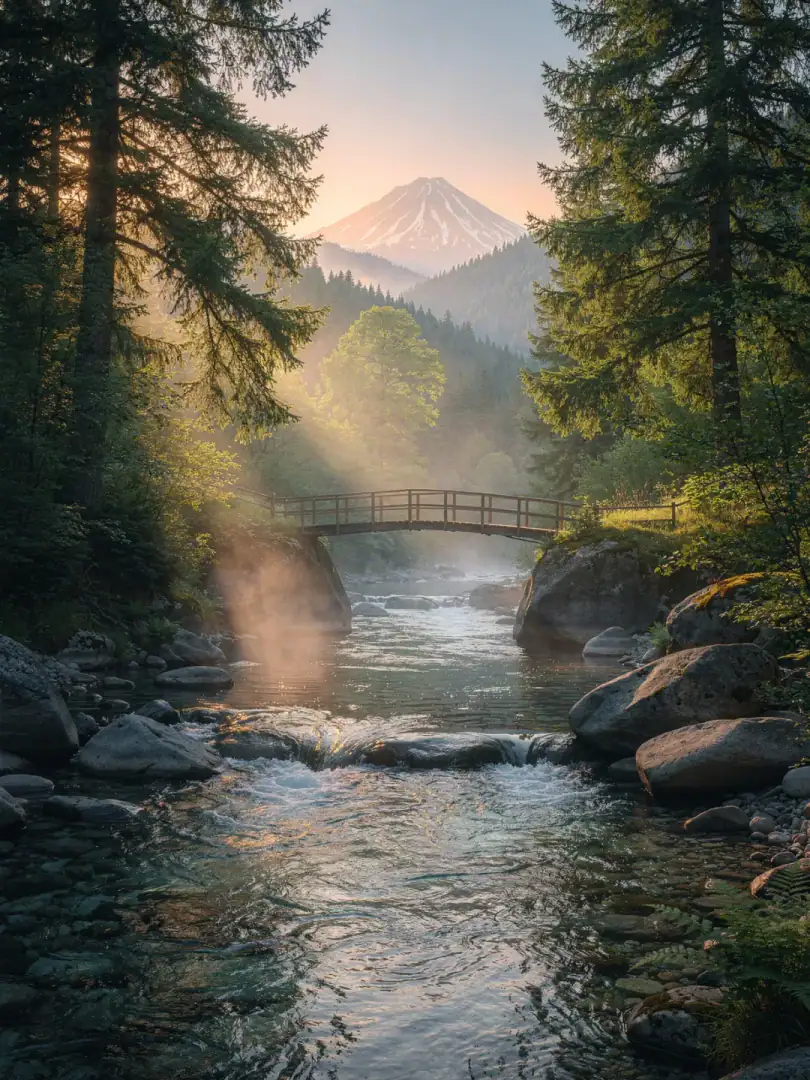
The Nikkawa flows from the Zao Mountains, a still-active volcano on the border between Miyagi and Yamagata. Near the distillery, it meets the second river, the Hirose. Both bring soft, low-mineral water down from the mountains, surrounded by dense forest. To this day, people there call the area "Mori no Miyako," city of trees.
In winter, the same mountain shows its harsher side. At the summit of Zao, trees freeze under yard-thick rime into the famous "snow monsters." In the valley below, it stays milder, though damp and cool—ideal for slow cask maturation.
The damp forest air around Miyagikyo keeps the casks supple and slows down how quickly whisky evaporates from them. About 100 kilometers to the south, in Koriyama, the climate is harsher. The town sits on a plateau through which the Asaka Canal flows, within sight of the Bandai volcano. Between summer and a cold, windy winter, temperatures there swing widely.
These fluctuations put more strain on the casks in Koriyama than the steady coolness of the Sakunami valley does. Whisky breathes through the wood, expanding in the heat and contracting in the cold. In the process, it draws color and aroma from the cask. Two rivers in the north, a canal and a second volcano in the south—so differently does the same region drink its water.