Granite Instead of Peat Bog
Malt & Peat
The peat bogs that define Scotland are almost entirely absent from the mountains of Central Japan. What lies beneath the barley here isn't peat but granite, and it's this rock that ultimately shapes how the malt tastes.
Most of the grain isn't malted on site anyway. The barley arrives already germinated and dried from overseas, generally unpeated, since the four distilleries build their character through water and cask rather than smoke. Only for a handful of bottlings do they reach for imported peated malt, when a smoky note is deliberately wanted.
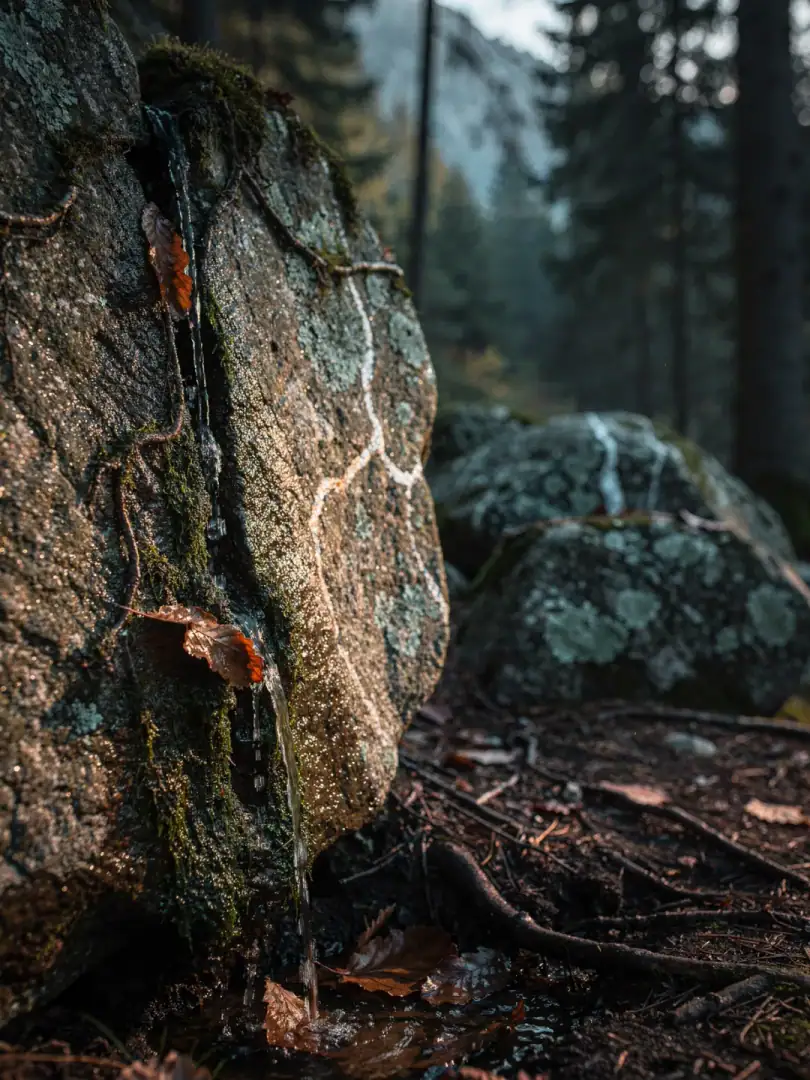
What shapes Central Japan instead lies deeper than any bog. Beneath Hakushu and Kaikomagatake sit layers of weathered and solid granite, through which rainwater seeps for decades before resurfacing as soft distilling water. This rock layer is the region's real "peat," even though it never burns and never smokes.
Chichibu takes a different path, letting Mizunara wood rather than smoke shape its character. The oak grows in the mountains around the town and gives the mash a resinous, faintly sweet note while it's still in the fermentation vessels, long before the first still even runs. This distillery doesn't need smoke to define itself.
Anyone still hunting for smoke in Central Japan will find it only in small doses. A handful of bottlings from Chichibu and Hakushu experiment with imported peated malt from Scotland, usually in small batches and limited runs. It remains the exception in a region that would rather draw its identity from mountain and water than from the bog.
Humus and root network of the mountain forest at Kaikomagatake, porous to rain and snowmelt.
The root: Filtration begins here, long before the water ever reaches the rock.