Border & Prohibition
Region & History
Only a few hundred meters separate Windsor from Detroit, divided solely by the Detroit River. It was there that grain merchant Hiram Walker began buying land from 1856 onward, preferring the grain on the Canadian side over what he found across in Michigan. By 1858, his first distillery stood, and right beside it grew an entire village for the workers: Walkerville, complete with its own streets and houses for the workforce.
The whisky was initially called "Club," a brand Walker registered in 1882. American competitors, fearing its success, pushed through a law requiring foreign whisky to state its origin. From 1893, the brand was officially known as Canadian Club, and in 1898 Queen Victoria granted the distillery a Royal Warrant, a rare honor for a North American distillery.
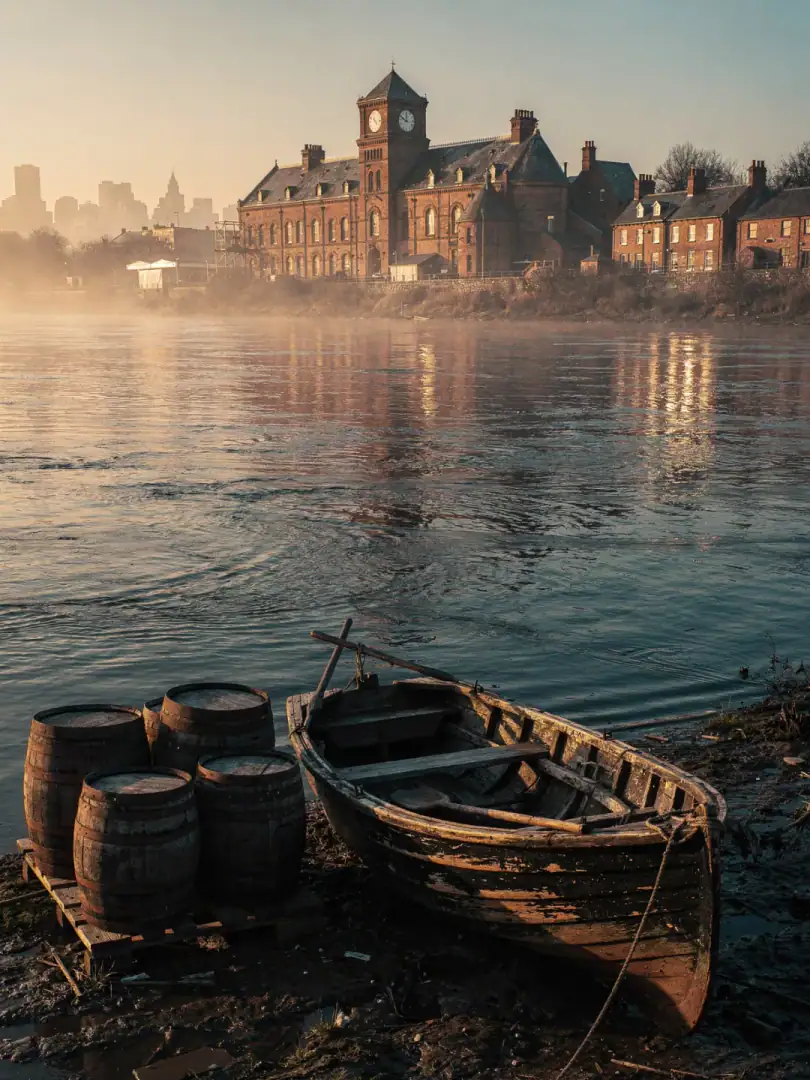
When the US banned alcohol starting in 1920, Canada remained an island of permission. Ontario was allowed to keep distilling as long as the whisky was destined for export, and the Detroit River became one of the busiest smuggling routes in North America. Boats shuttled between Windsor and Detroit under cover of night, and barrels from Walkerville ended up in American cellars and bars.
At the other end of the province, in Toronto, the story began more modestly in 1832: with a windmill by the harbor, built by brothers-in-law James Worts and William Gooderham. After Worts' early death, Gooderham carried on alone and added a distillery in 1837. By the 1890s, Gooderham & Worts had grown into the largest distillery in the British Empire. The last still fell silent in 1990; the Victorian brick buildings now stand protected as the Distillery District.
In Corbyville near Belleville, whisky once dominated everything too: Henry Corby started with a mill in the 1830s, and later the J.P. Wiser's brand took the lead. After 132 years, the distillery closed for good, and its aging stock moved to Windsor. There, Hiram Walker still stands today, now part of Corby Spirit and Wine, while in Collingwood the Canadian Mist Distillery has been distilling since 1967 – two distilleries closed, two still alive, and Ontario remains the heart of Canadian whisky.