Corn, Rye, Malt
Grain
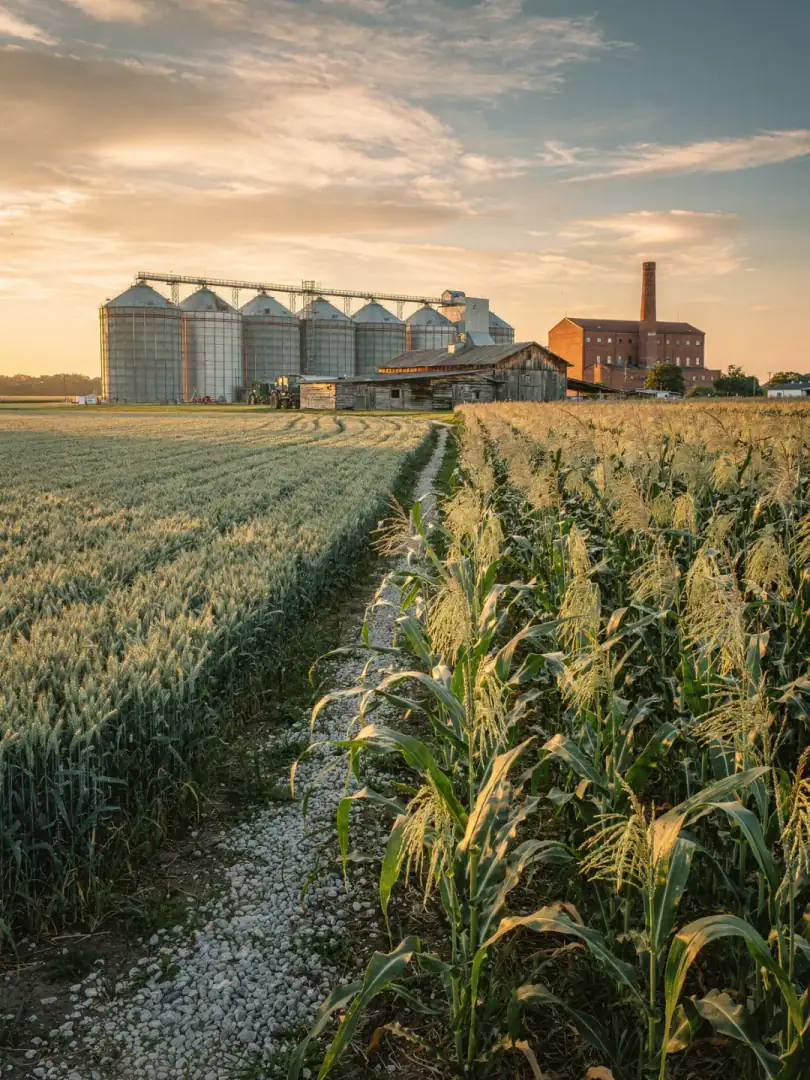
Southwest of Windsor lie cornfields as far as the eye can see. This stretch of land counts among Canada's most productive breadbaskets, and it's here that Hiram Walker still sources its corn today. Corn forms the backbone of nearly every whisky in Ontario. Highly fermented and cleanly distilled, it delivers the mild, slightly sweet base note known as Base Whisky.
For spice, rye is added, often shipped in from the prairies of Alberta, sometimes sourced from Ontario itself. Rye is mashed, fermented, and distilled separately from corn. It becomes its own "Flavouring Whisky" with a bolder, spicier character. Only after aging do the two meet again, when the blender brings them together.
A bit of malt is almost always part of the mix, but not for flavor. The enzymes in germinated barley malt break down the starch from corn and rye into fermentable sugar. In Ontario, often just a small malt proportion in the mash suffices for this. That's far less than in a Scotch malt whisky, which relies entirely on barley.
Canadian law, the Food and Drug Regulations, allows nearly complete freedom in grain choice. Whisky may be mashed from any grain or grain product, as long as it is mashed, distilled, and aged in Canada. The law doesn't even distinguish between "Canadian Whisky" and "Rye Whisky." Legally, both names mean the same thing, even if the rye content in the finished blend stays small.
What this looks like in practice is shown by Canadian Mist in Collingwood. The mash blends corn and malt from Ontario with rye from Alberta, continuously distilled in the column still. Three grains, one country, one whisky. And yet every Ontario bottling tastes different, depending on how much rye the blender ultimately allows.