Enzyme, Not Smoke
Malt & Peat
Peat bogs like those that define Scotland don't exist in Ontario. Here, the vast moorlands that elsewhere served as fuel for kilning over centuries never grew. The smoky flavor known from other regions is therefore entirely absent. Instead, the malt is dried with natural gas or steam, odor-neutral, without any peat fire.
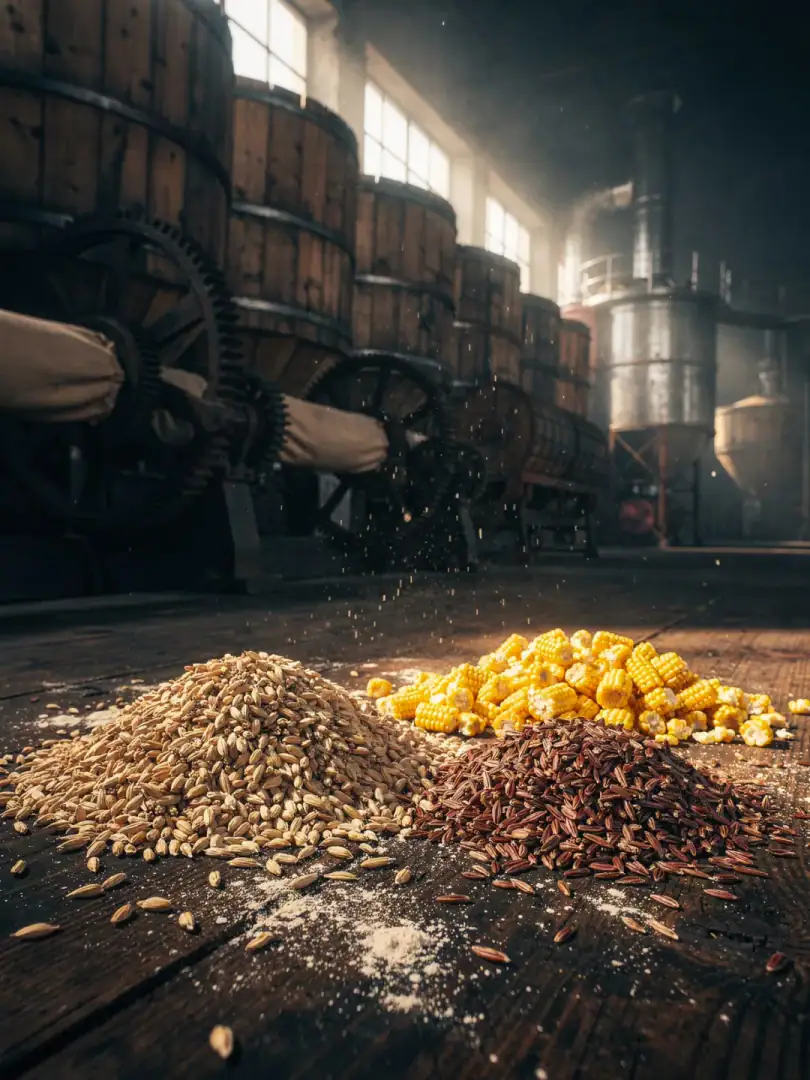
Malt is still needed, though, just for a different purpose. During germination, barley develops enzymes that later break down the starch from corn and rye into sugar. Without this malt, the yeast couldn't ferment the mash at all. The proportion stays small, often just a fraction of the total grain mix. This is quite different from a malt whisky, which relies one hundred percent on malted barley.
Because smoke is absent, corn and rye carry the flavor on their own. The corn delivers mild sweetness, the rye contributes spice with peppery and herbal notes. The result is a whisky that speaks of grain rather than moorland. Anyone looking for smoke in an Ontario whisky will be disappointed. Anyone paying attention to grain nuances instead will find more of them here than anywhere else in Canada.
In Windsor, Hiram Walker malts by the same principle: warm air instead of fire, so no smoke reaches the malt. At Canadian Mist in Collingwood, this shows in the details. Corn and malt come from Ontario, rye from Alberta, all malted and milled without smoke. No peat cutting, no kiln with smoke, just mills, malt silos, and the cool air off Georgian Bay.
Dark, humus-rich loam soil where corn and rye take root.
The root: Fertile topsoil gives the grain even growth – the foundation for a clean mash.