Column, Not Kettle
Distilling
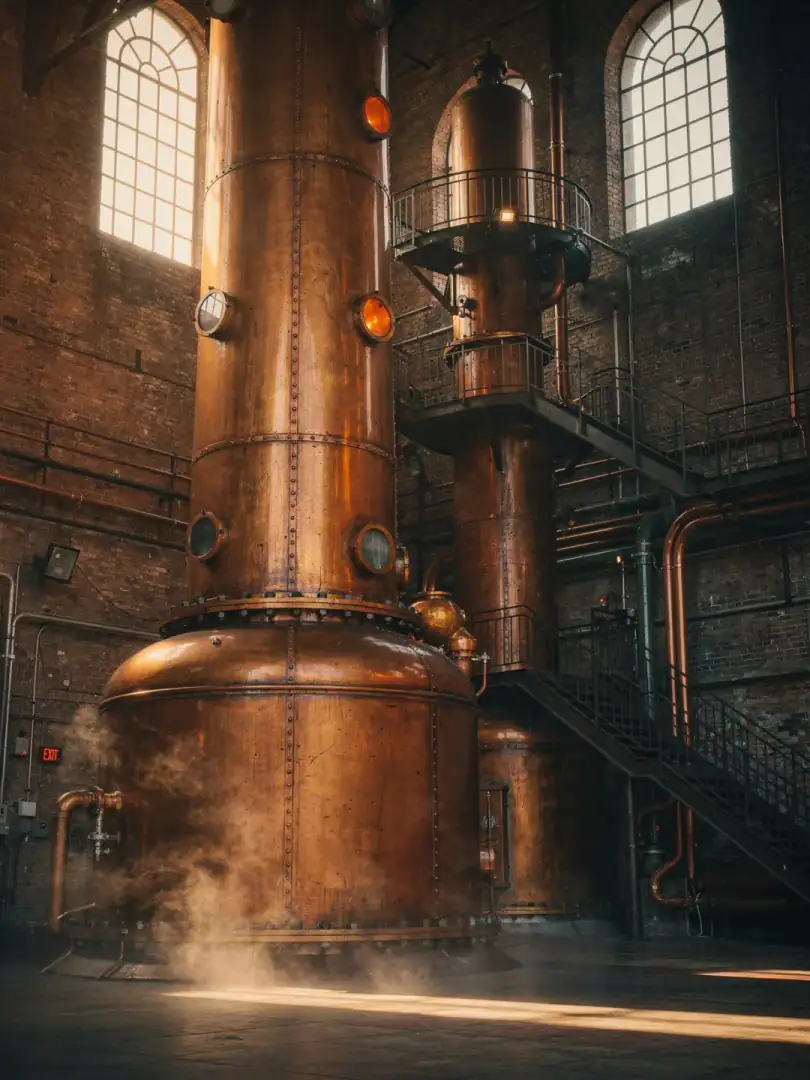
In Windsor, you won't find the bulbous copper kettles typical of Scotland. Instead, two slender columns operate here, each over 60 feet tall and riveted entirely from copper. With these, Hiram Walker runs the largest distillery in North America. Here alone, 60 to 70 percent of all Canadian whisky is produced. One column distills only rye, the other all remaining grain types – separate columns for separate whiskies.
A column still works without pause. Mash flows in at the top, steam rises from below through dozens of plates, and with each plate a bit more alcohol separates from the water. After the first run, the raw spirit sits at around 70 percent alcohol. That's considerably more than a Scottish pot still achieves in a single run. The copper in the column also binds sulfur compounds that would otherwise leave the whisky tasting dull and heavy.
The column still doesn't make the classic cut into heads, hearts, and tails. Instead, the master distiller decides at which plate to draw off the alcohol. Tapping further up yields a lighter, nearly neutral spirit. Staying lower leaves more aroma and oil in the distillate. This very choice separates the mild Base Whisky from the spicy Flavouring Whisky, even though both come from the same type of still.
In Collingwood, Canadian Mist relies on the same design, just tripled in sequence. The mash of corn, rye, and malt passes through three columns in series before the spirit is allowed into the barrel. Here, "triple" doesn't mean three separate distillation runs as with an Irish pot still, but three stages within the same continuous system. The master distiller in Collingwood draws the spirit at the end of the third column, right where it's mild and round enough for a light barrel profile.