Copper & Column
Distillation
Three distilleries, three completely different sets of stills. At Willowbank, the old distillery near Dunedin, stainless steel equipment stood originally. In 1981, Seagram swapped it for copper pot stills, as is customary in Scotland. Alongside them ran four column stills for grain whisky. After closing in 1997, all six stills were sold to Fiji, where they have been distilling rum ever since.
In Riverhead near Auckland, Thomson operates just a single still, a 900-litre copper kettle, hand-hammered and imported from Portugal. Distillation happens twice using the classic pot still method, with a column deliberately left out.
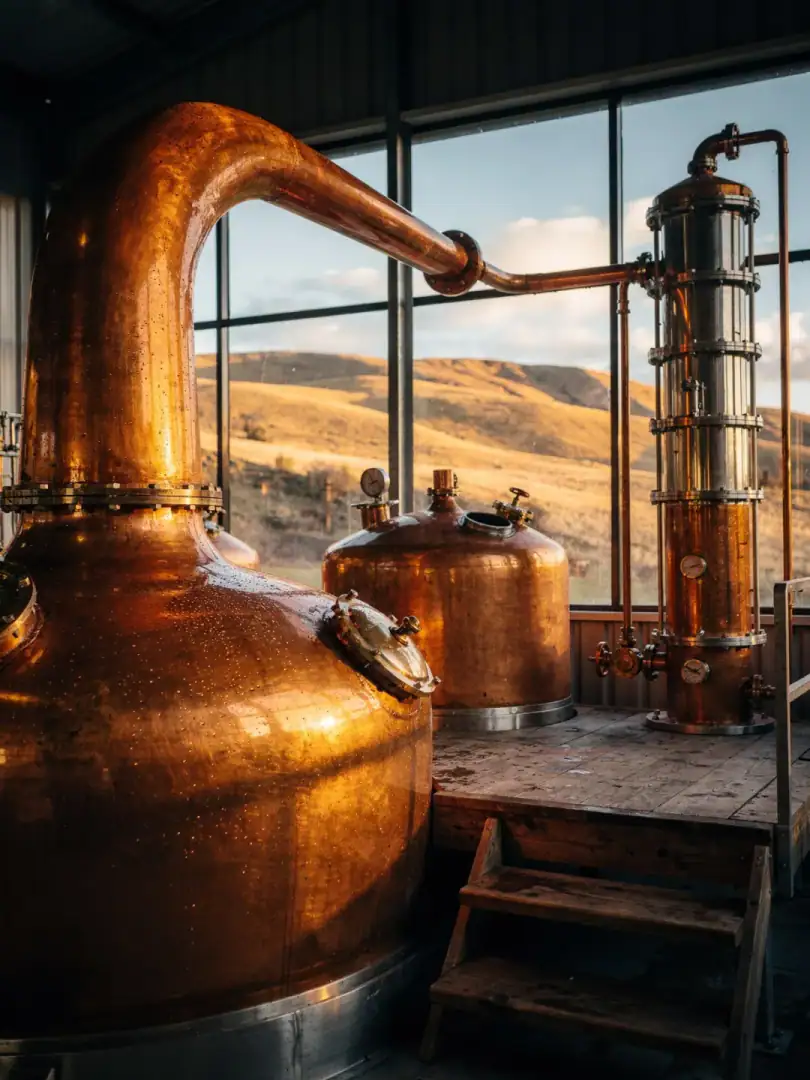
Cardrona in Central Otago takes the opposite approach: five stills stand together here. A pair of copper Forsyth pot stills with capacities of 2,000 and 1,300 litres sit alongside a continuous column still and its own doubler. Both columns were built by the German company Jacob Carl.
This blend of Scottish pot still tradition and German column technology allows for a lot of flexibility. Cardrona produces several whisky styles within a single distillery, ranging from robust malt to lighter distillates from the column. On October 23, 2015, spirit flowed from the new stills for the first time. The first casks were filled that same month.
In New Zealand too, the distiller separates the heart of the run from the heads and tails with every batch. Only this middle portion of the run goes into the cask. Heads and tails go back into the next run. How tightly a house makes this cut remains a trade secret, yet it still audibly shapes the character of the finished whisky.